Verma Nipun, Renauer Paul A, Dong Chuanpeng, Xin Shan, Lin Qianqian, Zhang Feifei, Glazer Peter M, Chen Sidi
Department of Genetics, Yale University School of Medicine, New Haven, Connecticut, USA.
System Biology Institute, Yale University, West Haven, Connecticut, USA.
bioRxiv. 2024 Jan 15:2024.01.14.575614. doi: 10.1101/2024.01.14.575614.
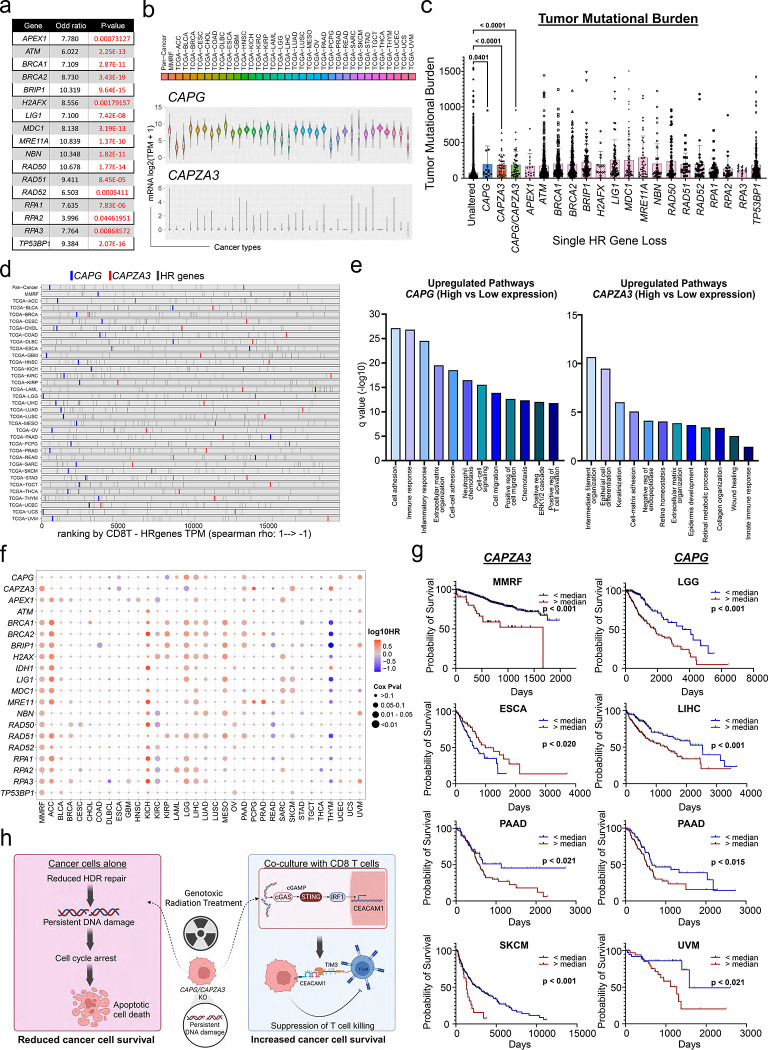
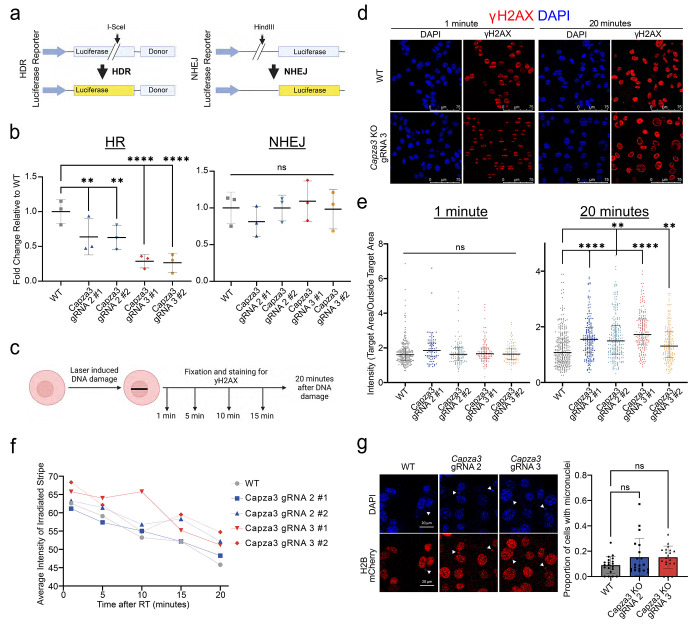
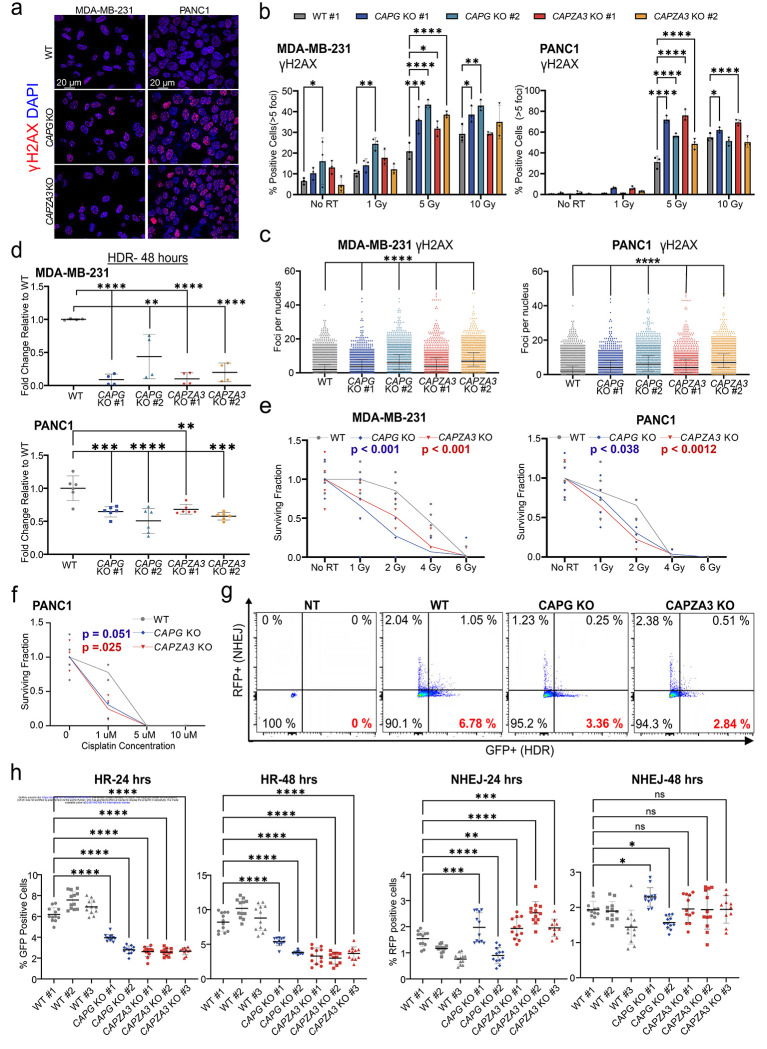
Radiotherapy (RT), is a fundamental treatment for malignant tumors and is used in over half of cancer patients. As radiation can promote anti-tumor immune effects, a promising therapeutic strategy is to combine radiation with immune checkpoint inhibitors (ICIs). However, the genetic determinants that impact therapeutic response in the context of combination therapy with radiation and ICI have not been systematically investigated. To unbiasedly identify the tumor intrinsic genetic factors governing such responses, we perform a set of genome-scale CRISPR screens in melanoma cells for cancer survival in response to low-dose genotoxic radiation treatment, in the context of CD8 T cell co-culture and with anti-PD1 checkpoint blockade antibody. Two actin capping proteins, and , emerge as top hits that upon inactivation promote the survival of melanoma cells in such settings. and knockouts (KOs) in mouse and human cancer cells display persistent DNA damage due to impaired homology directed repair (HDR); along with increased radiation, chemotherapy, and DNA repair inhibitor sensitivity. However, when cancer cells with these genes inactivated were exposed to sublethal radiation, inactivation of such actin capping protein promotes activation of the STING pathway, induction of inhibitory ligand expression and resistance to CD8 T cell killing. Patient cancer genomics analysis reveals an increased mutational burden in patients with inactivating mutations in and/or , at levels comparable to other HDR associated genes. There is also a positive correlation between expression and activation of immune related pathways and CD8 T cell tumor infiltration. Our results unveil the critical roles of actin binding proteins for efficient HDR within cancer cells and demonstrate a previously unrecognized regulatory mechanism of therapeutic response to radiation and immunotherapy.
放射治疗(RT)是恶性肿瘤的一种基本治疗方法,超过半数的癌症患者都会使用。由于辐射可促进抗肿瘤免疫效应,一种很有前景的治疗策略是将放疗与免疫检查点抑制剂(ICI)联合使用。然而,在放疗与ICI联合治疗的背景下,影响治疗反应的基因决定因素尚未得到系统研究。为了无偏见地识别控制此类反应的肿瘤内在遗传因素,我们在黑色素瘤细胞中进行了一系列全基因组规模的CRISPR筛选,以检测在CD8 T细胞共培养以及使用抗PD1检查点阻断抗体的情况下,低剂量基因毒性辐射治疗后的癌症存活率。两种肌动蛋白封端蛋白,即CapZ和gelsolin,成为最显著的命中靶点,失活后可促进黑色素瘤细胞在此类环境中的存活。小鼠和人类癌细胞中的CapZ和gelsolin基因敲除(KO)由于同源定向修复(HDR)受损而显示出持续性DNA损伤;同时对辐射、化疗和DNA修复抑制剂的敏感性增加。然而,当这些基因失活的癌细胞暴露于亚致死剂量辐射时,此类肌动蛋白封端蛋白的失活会促进STING通路的激活、抑制性配体表达的诱导以及对CD8 T细胞杀伤的抗性。患者癌症基因组分析显示,CapZ和/或gelsolin失活突变的患者中突变负担增加,其水平与其他HDR相关基因相当。CapZ表达与免疫相关通路的激活以及CD8 T细胞肿瘤浸润之间也存在正相关。我们的结果揭示了肌动蛋白结合蛋白在癌细胞内有效HDR中的关键作用,并证明了一种先前未被认识的对放疗和免疫治疗反应的调节机制。