Qin Feng, Hu Xuejiao, Wang Xiaojia, Liu Weijiang, Deng Qianyun, Zhao Yunhu, Li Caiyun, Liu Chao, Huang Zhenchao, Gu Bing
Department of Neurosurgery, Lingnan Hospital, Branch of the Third Affiliated Hospital of Sun Yat-sen University, 2693 Kaichuang Avenue, Guangzhou, Guangdong Province, 510530, China.
Department of Laboratory Medicine, Guangdong Provincial People's Hospital, Guangdong Academy of Medical Sciences, Southern Medical University, 106 Zhongshan 2nd Rd, Guangzhou, Guangdong Province, 510000, China.
Heliyon. 2024 Jan 10;10(2):e24399. doi: 10.1016/j.heliyon.2024.e24399. eCollection 2024 Jan 30.
Clinicians often face the challenge of differentially diagnosing febrile patients who are suspected of infectious diseases, since the clinical manifestations of infection and cancer may overlap. A single test that can detect both pathogens and tumor could provide timely and accurate diagnostic clues to aid the treatment and management of these patients.
We enrolled eight patients to evaluate the utility of metagenomic Next-Generation Sequencing for simultaneously detecting pathogens and neoplasms using body fluids and tissue samples. Patients were selected by the following criteria: 1) Tumor was not considered upon hospitalization, but mNGS testing indicated neoplasm; 2) Tumor was not excluded, but microbial infection was primarily suspected according to initial clinical assessment.
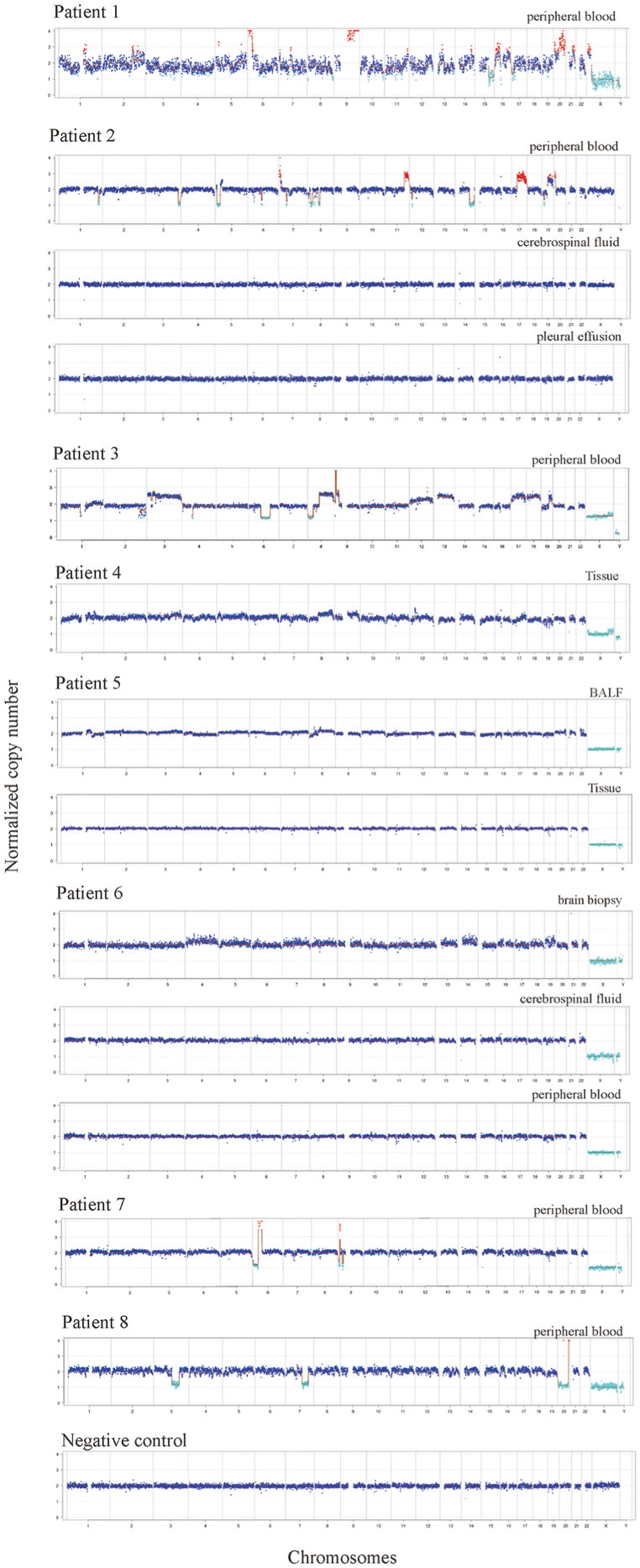
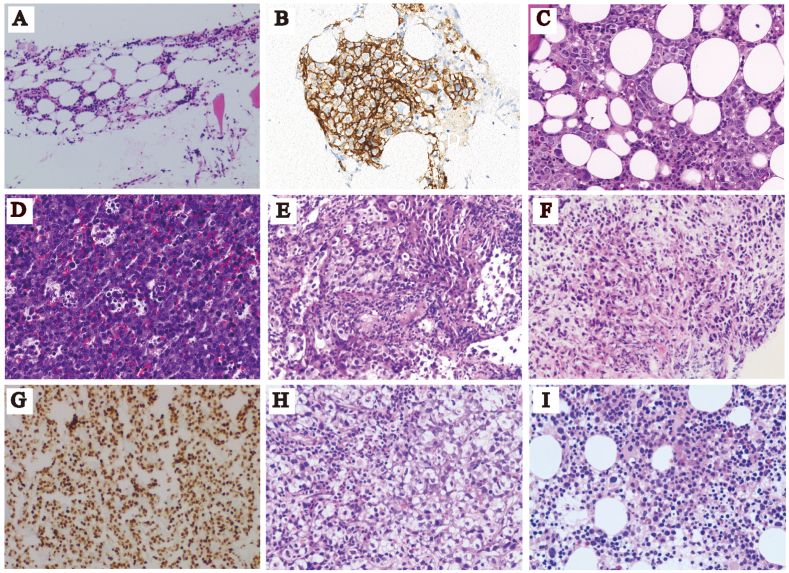
We detected potential pathogens in five patients, three of whom had progressed into critical infections. Moreover, abnormal chromosomal copy numbers were identified in all patients that indicated presence of neoplasms, which were pathologically confirmed.
Although copy number variations do not render a definitive cancer diagnosis, it can prompt clinicians to conduct more focused diagnostic testing for cancer, potentially saving time and cost. As a result, integrating copy number analysis with pathogen detection in mNGS may help establish rapid and accurate diagnosis for febrile patients.
临床医生常常面临鉴别诊断疑似感染性疾病发热患者的挑战,因为感染和癌症的临床表现可能重叠。一项能够同时检测病原体和肿瘤的单一检测方法可为这些患者的治疗和管理提供及时、准确的诊断线索。
我们招募了8名患者,以评估宏基因组下一代测序技术利用体液和组织样本同时检测病原体和肿瘤的效用。患者按以下标准选择:1)住院时未考虑肿瘤,但宏基因组下一代测序检测显示存在肿瘤;2)未排除肿瘤,但根据初始临床评估主要怀疑为微生物感染。
我们在5名患者中检测到潜在病原体,其中3名已进展为严重感染。此外,在所有患者中均鉴定出表明存在肿瘤的异常染色体拷贝数,并经病理证实。
虽然拷贝数变异不能做出明确的癌症诊断,但它可促使临床医生对癌症进行更有针对性的诊断检测,可能节省时间和成本。因此,在宏基因组下一代测序中整合拷贝数分析与病原体检测可能有助于为发热患者建立快速、准确的诊断。