Zhang Meng, Wang Zhao, Wang Jiaxi, Lv Hairong, Xiao Xia, Lu Wenyi, Jin Xin, Meng Juanxia, Pu Yedi, Zhao MingFeng
First Central Clinical College, Tianjin Medical University, Tianjin, 300192, People's Republic of China.
Department of Hematology, Tianjin First Central Hospital, Tianjin, 300192, People's Republic of China.
Infect Drug Resist. 2022 Jul 7;15:3549-3559. doi: 10.2147/IDR.S364525. eCollection 2022.
It was crucial to use empirical antibiotics in febrile neutropenia (FN) patients. However, most patients still died from infection due to poor efficacy. Metagenomic next-generation sequencing (mNGS) is a rapid microbiological diagnostic method. The value of mNGS in patients with FN remains to be studied, especially after empiric antibiotic treatment.
We retrospectively analyzed the differences between mNGS and the traditional methods in 192 patients with hematological malignancies who have received empiric antibiotic treatment. Samples were collected when patient had chills or half an hour before peak body temperature. And we compared the differences between FN and non-FN patients, mainly including types of pathogens and the diagnostic value of different pathogens.
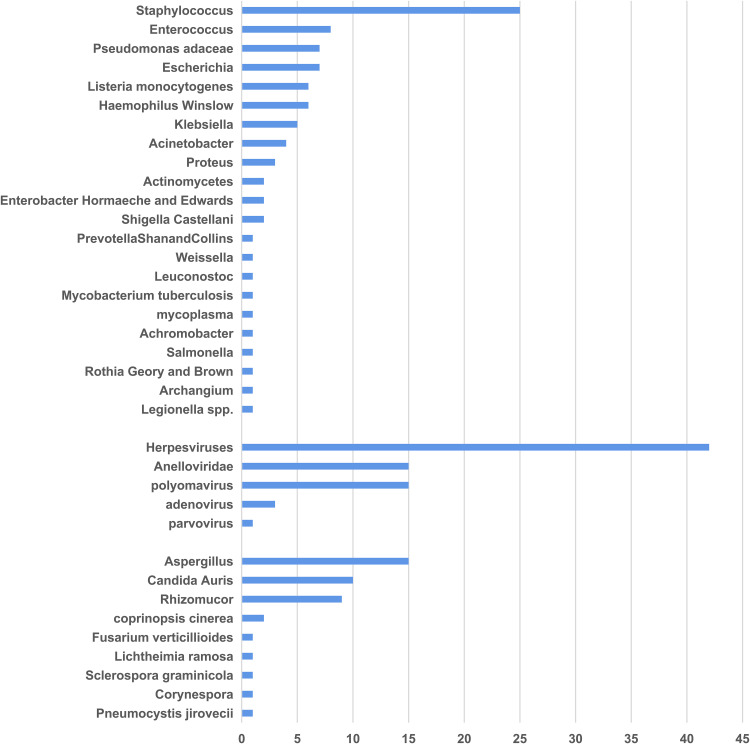
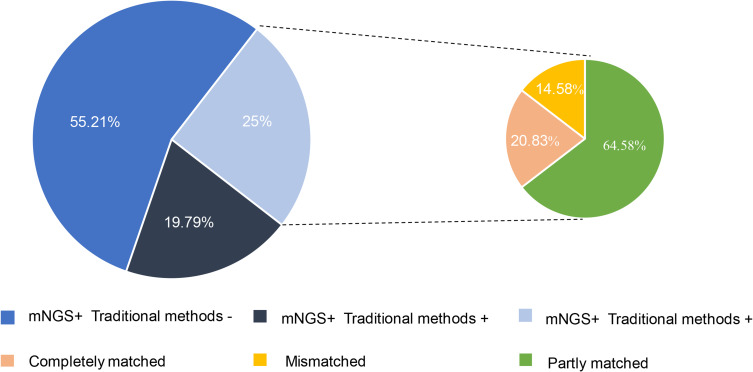
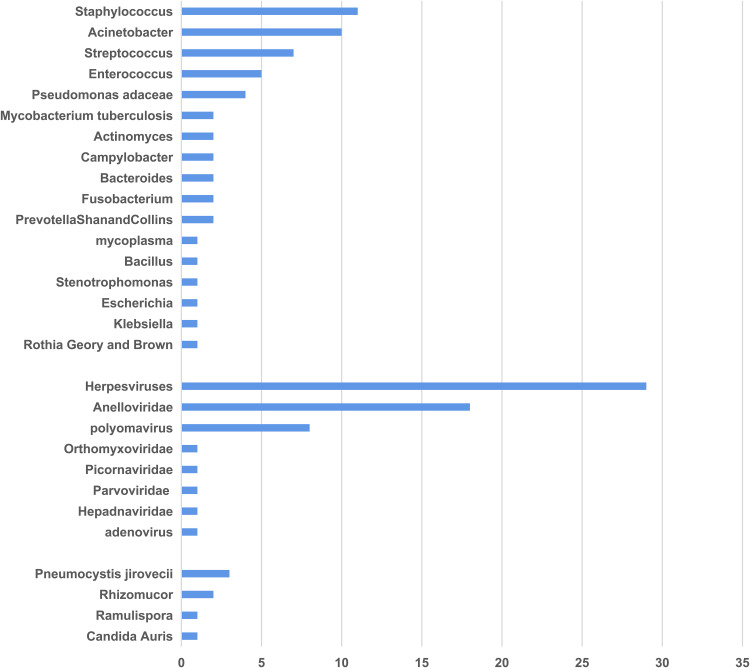
Despite receiving empirical treatment, the pathogen detection rate of mNGS was significantly higher than the traditional method (80.21% vs 25.00%, <0.001). And it has obvious advantages in detecting mixed pathogens infection (80.21% vs 4.17%, <0.001). Then, we found that mNGS saw more pathogens in the FN than in the non-FN group, especially fungus. 21/33 (63.63%) of FN patients was diagnosed with fungal infections. The fungal detection rate in FN was significantly higher than non-FN group (32.35% vs 12.22%, =0.001). Besides, the sensitivity of mNGS was higher than the traditional methods in both FN and non-FN group (<0.001), but no significant difference in specificity (>0.05). In the FN group, empiric antibiotic treatment of 46/102 (45.10%) patients did not treat all the pathogens detected by mNGS. After adjusting the antimicrobial regimen according to the results of mNGS, the effective rate at 72 hours and 7 days was 22/46 (47.83%) and 24/102 (52.17%), respectively.
mNGS had a significant impact on the diagnosis of infection and the second-line antimicrobial therapy in FN. mNGS plays a more important role in FN patients, especially in the diagnosis of fungal infections.
Firstly, we compared the difference between mNGS and the traditional methods in the diagnosis of infection. Secondly, we assessed the value of mNGS in FN patients by comparing it with non-FN patients, including types of pathogens and the diagnostic value of different pathogens. In order to show that mNGS plays a more important role in FN.
在发热性中性粒细胞减少症(FN)患者中使用经验性抗生素至关重要。然而,大多数患者仍因疗效不佳死于感染。宏基因组下一代测序(mNGS)是一种快速的微生物诊断方法。mNGS在FN患者中的价值仍有待研究,尤其是在经验性抗生素治疗之后。
我们回顾性分析了192例接受经验性抗生素治疗的血液系统恶性肿瘤患者中mNGS与传统方法之间的差异。在患者寒战或体温峰值前半小时采集样本。我们比较了FN患者与非FN患者之间的差异,主要包括病原体类型和不同病原体的诊断价值。
尽管接受了经验性治疗,mNGS的病原体检测率仍显著高于传统方法(80.21%对25.00%,<0.001)。并且在检测混合病原体感染方面具有明显优势(80.21%对4.17%,<0.001)。然后,我们发现mNGS在FN患者中检测到的病原体比非FN组更多,尤其是真菌。33例FN患者中有21例(63.63%)被诊断为真菌感染。FN患者的真菌检测率显著高于非FN组(32.35%对12.22%,=0.001)。此外,mNGS在FN组和非FN组中的敏感性均高于传统方法(<0.001),但特异性无显著差异(>0.05)。在FN组中,46/102例(45.10%)患者的经验性抗生素治疗未能涵盖mNGS检测到的所有病原体。根据mNGS结果调整抗菌方案后,72小时和7天的有效率分别为22/46例(47.83%)和24/102例(52.17%)。
mNGS对FN的感染诊断和二线抗菌治疗有显著影响。mNGS在FN患者中发挥着更重要的作用,尤其是在真菌感染的诊断中。
首先,我们比较了mNGS与传统方法在感染诊断中的差异。其次,通过将mNGS与非FN患者进行比较,评估mNGS在FN患者中的价值,包括病原体类型和不同病原体的诊断价值。以表明mNGS在FN中发挥着更重要的作用。