Department of Urology, Renji Hospital, Shanghai Jiao Tong University School of Medicine, Shanghai, China.
The Brady Urological Institute, Johns Hopkins University School of Medicine, Baltimore, Maryland, USA.
J Extracell Vesicles. 2024 Feb;13(2):e12402. doi: 10.1002/jev2.12402.
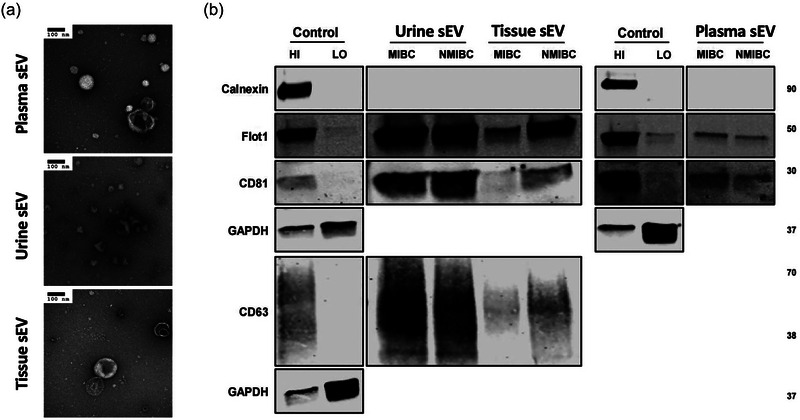
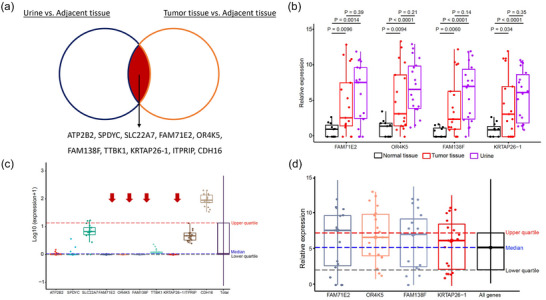
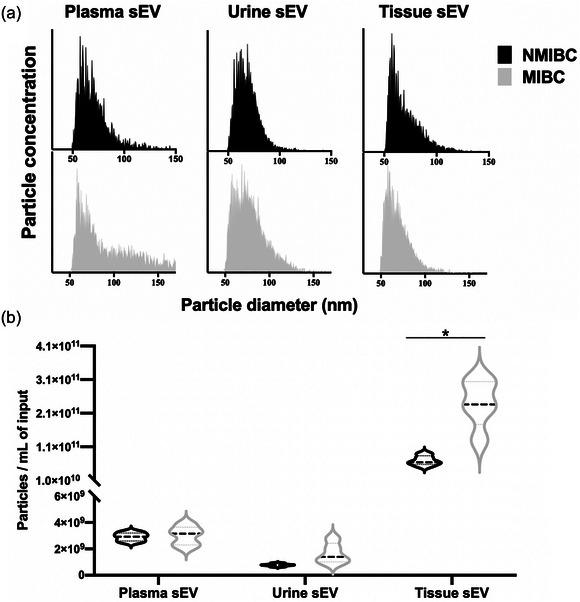
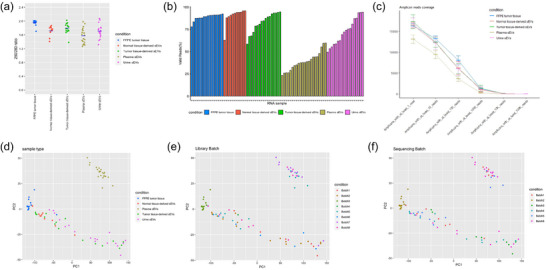
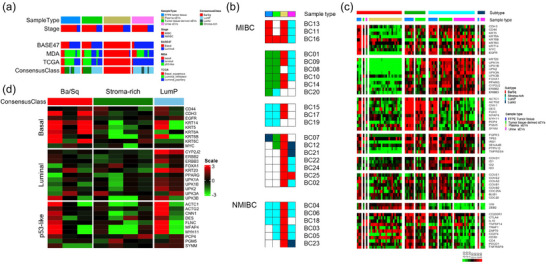
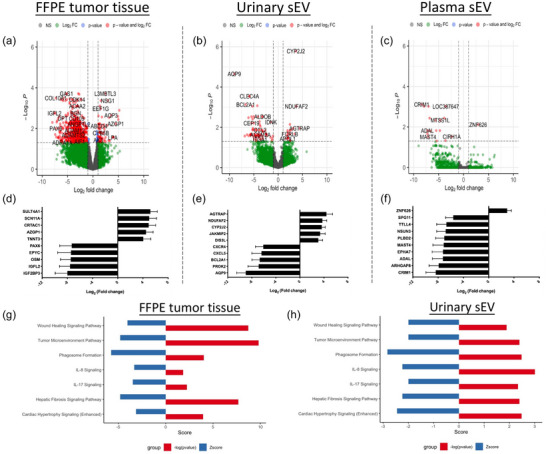
mRNA-based molecular subtypes have implications for bladder cancer prognosis and clinical benefit from certain therapies. Whether small extracellular vesicles (sEVs) can reflect bladder cancer molecular subtypes is unknown. We performed whole transcriptome RNA sequencing for formalin fixed paraffin embedded (FFPE) tumour tissues and sEVs separated from matched tissue explants, urine and plasma in patients with bladder cancer. sEVs were separated using size-exclusion chromatography, and characterized by transmission electron microscopy, nano flow cytometry and western blots, respectively. High yield of sEVs were obtained using approximately 1 g of tissue, incubated with media for 30 min. FFPE tumour tissue and tumour tissue-derived sEVs demonstrated good concordance in molecular subtype classification. All urinary sEVs were classified as luminal subtype, while all plasma sEVs were classified as Ba/Sq subtype, regardless of the molecular subtypes indicated by their matched FFPE tumour tissue. The comparison within urine sEVs, which may exclude the sample type specific background, could pick up the different biology between NMIBC and MIBC, as well as the signature genes related to molecular subtypes. Four candidate sEV-related bladder cancer-specific mRNA biomarkers, FAM71E2, OR4K5, FAM138F and KRTAP26-1, were identified by analysing matched urine sEVs, tumour tissue derived sEVs, and adjacent normal tissue derived sEVs. Compared to sEVs separated from biofluids, tissue-derived sEVs may reflect more tissue- or disease-specific biological features. Urine sEVs are promising biomarkers to be used for liquid biopsy-based molecular subtype classification, but the current algorithm needs to be modified/adjusted. Future work is needed to validate the four new bladder cancer-specific biomarkers in large cohorts.
基于 mRNA 的分子亚型对膀胱癌的预后和某些治疗方法的临床获益具有影响。目前尚不清楚小细胞外囊泡 (sEV) 是否能反映膀胱癌的分子亚型。我们对膀胱癌患者的福尔马林固定石蜡包埋 (FFPE) 肿瘤组织和分离自匹配组织外植体、尿液和血浆的 sEV 进行了全转录组 RNA 测序。通过尺寸排阻色谱法分离 sEV,分别通过透射电子显微镜、纳米流式细胞术和 Western blot 进行特征鉴定。使用大约 1 g 的组织,孵育 30 分钟可获得高产量的 sEV。FFPE 肿瘤组织和肿瘤组织衍生的 sEV 在分子亚型分类上具有良好的一致性。所有尿液 sEV 均被归类为 luminal 亚型,而所有血浆 sEV 均被归类为 Ba/Sq 亚型,无论其匹配的 FFPE 肿瘤组织指示的分子亚型如何。在尿液 sEV 内进行比较,可以排除样本类型特异性背景,从而发现非肌层浸润性膀胱癌和肌层浸润性膀胱癌之间的不同生物学特性,以及与分子亚型相关的特征基因。通过分析匹配的尿液 sEV、肿瘤组织衍生的 sEV 和相邻正常组织衍生的 sEV,鉴定出四个候选 sEV 相关的膀胱癌特异性 mRNA 生物标志物:FAM71E2、OR4K5、FAM138F 和 KRTAP26-1。与从生物流体中分离的 sEV 相比,组织衍生的 sEV 可能反映出更多的组织或疾病特异性生物学特征。尿液 sEV 是一种很有前途的液体活检分子亚型分类生物标志物,但目前的算法需要进行修改/调整。未来需要在大样本队列中验证这四个新的膀胱癌特异性生物标志物。