College of Art Design, The College of Post and Telecommunication of WIT, Wuhan, Hubei, China.
PLoS One. 2024 Jan 31;19(1):e0294244. doi: 10.1371/journal.pone.0294244. eCollection 2024.
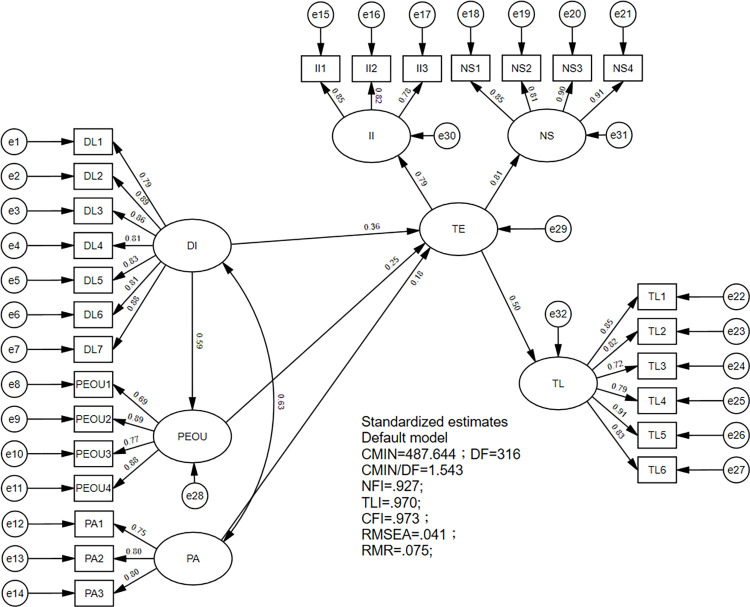
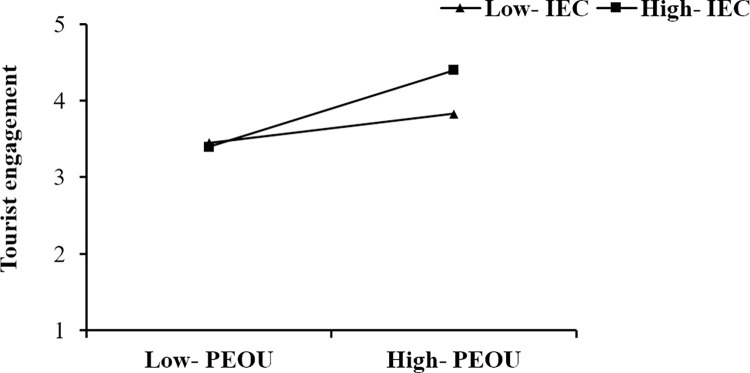
Advanced mobile functions and empowered smartphones have provided tourists with various location-based service apps that reshaped the business model of the tourism sector. Despite their importance to tourists, l-apps still have limitations, such as ignorance of tourist preferences and the mismatch between app introduction and tourist experience, therefore affecting tourist loyalty to destinations. Understanding tourist-oriented factors thus becomes critical for l-app designers and service providers. This study integrates the technology-acceptance model (TAM) into a unique context to examine the roles of digital literacy, perceived ease of use, perceived autonomy, virtual-content congruence, and tourist engagement on tourist loyalty. Our empirical test of a structural equation model based on a randomly recruited 319 customers found that tourists' digital literacy influences their engagement and perceived ease of use, which mediates the relationship between digital literacy and engagement; tourists' perceived autonomy influences their engagement. Moreover, we found the moderating role of information-experience congruency between digital literacy, perceived ease of use, and perceived autonomy and tourist engagement, thus contributing to the boundary conditions of the TAM model. Finally, tourist engagement contributes to tourist loyalty. The study contributes to the integration of the technology acceptance model with a tourist orientation. The findings also offer meaningful, practical implications and recommendations on l-app design to stakeholders of tourist destinations.
高级移动功能和功能强大的智能手机为游客提供了各种基于位置的服务应用程序,这些应用程序改变了旅游业的商业模式。尽管这些应用程序对游客很重要,但它们仍然存在一些局限性,例如忽略了游客的偏好以及应用程序介绍与游客体验之间的不匹配,从而影响了游客对目的地的忠诚度。因此,了解以游客为导向的因素对应用程序设计人员和服务提供商来说至关重要。本研究将技术接受模型(TAM)融入到一个独特的情境中,以检验数字素养、感知易用性、感知自主性、虚拟内容一致性和游客参与度对游客忠诚度的影响。我们对基于随机招募的 319 名客户的结构方程模型进行了实证检验,发现游客的数字素养影响其参与度和感知易用性,感知易用性在数字素养和参与度之间起中介作用;游客的感知自主性影响其参与度。此外,我们发现数字素养、感知易用性和感知自主性与游客参与度之间存在信息体验一致性的调节作用,从而为 TAM 模型的边界条件做出了贡献。最后,游客参与度对游客忠诚度有正向影响。本研究有助于将技术接受模型与游客导向相结合。研究结果还为旅游目的地的利益相关者提供了关于应用程序设计的有意义的实际意义和建议。