Chen Yinzhong, Guo Wei, Guo Xiucheng, Wanqing Qiao, Yin Zongsheng
Department of Orthopedics, the First Affiliated Hospital of Anhui Medical University, Hefei, Anhui, China.
Department of Orthopedics, the Second Affiliated Hospital of Shandong First Medical University, Tai'an, Shandong, China.
Heliyon. 2024 Jan 17;10(2):e24601. doi: 10.1016/j.heliyon.2024.e24601. eCollection 2024 Jan 30.
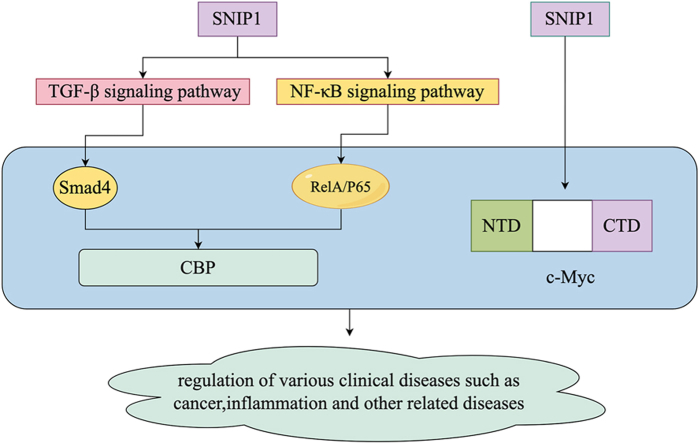
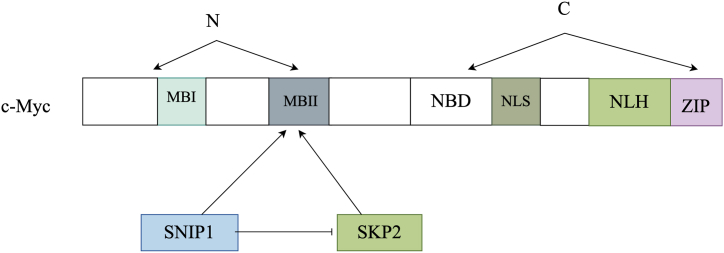
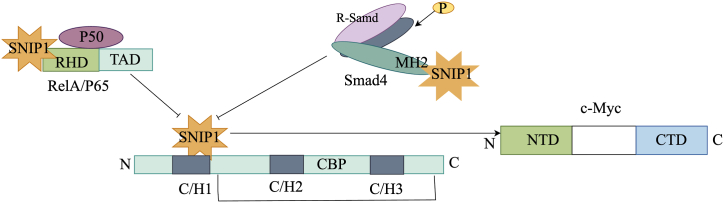
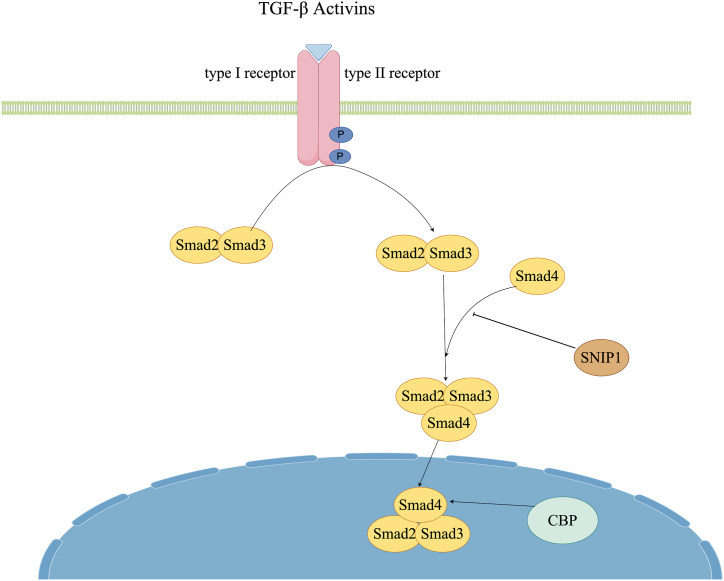
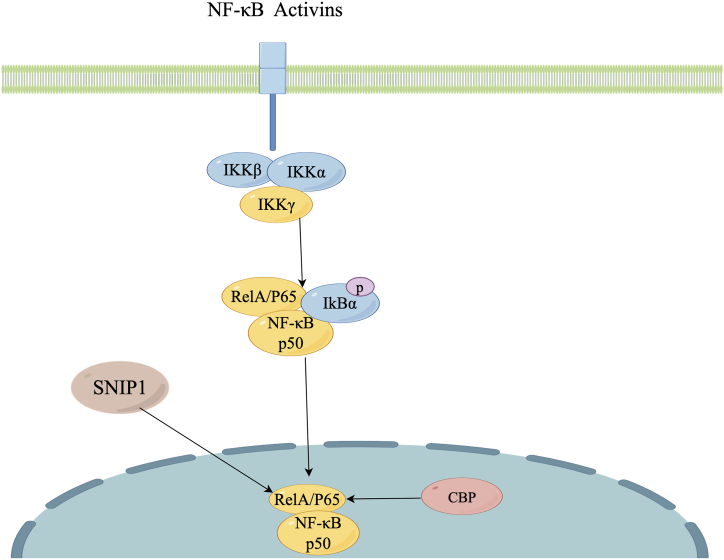
Smad intranuclear binding protein 1 (SNIP1), a highly conserved nuclear protein, functions as a transcriptional regulator and exerts a significant influence on disease progression. In addition, the N-terminal domain of SNIP1 facilitates its interaction with Smad4, a signaling protein associated with the TGF-β family, and RelA/p65, a transcription factor connected to NF-κB. This interaction further enhances the transcriptional activation of c-Myc-dependent genes. Presently, the primary emphasis in research is directed towards targeting the catalytic domain of SNIP1, as it holds promise as a potential therapeutic target for various diseases. While the significance of SNIP1 in pathological mechanisms remains uncertain, this review aims to comprehensively examine the existing literature on the association between SNIP1 and proteins implicated in the regulation of diverse clinical conditions, including cancer, inflammation, and related diseases.
Smad核内结合蛋白1(SNIP1)是一种高度保守的核蛋白,作为转录调节因子发挥作用,并对疾病进展产生重大影响。此外,SNIP1的N端结构域促进其与Smad4(一种与TGF-β家族相关的信号蛋白)和RelA/p65(一种与NF-κB相关的转录因子)相互作用。这种相互作用进一步增强了c-Myc依赖性基因的转录激活。目前,研究的主要重点是靶向SNIP1的催化结构域,因为它有望成为各种疾病的潜在治疗靶点。虽然SNIP1在病理机制中的重要性仍不确定,但本综述旨在全面审视现有文献中关于SNIP1与参与调节多种临床病症(包括癌症、炎症及相关疾病)的蛋白质之间关联的研究。