Department of Nephrology, First Medical Center of Chinese PLA General Hospital, National Key Laboratory of Kidney Diseases, National Clinical Research Center for Kidney Diseases, Military Logistics Research Key Laboratory of Field Disease Treatment, Beijing Key Laboratory of Kidney Disease Research, Beijing, 100853, China.
Sci Rep. 2024 Feb 2;14(1):2785. doi: 10.1038/s41598-024-53270-2.
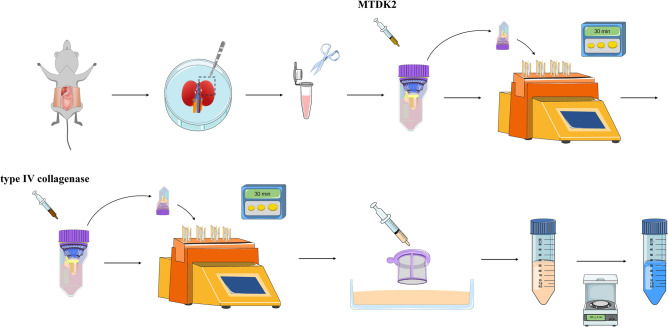
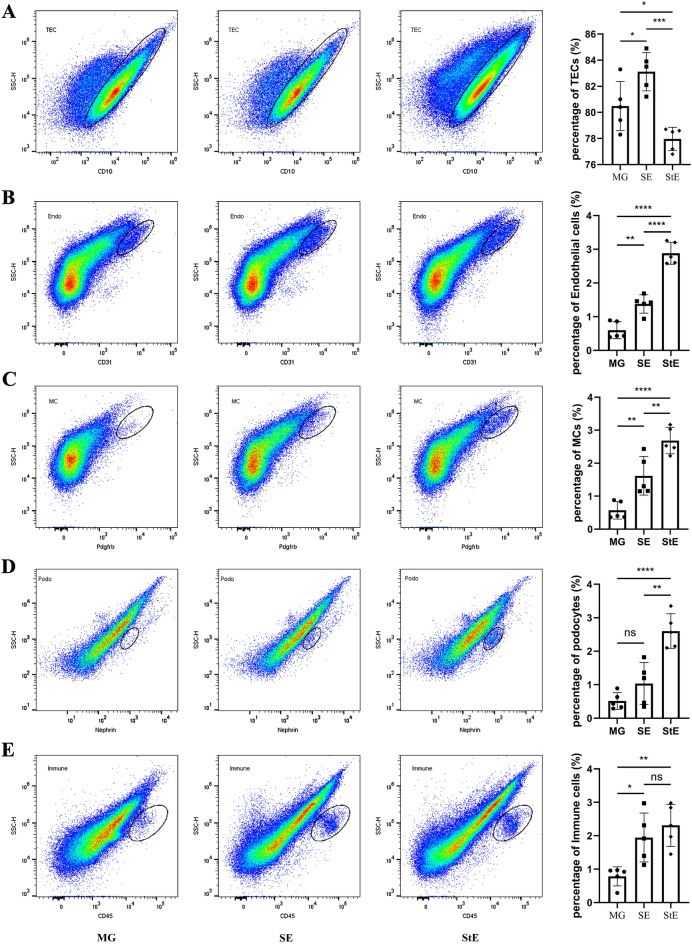
Preparation of kidney tissue single-cell suspensions is the basis of single-cell sequencing, flow cytometry and primary cell culture, but it is difficult to prepare high quality whole kidney single-cell suspensions because of the complex structure of the kidney. We explored a technique called stepwise enzymatic digestion (StE) method for preparing a single-cell suspension of rat whole kidney tissue which contained three main steps. The first step is to cut the kidney into a homogenate. The second step is the digestion of renal tubules using Multi Tissue Dissociation Kit 2 and the last step is the digestion of glomeruli using type IV collagenase. We also compared it with two previous techniques, mechanical grinding method and simple enzymatic digestion method. The StE method had the advantages of high intrinsic glomerular cells and immune cells harvest rate, high singlets rate and high cell viability compared with the other two techniques. In conclusion, the StE method is feasible, highly efficient, and worthy of further research and development.
肾组织单细胞悬液的制备是单细胞测序、流式细胞术和原代细胞培养的基础,但由于肾脏结构复杂,很难制备高质量的全肾单细胞悬液。我们探索了一种称为分步酶消化(StE)的方法,用于制备包含三个主要步骤的大鼠全肾组织单细胞悬液。第一步是将肾脏切成匀浆。第二步是使用多组织解离试剂盒 2 消化肾小管,第三步是使用 IV 型胶原酶消化肾小球。我们还将其与两种先前的技术,机械研磨法和简单酶消化法进行了比较。与其他两种技术相比,StE 法具有内在肾小球细胞和免疫细胞收获率高、单细胞率高和细胞活力高的优点。总之,StE 法是可行的、高效的,值得进一步研究和开发。