ProCURE, Catalan Institute of Oncology, Oncobell, Bellvitge Institute for Biomedical Research (IDIBELL), L'Hospitalet del Llobregat, 08908, Barcelona, Catalonia, Spain.
Genomes for Life - GCAT Lab Group, Institut Germans Trias i Pujol (IGTP), Badalona, 08916, Barcelona, Catalonia, Spain.
Genome Med. 2024 Feb 2;16(1):21. doi: 10.1186/s13073-024-01294-8.
The immune system has a central role in preventing carcinogenesis. Alteration of systemic immune cell levels may increase cancer risk. However, the extent to which common genetic variation influences blood traits and cancer risk remains largely undetermined. Here, we identify pleiotropic variants and predict their underlying molecular and cellular alterations.
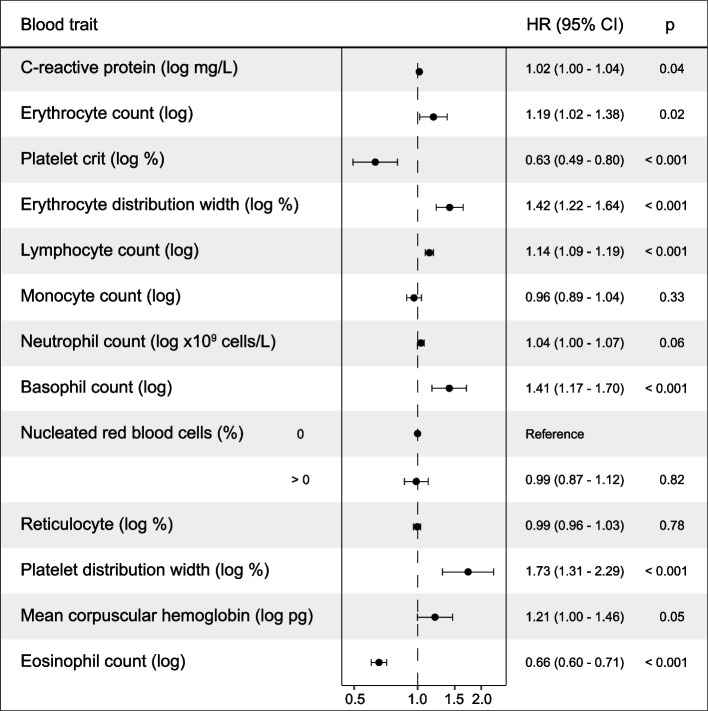
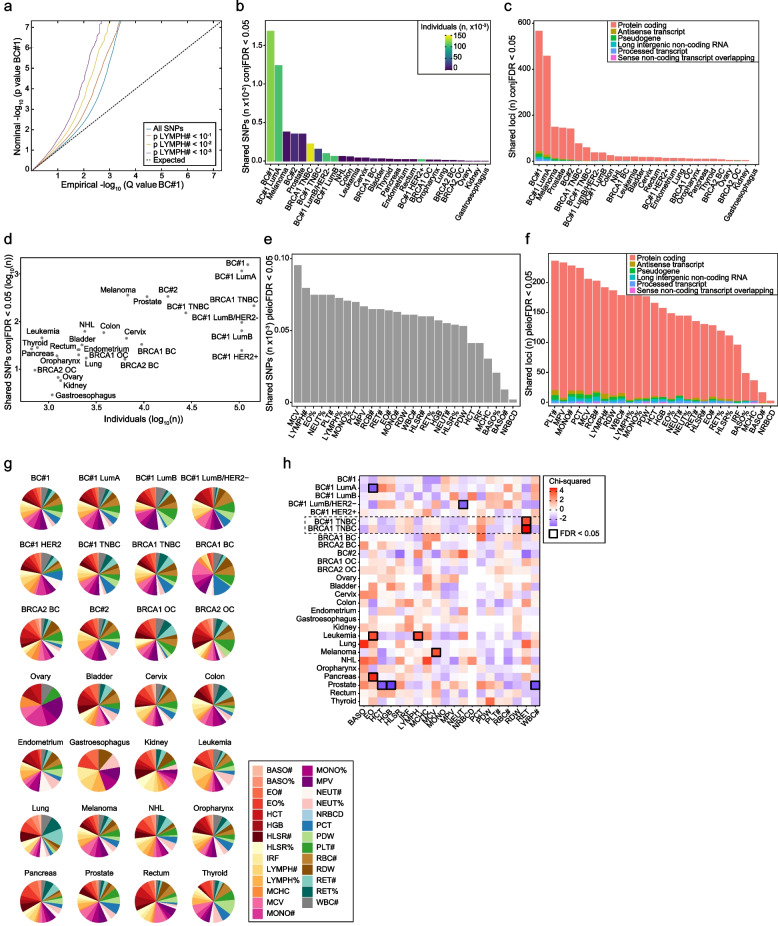
Multivariate Cox regression was used to evaluate associations between blood traits and cancer diagnosis in cases in the UK Biobank. Shared genetic variants were identified from the summary statistics of the genome-wide association studies of 27 blood traits and 27 cancer types and subtypes, applying the conditional/conjunctional false-discovery rate approach. Analysis of genomic positions, expression quantitative trait loci, enhancers, regulatory marks, functionally defined gene sets, and bulk- and single-cell expression profiles predicted the biological impact of pleiotropic variants. Plasma small RNAs were sequenced to assess association with cancer diagnosis.
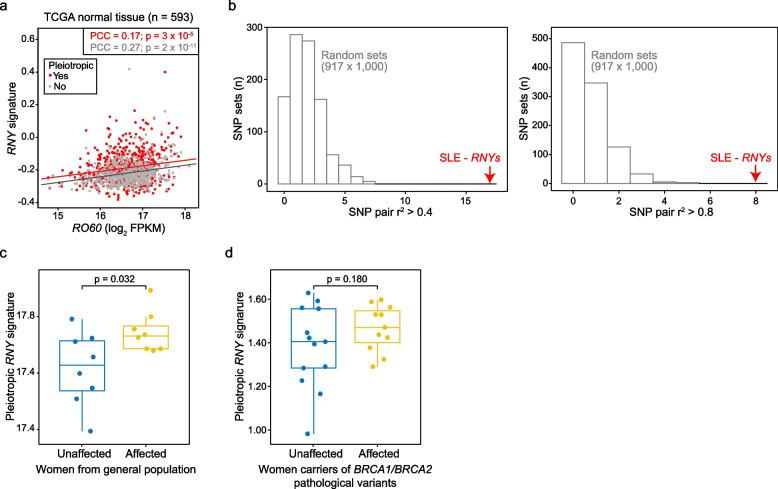
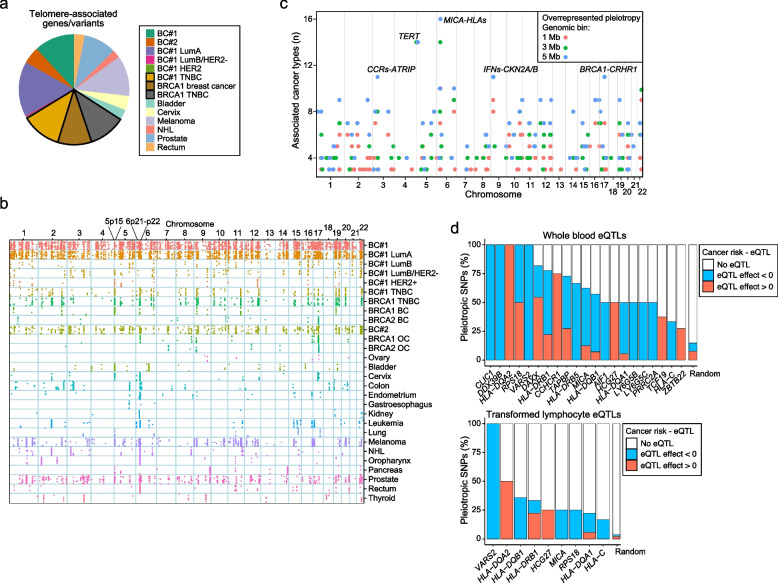
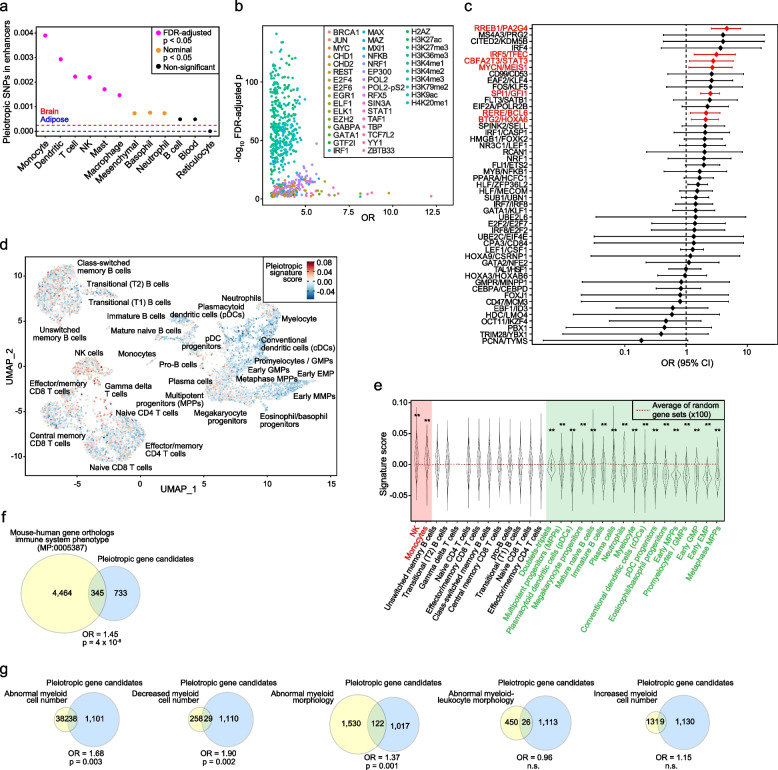
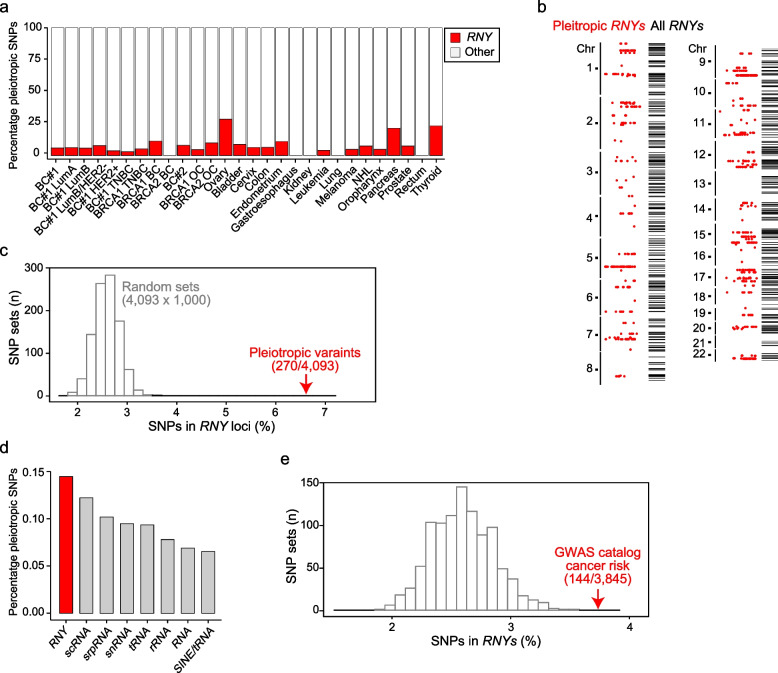
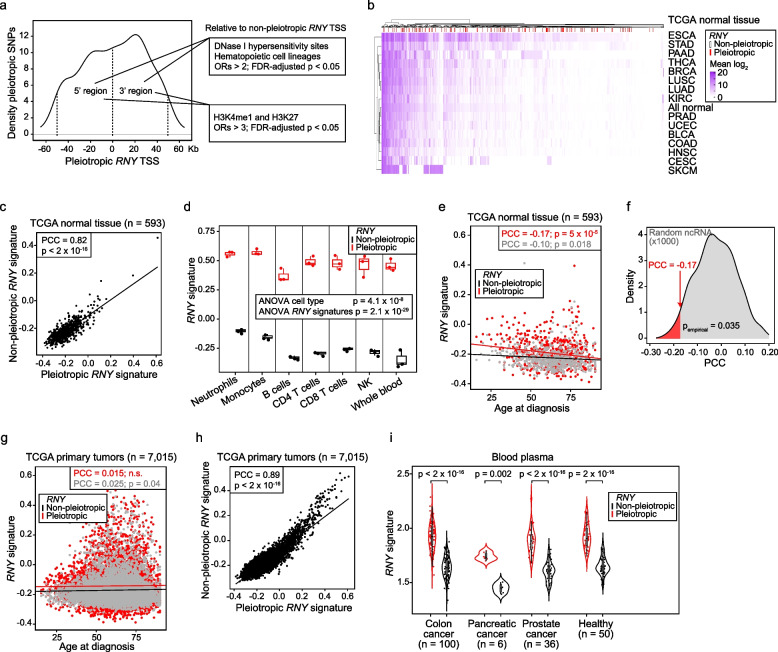
The study identified 4093 common genetic variants, involving 1248 gene loci, that contributed to blood-cancer pleiotropism. Genomic hotspots of pleiotropism include chromosomal regions 5p15-TERT and 6p21-HLA. Genes whose products are involved in regulating telomere length are found to be enriched in pleiotropic variants. Pleiotropic gene candidates are frequently linked to transcriptional programs that regulate hematopoiesis and define progenitor cell states of immune system development. Perturbation of the myeloid lineage is indicated by pleiotropic associations with defined master regulators and cell alterations. Eosinophil count is inversely associated with cancer risk. A high frequency of pleiotropic associations is also centered on the regulation of small noncoding Y-RNAs. Predicted pleiotropic Y-RNAs show specific regulatory marks and are overabundant in the normal tissue and blood of cancer patients. Analysis of plasma small RNAs in women who developed breast cancer indicates there is an overabundance of Y-RNA preceding neoplasm diagnosis.
This study reveals extensive pleiotropism between blood traits and cancer risk. Pleiotropism is linked to factors and processes involved in hematopoietic development and immune system function, including components of the major histocompatibility complexes, and regulators of telomere length and myeloid lineage. Deregulation of Y-RNAs is also associated with pleiotropism. Overexpression of these elements might indicate increased cancer risk.
免疫系统在预防癌症发生方面起着核心作用。全身免疫细胞水平的改变可能会增加癌症风险。然而,常见遗传变异在多大程度上影响血液特征和癌症风险仍在很大程度上尚未确定。在这里,我们鉴定了多效性变异,并预测了它们潜在的分子和细胞改变。
使用多元 Cox 回归评估了英国生物银行中病例的血液特征与癌症诊断之间的关联。从 27 种血液特征和 27 种癌症类型和亚型的全基因组关联研究的汇总统计数据中识别共享遗传变异,应用条件/联合虚假发现率方法。对基因组位置、表达数量性状基因座、增强子、调控标记、功能定义的基因集以及批量和单细胞表达谱进行分析,预测多效性变异的生物学影响。对血浆小 RNA 进行测序以评估与癌症诊断的关联。
研究确定了 4093 个常见遗传变异,涉及 1248 个基因座,这些变异与血液-癌症的多效性有关。多效性热点包括染色体区域 5p15-TERT 和 6p21-HLA。参与调节端粒长度的产物的基因在多效性变异中被发现是富集的。多效性候选基因经常与调节造血和定义免疫系统发育祖细胞状态的转录程序相关联。多效性关联与定义造血谱系的主调控因子和细胞改变有关,表明髓系受到干扰。嗜酸性粒细胞计数与癌症风险呈负相关。多效性关联的高频中心也围绕着小非编码 Y-RNA 的调节。预测的多效性 Y-RNA 显示出特定的调节标记,并且在癌症患者的正常组织和血液中过度丰富。对发生乳腺癌的女性血浆小 RNA 的分析表明,在肿瘤诊断之前存在 Y-RNA 的过度表达。
这项研究揭示了血液特征与癌症风险之间广泛的多效性。多效性与造血发育和免疫系统功能相关的因素和过程有关,包括主要组织相容性复合物的组成部分、端粒长度和髓系谱系的调节剂。Y-RNA 的失调也与多效性有关。这些元素的过度表达可能表明癌症风险增加。