Lehecka B J, Burleson Jordin, Diederich Paige, Salem Morgan, Schoonover Rachel, Tejano Jason
Physical Therapy Wichita State University.
Int J Sports Phys Ther. 2024 Feb 1;19(2):199-205. doi: 10.26603/001c.91640. eCollection 2024.
Low back pain (LBP) is a leading cause of disability. Recurrent low back pain (rLBP) is defined as two or more episodes of LBP in a 12-month period, each lasting more than 24 hours and separated by at least one pain-free month. Many studies have shown that hip and trunk variables have an influence on LBP. However, most of these are studies of participants with acute or chronic LBP rather than rLBP.
To examine the difference between hip and trunk variables of university students with and without rLBP.
Cross-Sectional.
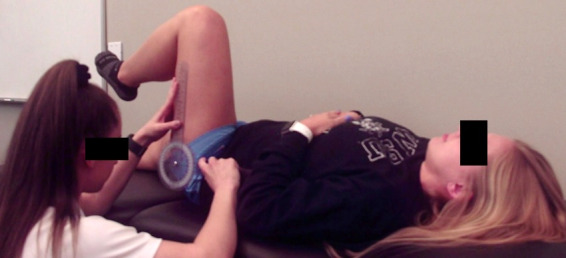
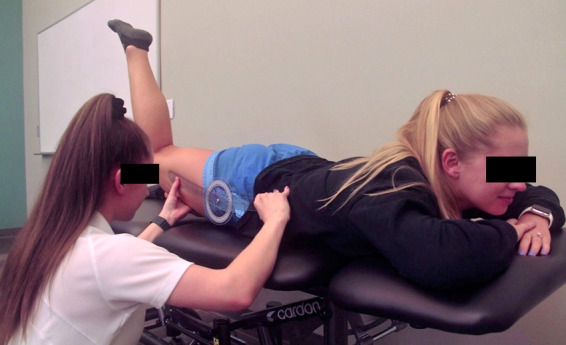
Participants with and without rLBP between 18 and 35 years of age not currently undergoing clinical orthopedic care were recruited for this cross-sectional study. Bilateral hip range of motion (ROM) and trunk ROM were measured with a goniometer or measuring tape (hip motions in all planes along with trunk flexion, extension, and lateral flexion). Strength of the hip extensors, abductors, and external rotators was measured using a handheld dynamometer, and a single-leg bridge endurance test was performed to assess differences and correlations between outcomes.
Twenty-six subjects aged 18 to 35 years with rLBP (n=10) and without rLBP (n=16) participated. Statistically significant differences between the two groups were found for right and left hip flexion (p = 0.029 and 0.039, respectively), right hip adduction (p = 0.043), and right hip extension (p = 0.021). No significant differences were found between groups for strength, endurance, or other ROM measures.
The findings of this study show statistically significant although clinically non-meaningful differences in hip flexion, extension, and adduction ROM in the rLBP group compared to the control group. This lack of clinically meaningful difference may be relevant to testing procedures and treatment of patients or athletes with rLBP. This study also suggests that hip strength and endurance may not play a major role in the development or treatment of rLBP. 3.
腰痛(LBP)是导致残疾的主要原因。复发性腰痛(rLBP)被定义为在12个月内发生两次或更多次腰痛发作,每次发作持续超过24小时,且两次发作之间至少有一个无疼痛的月份。许多研究表明,髋部和躯干变量会对腰痛产生影响。然而,其中大多数是针对急性或慢性腰痛患者而非复发性腰痛患者的研究。
研究有和没有复发性腰痛的大学生在髋部和躯干变量方面的差异。
横断面研究。
招募年龄在18至35岁之间、目前未接受临床骨科治疗的有和没有复发性腰痛的参与者进行这项横断面研究。使用角度计或卷尺测量双侧髋关节活动范围(ROM)和躯干ROM(所有平面的髋关节活动以及躯干的前屈、后伸和侧屈)。使用手持测力计测量髋部伸肌、外展肌和外旋肌的力量,并进行单腿桥接耐力测试以评估结果之间的差异和相关性。
26名年龄在18至35岁之间的有复发性腰痛(n = 10)和无复发性腰痛(n = 16)的受试者参与了研究。两组之间在右、左髋关节屈曲(分别为p = 0.029和0.039)、右髋关节内收(p = 0.043)和右髋关节伸展(p = 0.021)方面存在统计学上的显著差异。在力量、耐力或其他ROM测量方面,两组之间未发现显著差异。
本研究结果表明,与对照组相比,复发性腰痛组在髋关节屈曲、伸展和内收ROM方面存在统计学上的显著差异,尽管在临床上无意义。这种缺乏临床意义的差异可能与复发性腰痛患者或运动员的测试程序和治疗有关。本研究还表明,髋部力量和耐力可能在复发性腰痛的发生或治疗中不起主要作用。 3.