Kim Won-Deuk, Shin DooChul
Department of Physical Therapy, Graduate School of Kyungnam University, Changwon, South Korea.
Department of Physical Therapy, College of Health Sciences, Kyungnam University, Changwon, South Korea.
Med Sci Monit. 2020 Sep 24;26:e925080. doi: 10.12659/MSM.925080.
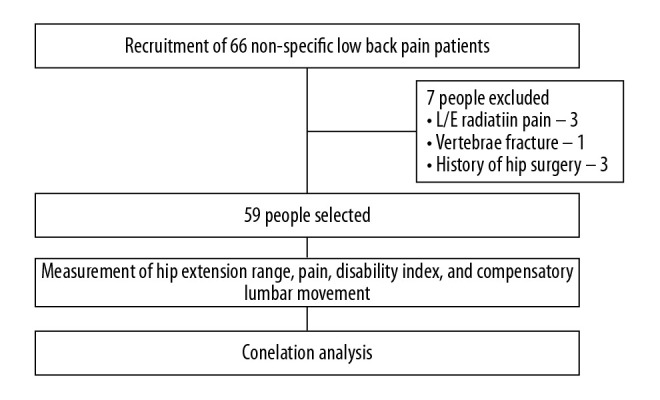
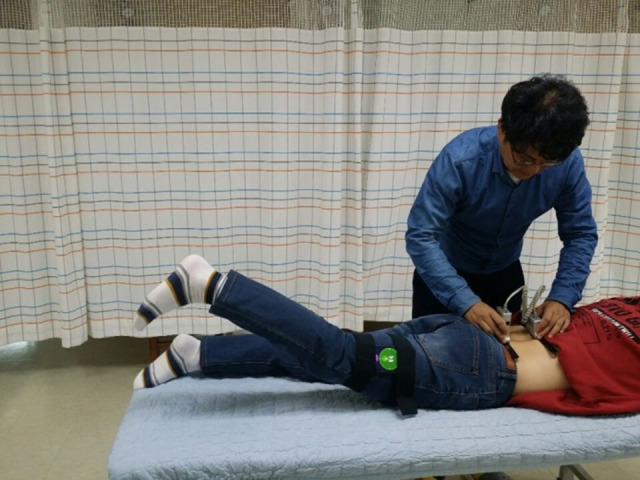
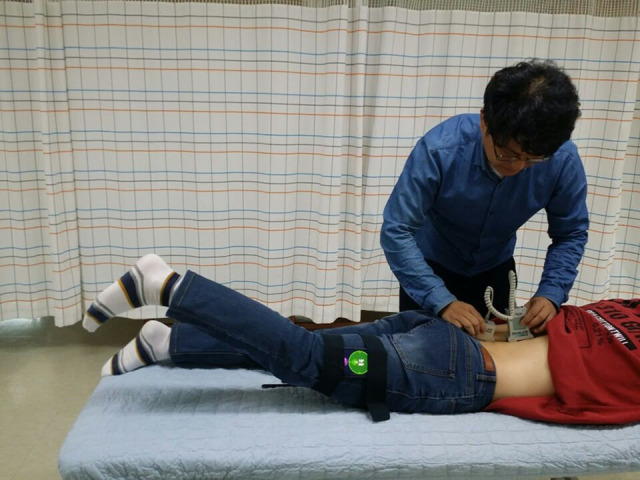
BACKGROUND This study aimed to confirm the correlations among hip extension range of motion, hip extension asymmetry, pain intensity, disability index, and compensatory lumbar movement in patients with nonspecific chronic low back pain. MATERIAL AND METHODS Of 66 patients with nonspecific chronic low back pain and limited hip extension, 59 met the inclusion criteria and were enrolled in the study. Pain intensity, Oswestry Disability Index (ODI), hip range of motion, compensatory lumbar extension, and compensatory lumbar rotation of the subjects were assessed. Pain was measured using a numeric pain rating scale (NPRS), and hip extension range of motion and compensatory lumbar movement were evaluated using a digital dual inclinometer (Dualar IQ, JTech Medical, United States). Correlation analysis was used to analyze the data. RESULTS A strong correlation was observed among hip extension asymmetry, pain intensity, and disability index (P<0.05). However, no correlation was observed among compensatory lumbar rotation and extension, pain intensity, and ODI. A strong correlation also was observed between limited hip extension range of motion and compensatory lumbar rotation (P<0.05) but not between limited hip extension range of motion and compensatory lumbar extension (P>0.05). CONCLUSIONS The results of this study showed that hip extension asymmetry might be a more critical factor than hip extension range of motion. The strong correlation between limited hip extension and compensatory lumbar rotation suggests a risk of micro-trauma due to compensatory lumbar rotation.
背景 本研究旨在确认非特异性慢性下腰痛患者的髋关节伸展活动范围、髋关节伸展不对称性、疼痛强度、残疾指数和代偿性腰椎活动之间的相关性。
材料与方法 66例非特异性慢性下腰痛且髋关节伸展受限的患者中,59例符合纳入标准并纳入本研究。对受试者的疼痛强度、Oswestry残疾指数(ODI)、髋关节活动范围、代偿性腰椎伸展和代偿性腰椎旋转进行评估。使用数字疼痛评分量表(NPRS)测量疼痛,使用数字双倾角仪(Dualar IQ,JTech Medical,美国)评估髋关节伸展活动范围和代偿性腰椎活动。采用相关性分析对数据进行分析。
结果 观察到髋关节伸展不对称性、疼痛强度和残疾指数之间存在强相关性(P<0.05)。然而,未观察到代偿性腰椎旋转和伸展、疼痛强度与ODI之间存在相关性。髋关节伸展活动范围受限与代偿性腰椎旋转之间也存在强相关性(P<0.05),但髋关节伸展活动范围受限与代偿性腰椎伸展之间无相关性(P>0.05)。
结论 本研究结果表明,髋关节伸展不对称性可能比髋关节伸展活动范围更关键。髋关节伸展受限与代偿性腰椎旋转之间的强相关性提示存在因代偿性腰椎旋转导致微创伤的风险。