Wang Pingxi, Li Min, Ma Xingye, Zhao Bin, Jin Xining, Zhang Huaisheng, Chen Shilin, Wu Xiangyuan, Zhang Xiaoxiang
State Key Laboratory of Wheat-Maize Double Cropping and High-Efficiency Production, School of Agriculture, Henan Institute of Science and Technology, Xinxiang 453003, China.
Plants (Basel). 2025 Jun 16;14(12):1853. doi: 10.3390/plants14121853.
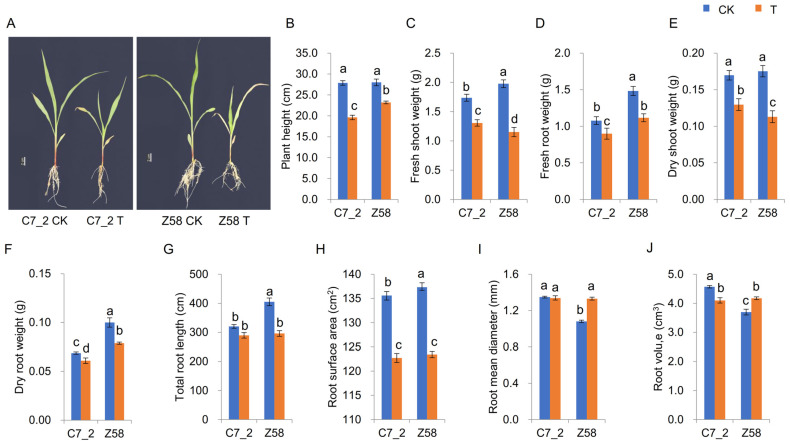
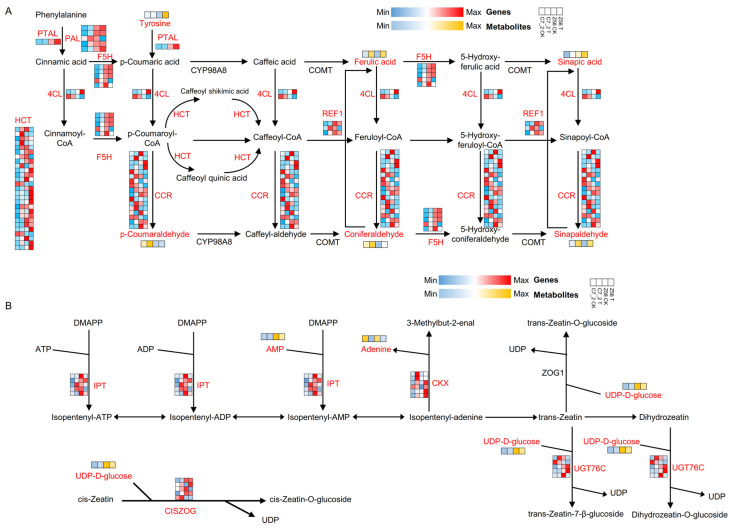
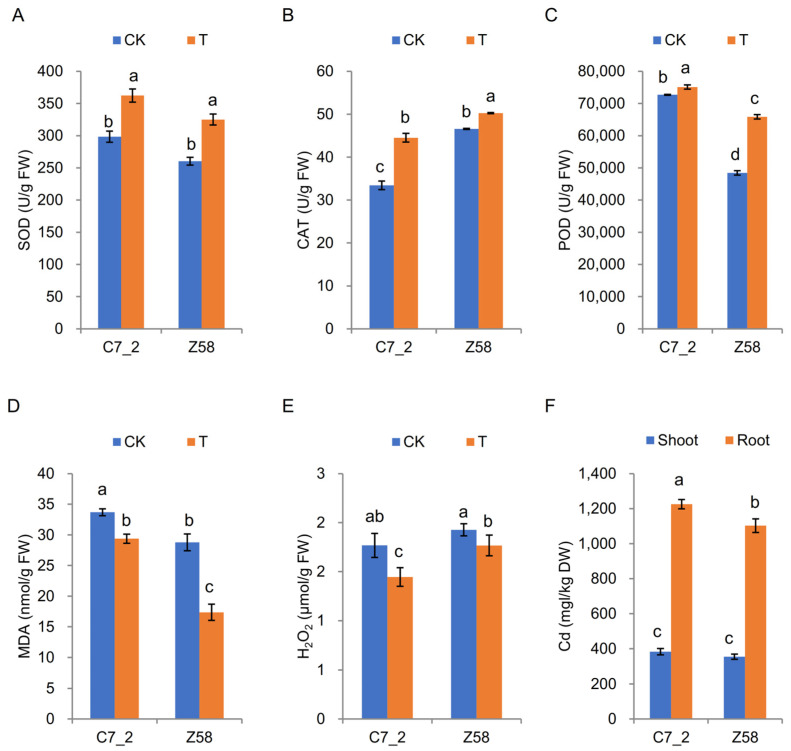
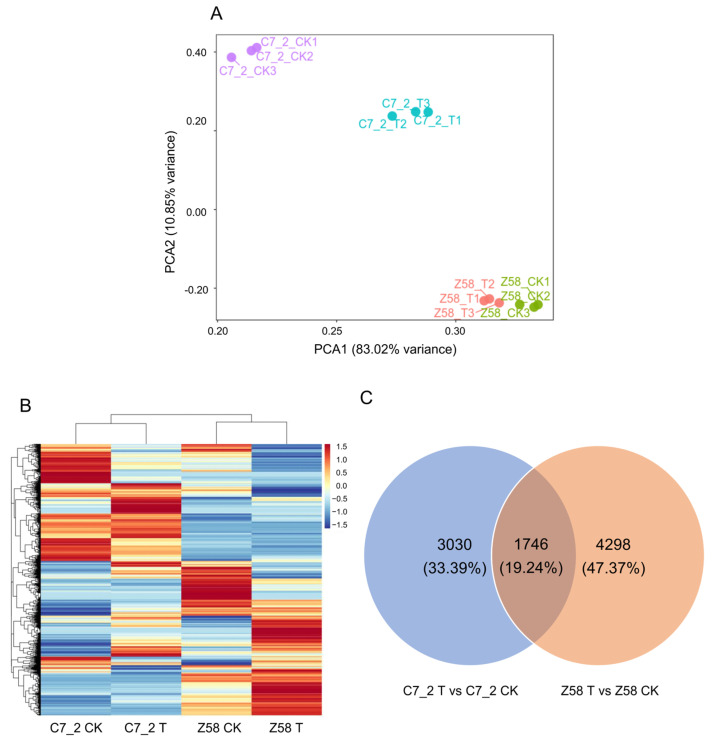
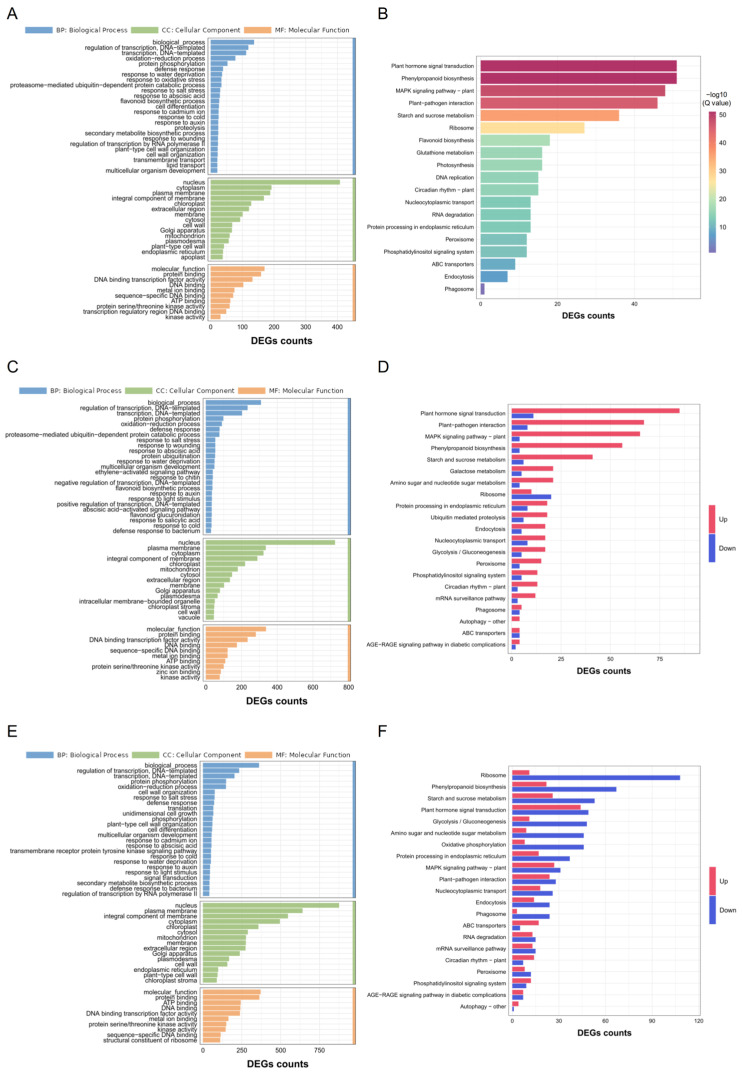
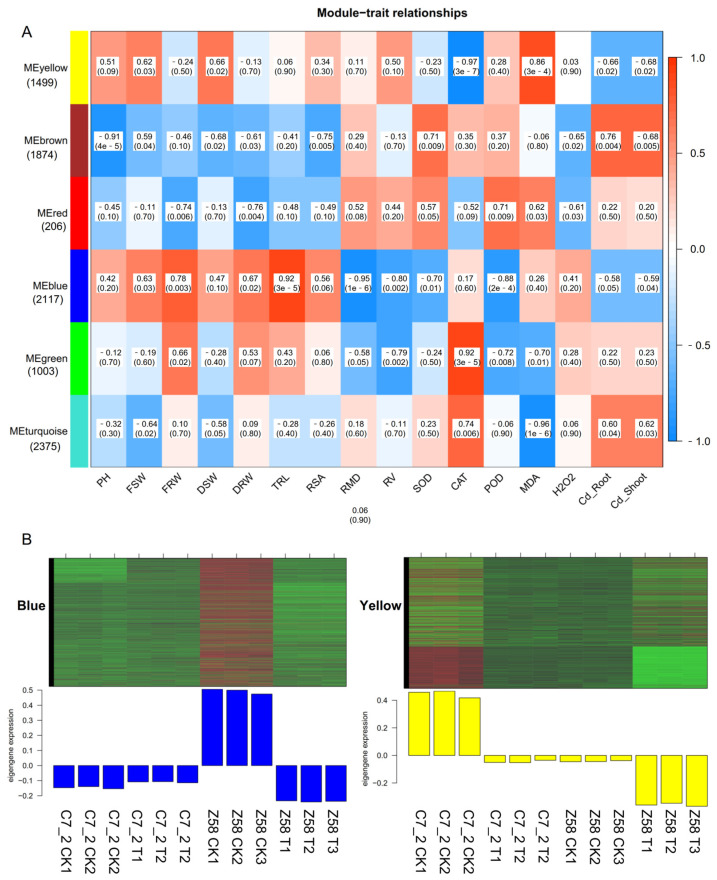
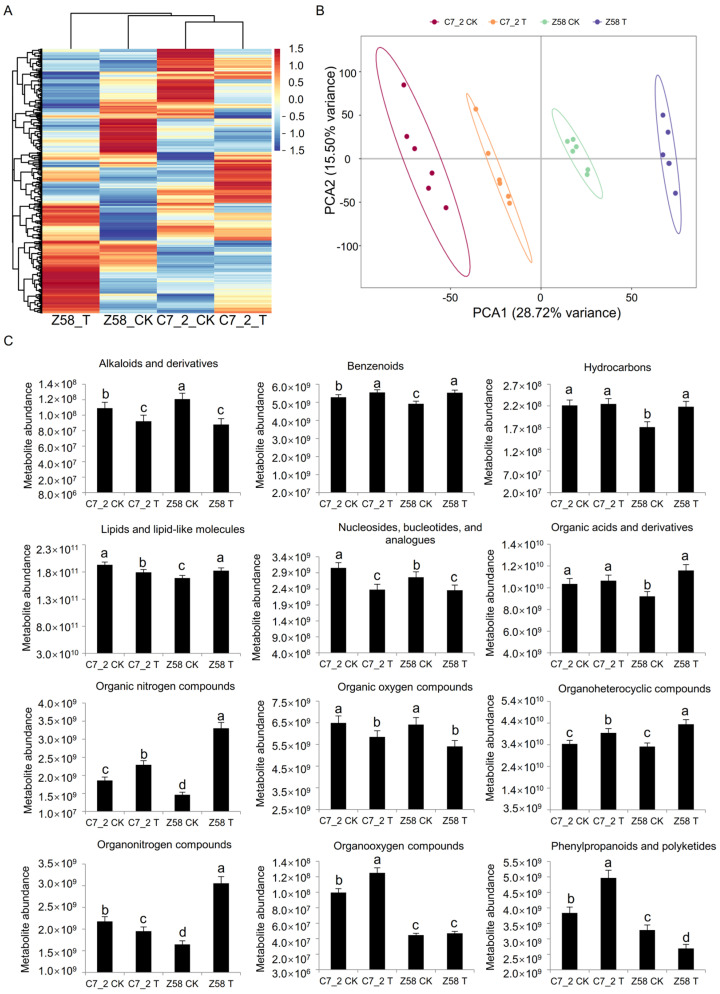
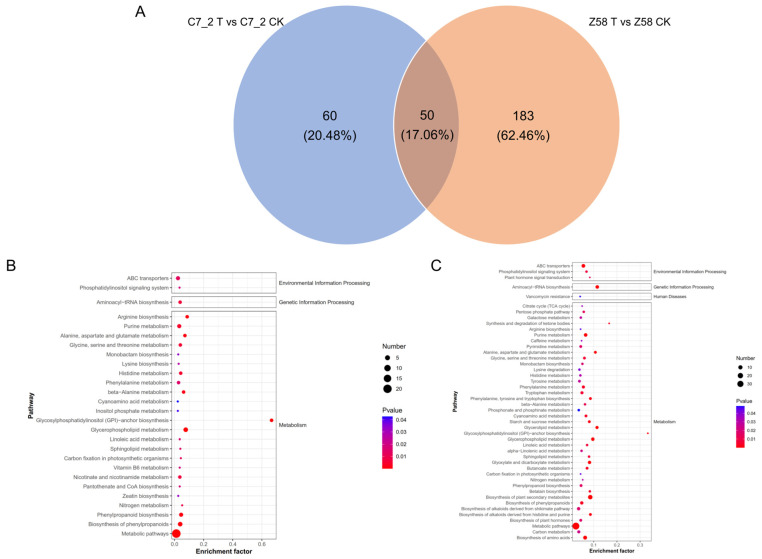
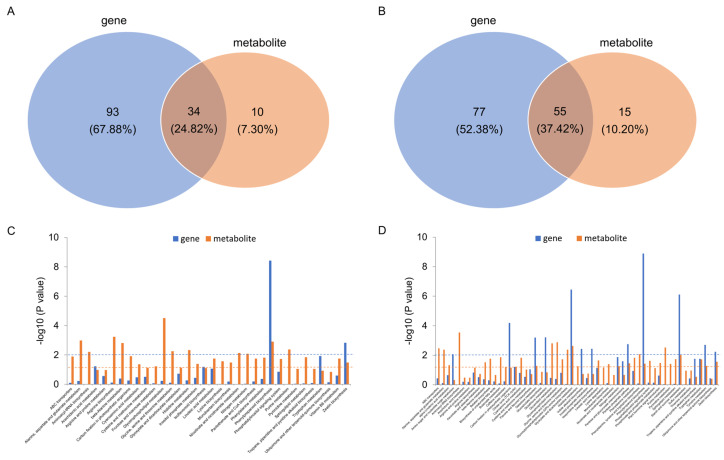
Cadmium (Cd) significantly influences the morphological, physiological traits, and transport capacity of plants, but the underlying mechanism of Cd stress still remains to be further studied. In this study, physiological, transcriptomic, and metabolomic analyses were conducted to examine the morphological and physiological traits of two elite maize inbred lines, Chang7_2 (C7_2, a Cd-resistant line) and Zheng58 (Z58, a Cd-sensitive line) under control and Cd stress conditions. The results of morphological traits indicated that C7_2 reduced by 9.50-29.60% under Cd stress, whereas Z58 displayed more pronounced morphological changes ranging from 10.12 to 41.72% under Cd stress. Physiological assessments revealed that C7_2 maintained relatively stable antioxidant enzyme activity, while Z58 demonstrated more rapid alterations in the antioxidant system under Cd stress. Transcriptomic analysis identified 3030 differentially expressed genes (DEGs) unique to C7_2 and 4298 DEGs unique to Z58, with 1746 common DEGs shared between the two lines. Functional annotation revealed that the unique DEGs in C7_2 were mainly enriched in plant hormone signal transduction, plant-pathogen interactions, and the MAPK signaling pathway, while the unique DEGs in Z58 were mainly enriched in ribosome-related functions, plant hormone signal transduction, and phenylpropanoid biosynthesis. Metabolomic analysis identified 12 superclasses encompassing 896 metabolites in C7_2 and Z58, primarily including lipids and lipid-like molecules, organic acids and derivatives, as well as organoheterocyclic compounds. Analysis of differentially accumulated metabolites (DAMs) revealed fewer DAMs were accumulated in C7_2 under Cd stress. Further analysis identified that the three pathways of GPI anchor biosynthesis, glycerophospholipid metabolism, and purine metabolism were among the top 10 metabolic pathways in C7_2 and Z58. The integrative analysis highlighted the crucial roles of phenylpropanoid biosynthesis and zeatin biosynthesis in C7_2 for resistance to Cd stress. This study provides novel insights into the molecular and metabolic pathways underlying Cd tolerance in maize by integrating transcriptomic and metabolomic analyses of two contrasting inbred lines, providing a theoretical foundation for the future breeding of Cd-tolerant varieties.
镉(Cd)对植物的形态、生理特性及转运能力有显著影响,但镉胁迫的潜在机制仍有待进一步研究。本研究通过生理、转录组和代谢组分析,考察了两个优良玉米自交系昌7_2(C7_2,耐镉系)和郑58(Z58,镉敏感系)在对照和镉胁迫条件下的形态和生理特性。形态性状结果表明,镉胁迫下C7_2降低了9.50 - 29.60%,而Z58在镉胁迫下表现出更明显的形态变化,降幅为10.12%至41.72%。生理评估显示,C7_2保持相对稳定的抗氧化酶活性,而Z58在镉胁迫下抗氧化系统变化更快。转录组分析鉴定出C7_2特有的3030个差异表达基因(DEG)和Z58特有的4298个DEG,两系共有1746个共同的DEG。功能注释表明,C7_2中的特有DEG主要富集在植物激素信号转导、植物 - 病原体相互作用和MAPK信号通路,而Z58中的特有DEG主要富集在核糖体相关功能、植物激素信号转导和苯丙烷生物合成。代谢组分析鉴定出C7_2和Z58中包含896种代谢物的12个超类,主要包括脂质和类脂分子、有机酸及其衍生物以及有机杂环化合物。差异积累代谢物(DAM)分析表明,镉胁迫下C7_2中积累的DAM较少。进一步分析确定,糖基磷脂酰肌醇(GPI)锚生物合成、甘油磷脂代谢和嘌呤代谢这三条途径在C7_2和Z58的前10大代谢途径中。综合分析突出了苯丙烷生物合成和玉米素生物合成在C7_2耐镉胁迫中的关键作用。本研究通过对两个对比自交系进行转录组和代谢组分析,为玉米耐镉性的分子和代谢途径提供了新见解,为未来耐镉品种的培育提供了理论基础。