Department of Neurology, Headache Unit, Hospital Clínico Universitario de Valladolid, Hospital Clínico Universitario de Valladolid, Rondilla Santa Teresa Streat S/N, Edificio Rondilla, 47010, Valladolid, Spain.
Department of Medicine, Faculty of Medicine, Universidad de Valladolid, Hospital Clínico Universitario de Valladolid, Rondilla Santa Teresa Streat S/N, Edificio Rondilla, 47010, Valladolid, Spain.
J Headache Pain. 2024 Feb 8;25(1):18. doi: 10.1186/s10194-024-01728-z.
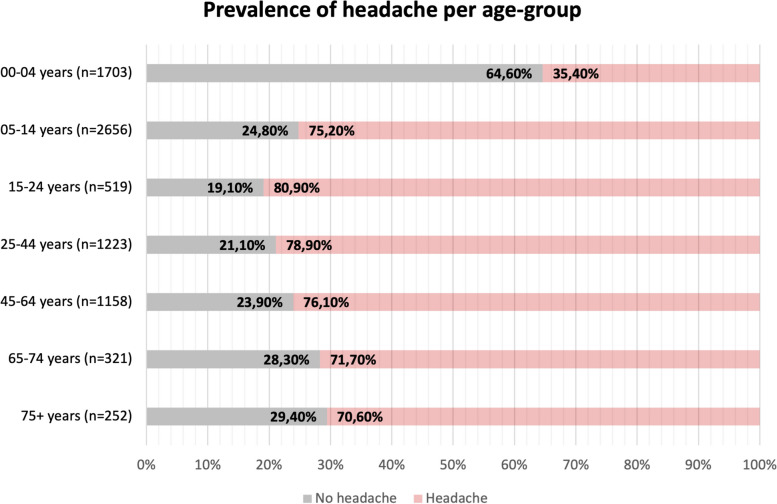
Headache is a common symptom of influenza infection; however, its causes and consequences remain uncertain. In this manuscript, we analyzed which demographic and clinical factors were associated with the presence of headache during the course of influenza infection and whether patients with headache had a different prognosis, evaluated by need of hospitalization, sick leave or school absenteeism. The influence study (NCT05704335) was an observational study that analyzed data routinely collected from the Health Sentinel Network between 2010 and 2020. During the study period, 7832 cases were considered, among which, 5275 (67.4%) reported headache. The presence of headache was independently associated with myalgia (2.753; 95%CI: 2.456-3.087, P < 0.001), asthenia (OR: 1.958; 95%CI: 1.732-2.214, P < 0.001), shivering (OR: 1.925; 95%CI: 1.718-2.156, P < 0.001), nasopharyngeal erythema (OR: 1.505; 95%CI: 1.293-1.753, P < 0.001), fever (OR: 1.469; 95%CI: 1.159-1.861; P = 0.001), sudden onset of symptoms (OR: 1.380; 95%CI: 1.120-1.702, p = 0.004), female sex (OR: 1.134; 95%CI: 1.023-1.257, P = 0.018), and gastrointestinal symptoms (OR: 1.169; 95%CI: 1.039-1.315; P = 0.01). Patients with headache had a sex and age adjusted lower odds of being referred to the hospital (OR: 0.463; 95%CI: 0.264-0.812, P = 0.007) and a higher odd of having a sick leave and/or school absenteeism (absenteeism (OR: 1.342; 95%CI: 1.190-1.514, P < 0.001). In conclusion, the presence of headache seems associated with symptoms caused by the innate immune response. These findings support a headache pathophysiology linked with the innate immune response. Due to the potential negative consequences and its treatable nature, clinicians should systematically evaluate it and, whenever necessary, treat it too.
头痛是流感感染的常见症状;然而,其病因和后果仍不确定。在本手稿中,我们分析了哪些人口统计学和临床因素与流感感染过程中头痛的存在有关,以及头痛患者的预后是否不同,通过住院、病假或缺课来评估。该观察性研究(NCT05704335)分析了 2010 年至 2020 年期间卫生监测网络常规收集的数据。在研究期间,共考虑了 7832 例病例,其中 5275 例(67.4%)报告有头痛。头痛的存在与肌痛(2.753;95%CI:2.456-3.087,P<0.001)、乏力(OR:1.958;95%CI:1.732-2.214,P<0.001)、寒战(OR:1.925;95%CI:1.718-2.156,P<0.001)、鼻咽部红斑(OR:1.505;95%CI:1.293-1.753,P<0.001)、发热(OR:1.469;95%CI:1.159-1.861;P=0.001)、症状突然发作(OR:1.380;95%CI:1.120-1.702,p=0.004)、女性(OR:1.134;95%CI:1.023-1.257,P=0.018)和胃肠道症状(OR:1.169;95%CI:1.039-1.315;P=0.01)有关。有头痛的患者住院的调整后比值比(OR:0.463;95%CI:0.264-0.812,P=0.007)较低,病假和/或缺课的可能性较高(缺勤(OR:1.342;95%CI:1.190-1.514,P<0.001)。总之,头痛的存在似乎与固有免疫反应引起的症状有关。这些发现支持与固有免疫反应相关的头痛发病机制。由于潜在的负面后果及其可治疗性,临床医生应系统地评估头痛,并在必要时进行治疗。