Laboratory of Analytical Biochemistry, Institute of Food Technology and Nutrition, College of Natural Sciences, Rzeszow University, Zelwerowicza Street 4, 35-601 Rzeszow, Poland.
Int J Mol Sci. 2024 Jan 26;25(3):1529. doi: 10.3390/ijms25031529.
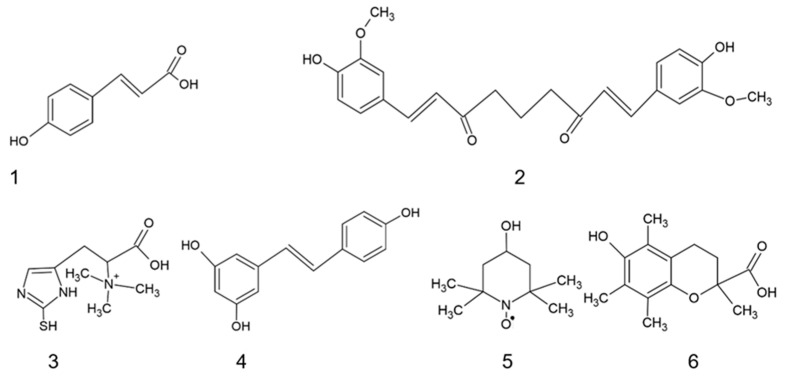
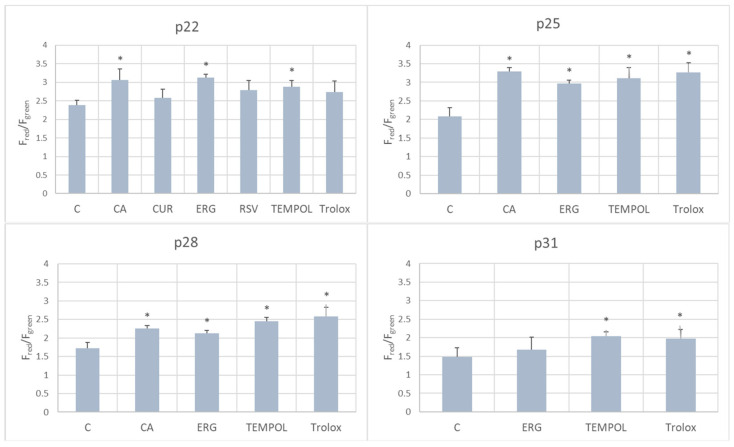
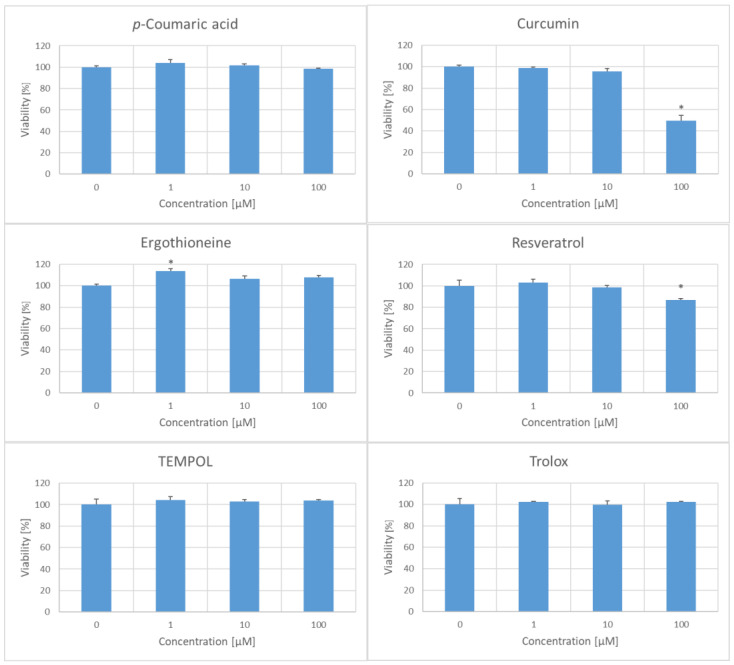
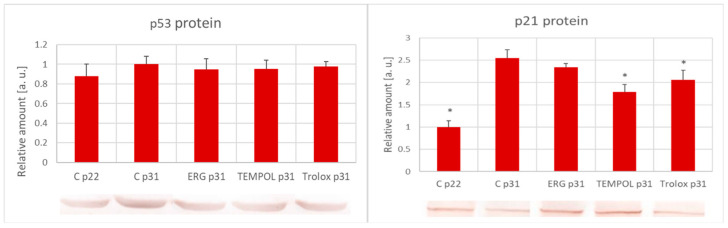
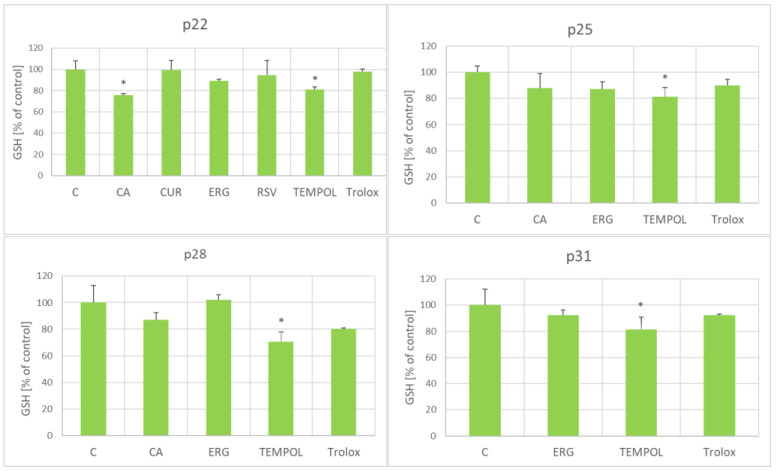
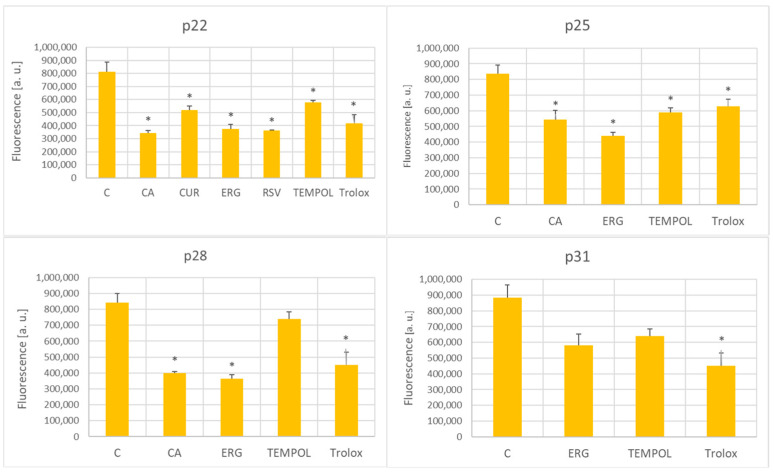
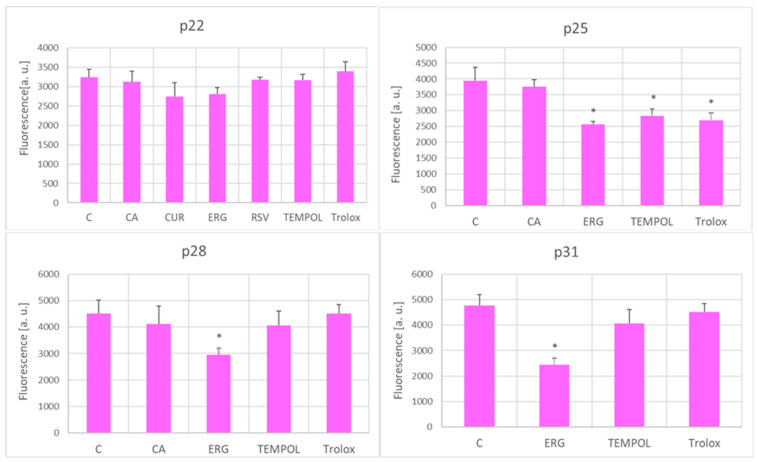
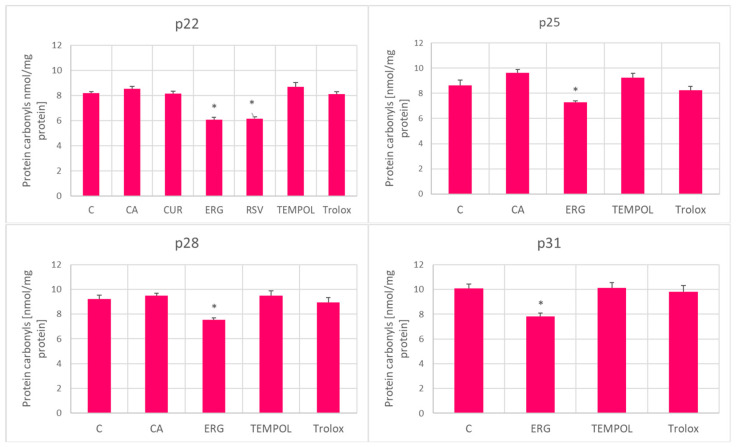
The modification of the replicative lifespan (RLS) of fibroblasts is of interest both from a knowledge point of view and for the attenuation of skin aging. The effect of six antioxidants at a concentration of 1 μM on the replicative lifespan of human dermal fibroblasts was studied. The nitroxide 4-hydroxy-TEMPO (TEMPOL), ergothioneine, and Trolox extended the replicative lifespan (RLS) (40 ± 1 population doublings (PD)) by 7 ± 2, 4 ± 1, and 3 ± 1 PD and lowered the expression of p21 at late passages. Coumaric acid, curcumin and resveratrol did not affect the RLS . The level of reactive oxygen species (ROS) was decreased or not affected by the antioxidants although TEMPOL and coumaric acid decreased the level of glutathione. Only ergothioneine and resveratrol decreased the level of protein carbonylation. The antioxidants that could prolong the RLS elevated the mitochondrial membrane potential. Protecting the activity of mitochondria seems to be important for maintaining the replicative capacity of fibroblasts.
研究了 6 种抗氧化剂在 1μM 浓度下对人真皮成纤维细胞复制寿命(RLS)的影响。氮氧化物 4-羟基-TEMPO(TEMPOL)、麦角硫因和 Trolox 将复制寿命(RLS)延长了 7±2、4±1 和 3±1 PD,并降低了晚期传代中 p21 的表达。香豆酸、姜黄素和白藜芦醇对 RLS 没有影响。尽管 TEMPOL 和香豆酸降低了谷胱甘肽水平,但抗氧化剂并没有降低活性氧(ROS)的水平。只有麦角硫因和白藜芦醇降低了蛋白质羰基化水平。能够延长 RLS 的抗氧化剂提高了线粒体膜电位。保护线粒体的活性对于维持成纤维细胞的复制能力似乎很重要。