F. M. Kirby Neurobiology Center and Department of Neurology, Boston Children's Hospital, Boston, MA, USA.
Department of Neurobiology, Harvard Medical School, Boston, MA, USA.
Nat Commun. 2024 Feb 12;15(1):1289. doi: 10.1038/s41467-024-45729-7.
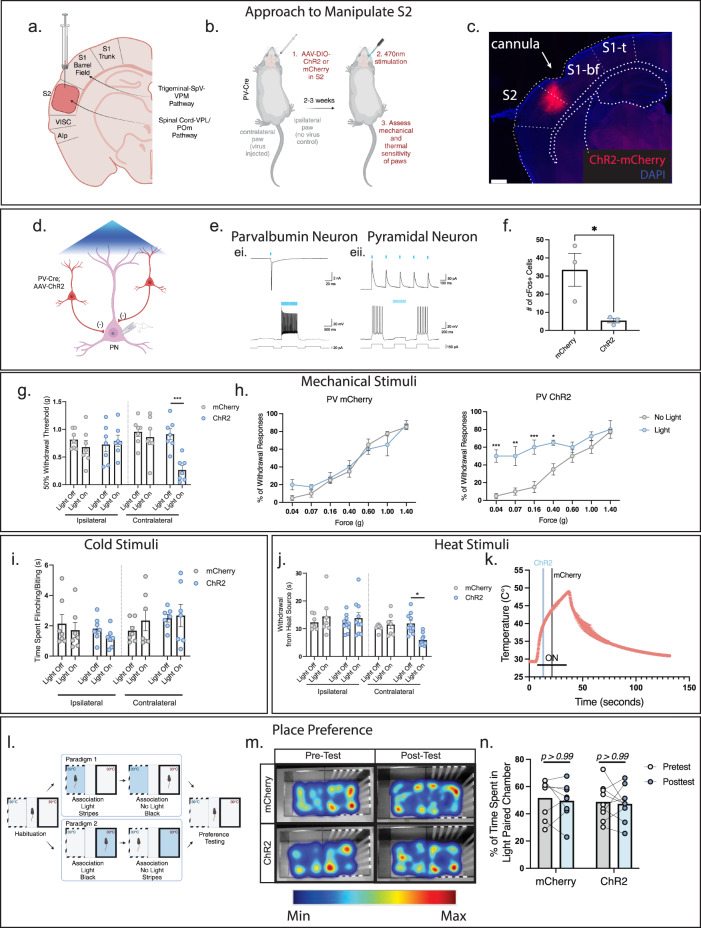
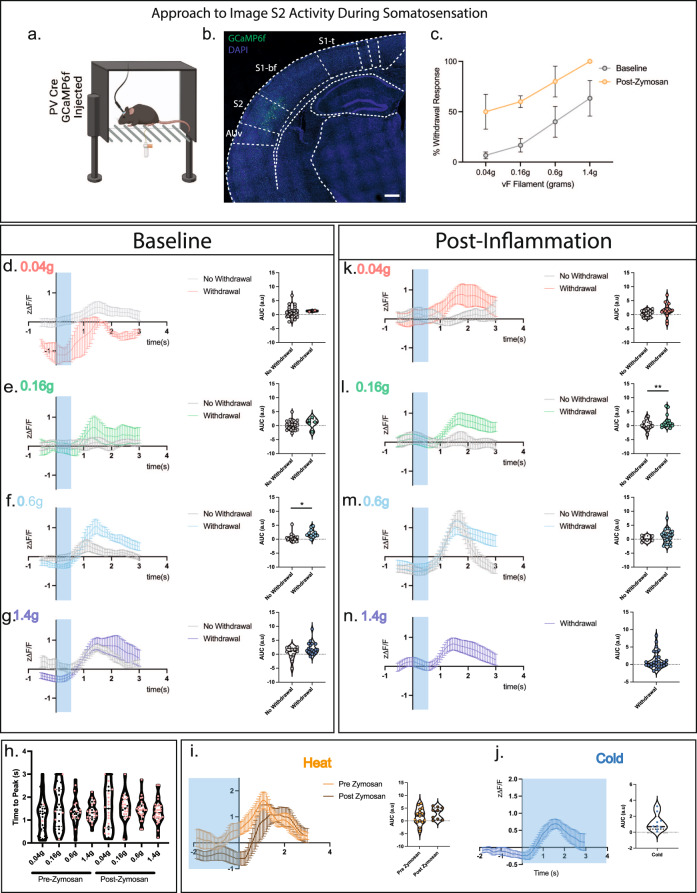
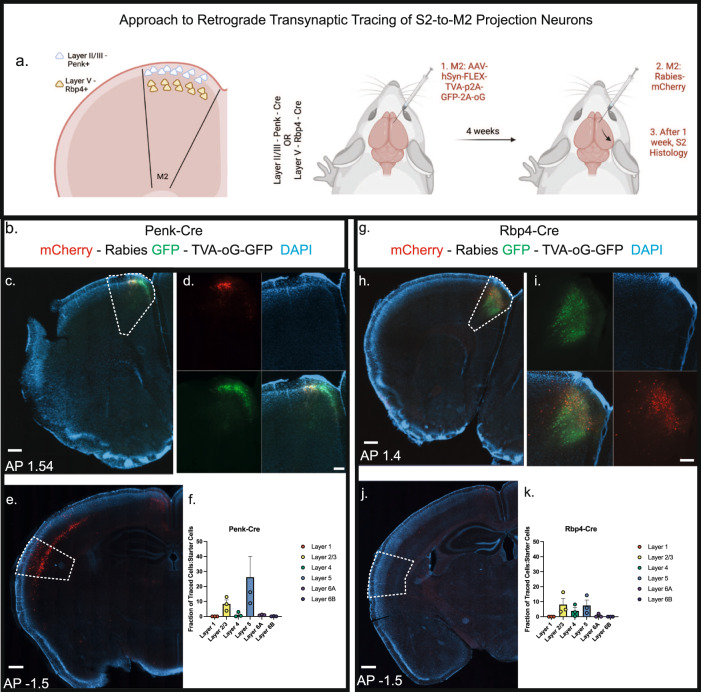
The cerebral cortex is vital for the processing and perception of sensory stimuli. In the somatosensory axis, information is received primarily by two distinct regions, the primary (S1) and secondary (S2) somatosensory cortices. Top-down circuits stemming from S1 can modulate mechanical and cooling but not heat stimuli such that circuit inhibition causes blunted perception. This suggests that responsiveness to particular somatosensory stimuli occurs in a modality specific fashion and we sought to determine additional cortical substrates. In this work, we identify in a mouse model that inhibition of S2 output increases mechanical and heat, but not cooling sensitivity, in contrast to S1. Combining 2-photon anatomical reconstruction with chemogenetic inhibition of specific S2 circuits, we discover that S2 projections to the secondary motor cortex (M2) govern mechanical and heat sensitivity without affecting motor performance or anxiety. Taken together, we show that S2 is an essential cortical structure that governs mechanical and heat sensitivity.
大脑皮层对于感觉刺激的处理和感知至关重要。在躯体感觉轴中,信息主要由两个不同的区域接收,即初级(S1)和次级(S2)躯体感觉皮层。来自 S1 的自上而下的回路可以调节机械和冷却刺激,但不能调节热刺激,因此回路抑制会导致感觉迟钝。这表明对特定躯体感觉刺激的反应是以特定方式发生的,我们试图确定其他皮质底物。在这项工作中,我们在小鼠模型中发现,抑制 S2 的输出会增加机械和热刺激的敏感性,但不会增加冷刺激的敏感性,而 S1 则相反。结合双光子解剖重建和特定 S2 回路的化学遗传抑制,我们发现 S2 投射到次级运动皮层(M2)会调节机械和热刺激的敏感性,而不会影响运动表现或焦虑。综上所述,我们表明 S2 是一个重要的皮质结构,它调节着机械和热刺激的敏感性。