Magerøy Malin Rosell, Macrae Carl, Braut Geir Sverre, Wiig Siri
SHARE - Centre for Resilience in Healthcare, Faculty of Health Science, University of Stavanger, Stavanger, Norway.
Centre for Health, Innovation, Leadership and Learning, Nottingham University Business School, Nottingham, United Kingdom.
Front Health Serv. 2024 Jan 29;4:1275743. doi: 10.3389/frhs.2024.1275743. eCollection 2024.
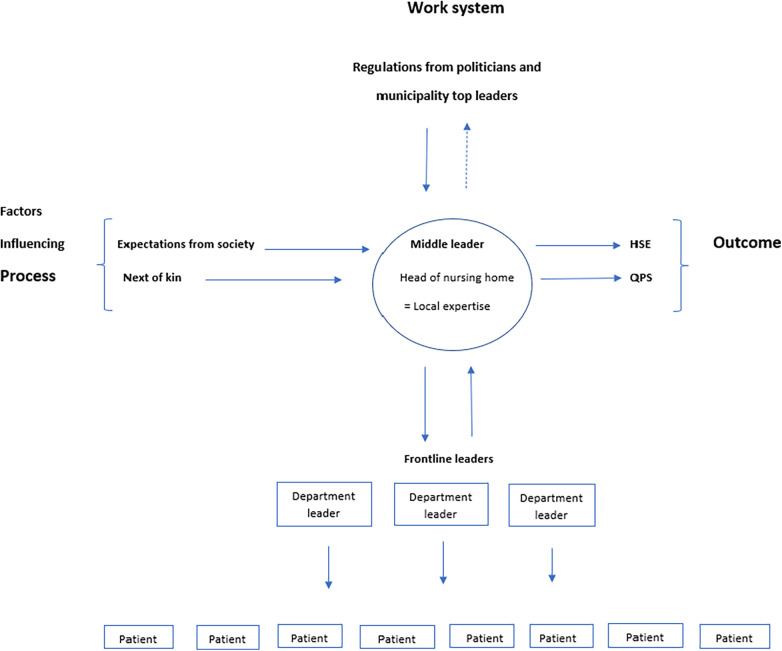
Within healthcare, the role of leader is becoming more complex, and healthcare leaders carry an increasing responsibility for the performance of employees, the experience and safety of patients and the quality of care provision. This study aimed to explore how leaders of nursing homes manage the dual responsibility of both Health, Safety and Environment (HSE) and Quality and Patient Safety (QPS), focusing particularly on the approaches leaders take and the dilemmas they face. In addition, we wanted to examine how leaders experience and manage the challenges of HSE and QPS in a holistic way.
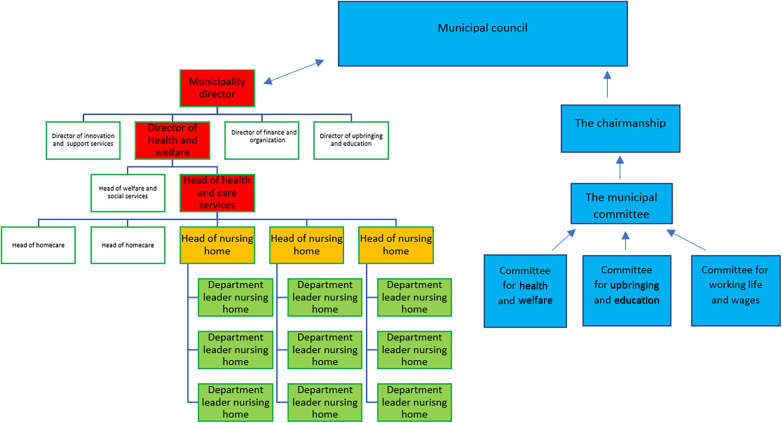
DESIGN/SETTING: The study was designed as a case study. Data were collected through semi structured individual interviews with leaders of nursing homes in five Norwegian municipalities.
13 leaders of nursing homes in urban and rural municipalities participated in this study.
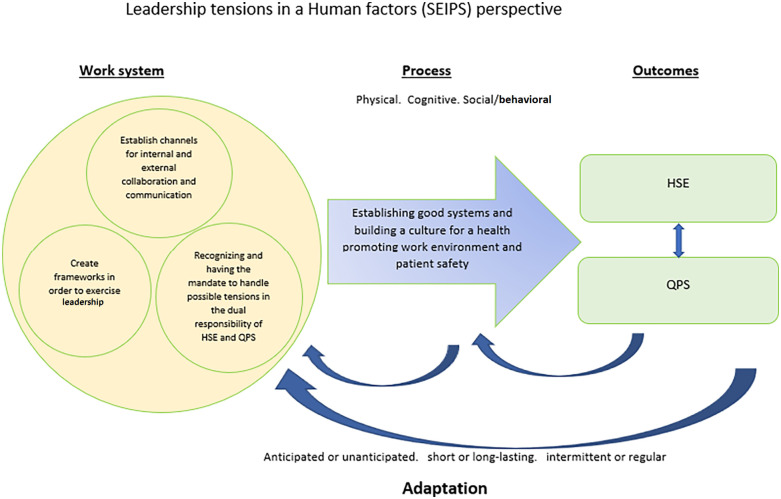
Data analysis resulted in four themes explaining how leaders of nursing homes manage the dual responsibility of HSE and QPS, and the approaches they take and the dilemmas they face: 1.Establishing good systems and building a culture for a work environment that promotes health and patient safety.2.Establish channels for internal and external collaboration and communication.3.Establish room for maneuver to exercise leadership.4.Recognizing and having the mandate to handle possible tensions in the dual responsibility of HSE and QPS.
The study showed that leaders of nursing homes who are responsible for ensuring quality and safety for both patients and staff, experience tensions in handling this dual responsibility. They acknowledged the importance of having time to be present as a leader, to have robust systems to maintain HSE and QPS, and that conflicting aspects of legislation are an everyday challenge.
在医疗保健领域,领导者的角色正变得愈发复杂,医疗保健领导者对员工绩效、患者体验与安全以及护理质量承担着越来越大的责任。本研究旨在探讨养老院领导者如何管理健康、安全与环境(HSE)以及质量与患者安全(QPS)这两项双重责任,尤其关注领导者所采取的方法以及他们所面临的困境。此外,我们还想研究领导者如何从整体上体验和应对HSE和QPS方面的挑战。
设计/背景:本研究设计为案例研究。通过对挪威五个市镇的养老院领导者进行半结构化个人访谈来收集数据。
来自城乡市镇的13位养老院领导者参与了本研究。
数据分析得出四个主题,解释了养老院领导者如何管理HSE和QPS的双重责任,以及他们所采取的方法和面临的困境:1.建立良好的体系并营造促进健康和患者安全的工作环境文化。2.建立内部和外部协作与沟通的渠道。3.建立发挥领导作用的回旋空间。4.认识到并有权处理HSE和QPS双重责任中可能存在的紧张关系。
该研究表明,负责确保患者和员工质量与安全的养老院领导者在处理这一双重责任时会面临紧张局面。他们承认作为领导者有时间在场、拥有强大的体系来维护HSE和QPS的重要性,并且立法中相互冲突的方面是日常面临的挑战。