Sidharthan Saanu, Ramanarayanan Venkitachalam, Karuveettil Vineetha, Ravindran Greeshma C
Department of Community Medicine and Public Health, Amrita School of Medicine, Amrita Vishwa Vidyapeetham, Kochi, Kerala, India.
Department of Public Health Dentistry, Amrita School of Dentistry, Amrita Vishwa Vidyapeetham, Kochi, Kerala, India.
J Oral Biol Craniofac Res. 2024 Mar-Apr;14(2):133-142. doi: 10.1016/j.jobcr.2024.01.010. Epub 2024 Feb 4.
There exists a high burden of oral diseases. Yet, the utilization of oral health care remains low. Understanding how, when, and why/why not individuals utilize dental healthcare resources is essential for planning health services and developing policies as it reflects the population's oral health needs, helps allocate resources efficiently, and formulate policies that are tailored to address their needs.
To assess the utilization of dental health services and its associated factors along with barriers and facilitators among adults residing in Ernakulam district, Kerala, using the Anderson healthcare model for healthcare utilization.
A mixed-method study was conducted among adults aged 18 years and above in urban and rural wards of Ernakulam district using the cluster sampling method. Univariate and multivariate analysis were used for the quantitative part, and thematic analysis was used for the qualitative aspect. The total sample size was 544.
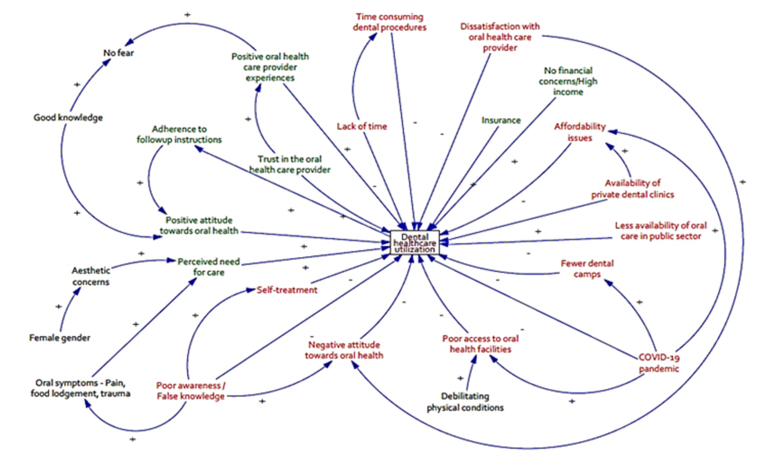
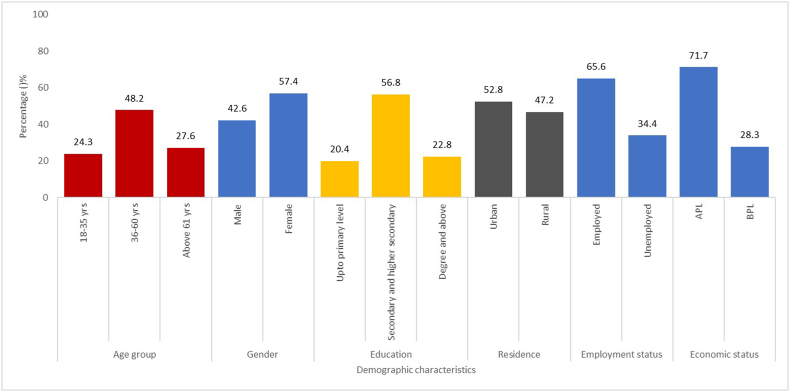
The dental healthcare utilization was 15.4 ± 2.9 % among the study participants. Age and education were associated with dental healthcare utilization. The level of education, pain, and self-consciousness of oral diseases were independent predictors. Barriers identified were negative attitudes, financial restraints, and difficulty in access, while facilitators were trust in service providers, availability of services, and a positive attitude.
Utilization was poor despite the perceived need for oral health care. This was affected by several personal and system-level facilitators and barriers.
口腔疾病负担沉重。然而,口腔保健的利用率仍然很低。了解个人如何、何时以及为何/为何不利用牙科保健资源对于规划卫生服务和制定政策至关重要,因为这反映了人群的口腔健康需求,有助于有效分配资源,并制定满足其需求的政策。
使用安德森医疗保健利用模型,评估喀拉拉邦埃纳库拉姆区成年人的牙科保健服务利用情况及其相关因素,以及障碍和促进因素。
采用整群抽样方法,对埃纳库拉姆区城乡病房18岁及以上的成年人进行了一项混合方法研究。定量部分采用单变量和多变量分析,定性部分采用主题分析。总样本量为544。
研究参与者中牙科保健利用率为15.4 ± 2.9%。年龄和教育程度与牙科保健利用率相关。教育水平、疼痛和口腔疾病自我意识是独立预测因素。确定的障碍包括消极态度、经济限制和获取困难,而促进因素包括对服务提供者的信任、服务的可及性和积极态度。
尽管人们意识到需要口腔保健,但利用率仍然很低。这受到几个个人和系统层面的促进因素和障碍的影响。