Wang Leixia, Chao Jianqian, Wu Yanqian, Zhang Na, Bao Min
Health Management Research Center, School of Public Health, Southeast University, Nanjing, Jiangsu, 210096, China.
Heliyon. 2024 Feb 3;10(3):e25797. doi: 10.1016/j.heliyon.2024.e25797. eCollection 2024 Feb 15.
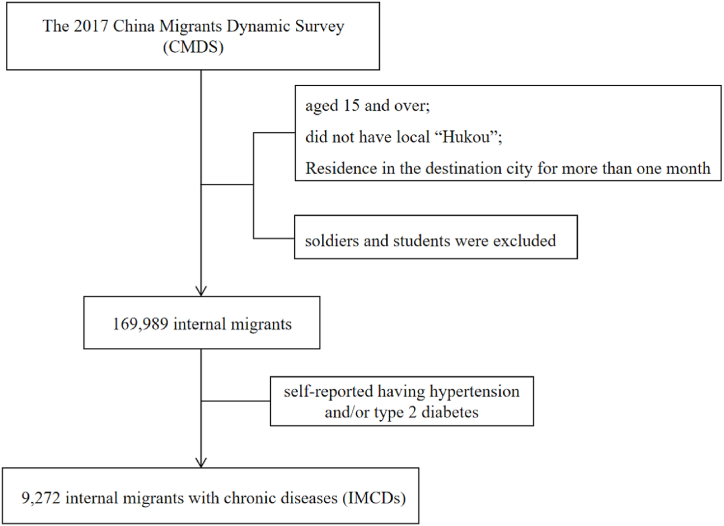
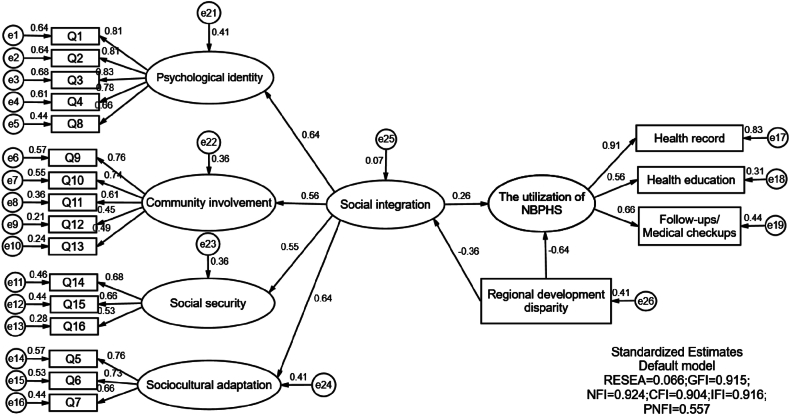
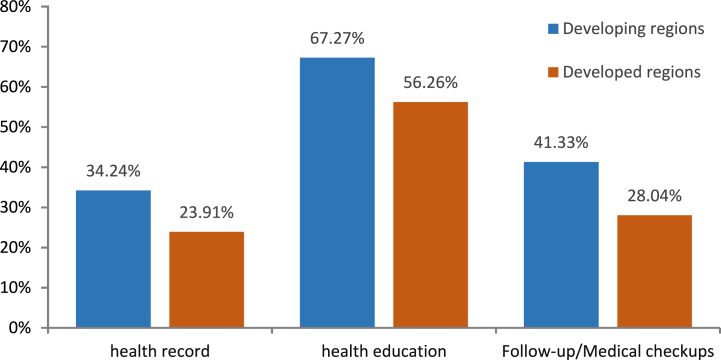
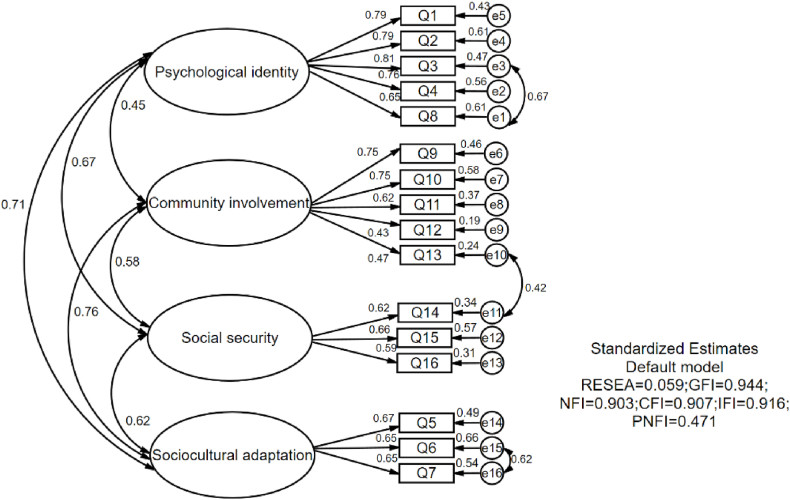
Internal migrants with chronic diseases (IMCDs) are a specific subgroup of the internal migrants, but few studies have focused on health service utilization among this group. Social integration is an essential element in the maintenance of health and well-being in migrants. However, the measurement of social integration remains inconsistent. This study aimed to measure social integration more comprehensively and evaluate the association between social integration and National Basic Public Health Services (NBPHS) utilization among IMCDs in China, thereby providing theoretical support for health promotion among IMCDs. The data of this study were obtained from the China Migrants Dynamic Survey (CMDS) in 2017. A total of 9272 internal migrants who self-reported hypertension and/or type 2 diabetes were included in the analysis. Four factors were extracted through exploratory factor analysis to measure the social integration of IMCDs: psychological identity, community involvement, social security, and sociocultural adaptation. The results show the IMCDs underutilized NBPHS, with 26.80 % stating that they have not used any of the services in the NBPHS. We confirmed the positive association between social integration and NBPHS use among IMCDs. The social integration of IMCDs in developed regions was relatively worse than in developing regions, further exacerbating the underutilization of NBPHS in developed regions. Therefore, targeted government measures and supportive policies are necessary, especially in developed regions, to encourage IMCDs to participate in social organizations and community activities and stimulate their active participation in the NBPHS.
患有慢性病的流动人口(IMCDs)是流动人口中的一个特定亚群体,但很少有研究关注该群体的卫生服务利用情况。社会融合是维持流动人口健康和福祉的一个重要因素。然而,社会融合的衡量标准仍然不一致。本研究旨在更全面地衡量社会融合,并评估中国患有慢性病的流动人口的社会融合与国家基本公共卫生服务(NBPHS)利用之间的关联,从而为促进患有慢性病的流动人口的健康提供理论支持。本研究的数据来自2017年中国流动人口动态监测调查(CMDS)。共有9272名自我报告患有高血压和/或2型糖尿病的流动人口纳入分析。通过探索性因素分析提取了四个因素来衡量患有慢性病的流动人口的社会融合:心理认同、社区参与、社会保障和社会文化适应。结果显示,患有慢性病的流动人口对国家基本公共卫生服务利用不足,26.80%的人表示他们未使用国家基本公共卫生服务中的任何一项服务。我们证实了患有慢性病的流动人口的社会融合与国家基本公共卫生服务利用之间存在正相关。发达地区患有慢性病的流动人口的社会融合相对比发展中地区差,这进一步加剧了发达地区国家基本公共卫生服务利用不足的情况。因此,有必要采取有针对性的政府措施和支持性政策,特别是在发达地区,鼓励患有慢性病的流动人口参与社会组织和社区活动,并促使他们积极参与国家基本公共卫生服务。