Department of Pulmonary and Critical Care Medicine, The Yancheng Clinical College of Xuzhou Medical University, The First People's Hospital of Yancheng, Yancheng, 224006, China.
Department of Respiratory and Critical Care Medicine, The First Affiliated Hospital of Nanjing Medical Univesity, Nanjing, 210029, China.
BMC Pulm Med. 2024 Feb 14;24(1):82. doi: 10.1186/s12890-024-02862-9.
There is a need to develop and validate a widely applicable nomogram for predicting readmission of respiratory failure patients within 365 days.
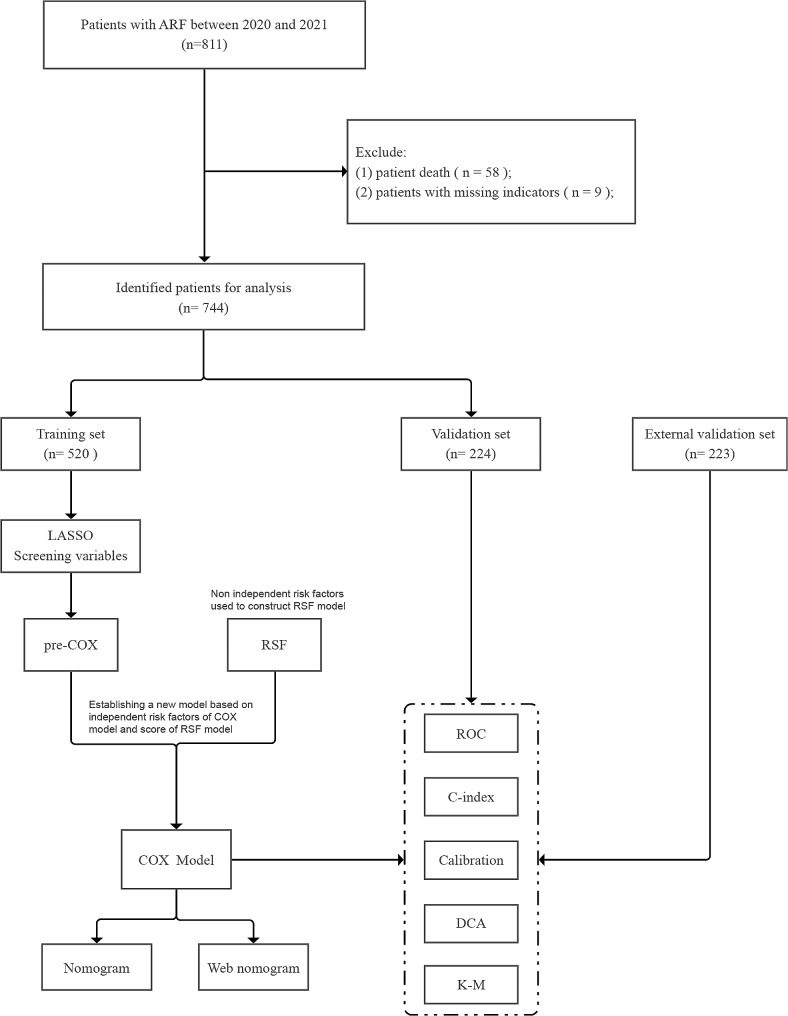
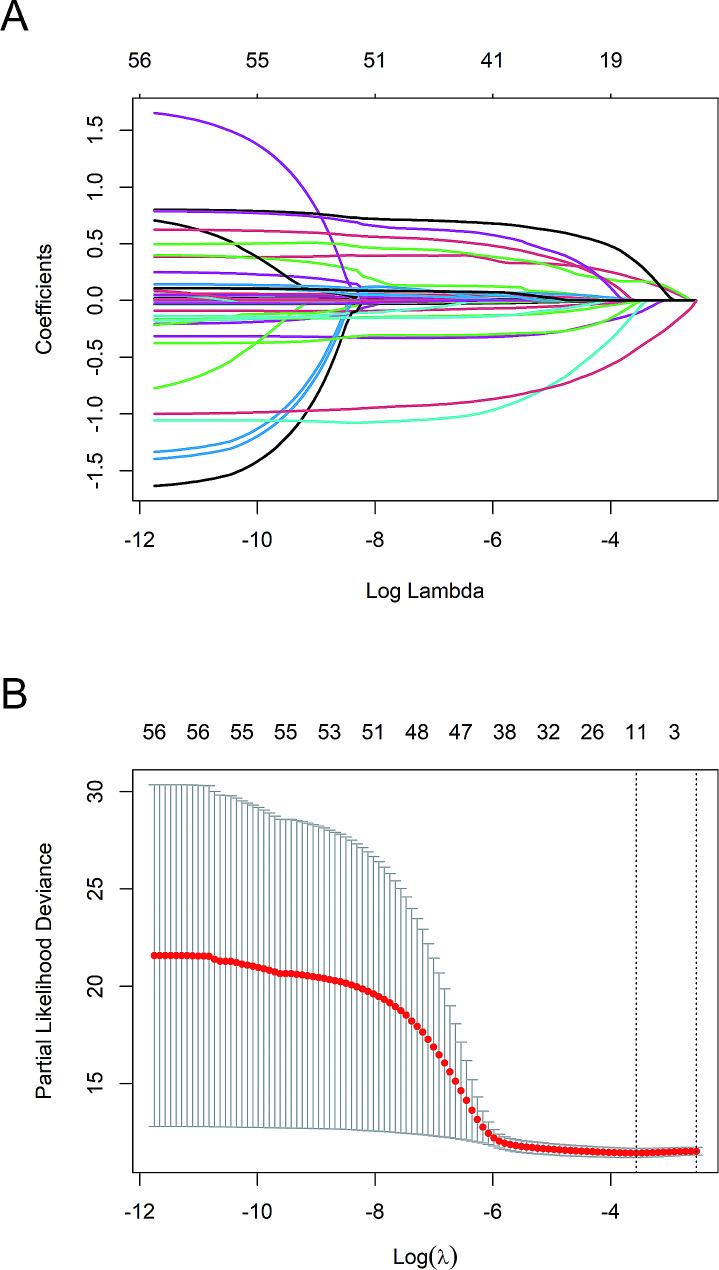
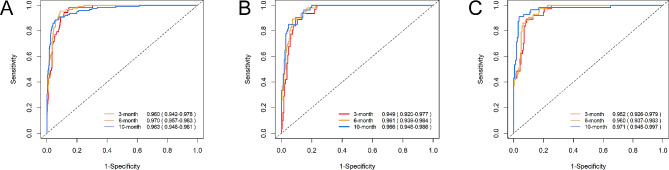
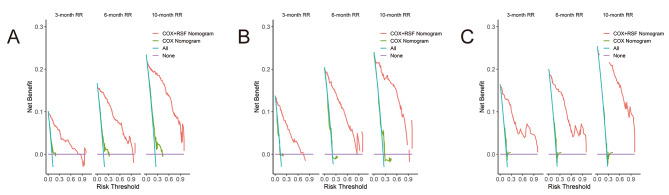
We recruited patients with respiratory failure at the First People's Hospital of Yancheng and the People's Hospital of Jiangsu. We used the least absolute shrinkage and selection operator regression to select significant features for multivariate Cox proportional hazard analysis. The Random Survival Forest algorithm was employed to construct a model for the variables that obtained a coefficient of 0 following LASSO regression, and subsequently determine the prediction score. Independent risk factors and the score were used to develop a multivariate COX regression for creating the line graph. We used the Harrell concordance index to quantify the predictive accuracy and the receiver operating characteristic curve to evaluate model performance. Additionally, we used decision curve analysiso assess clinical usefulness.
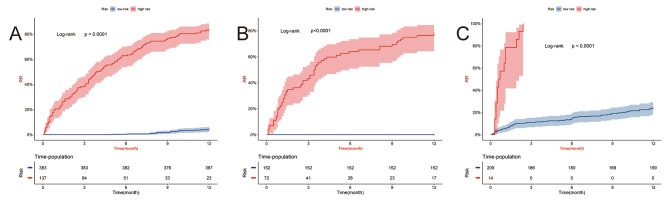
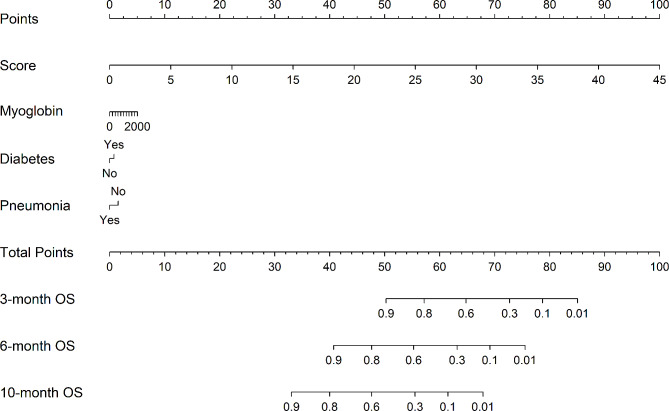
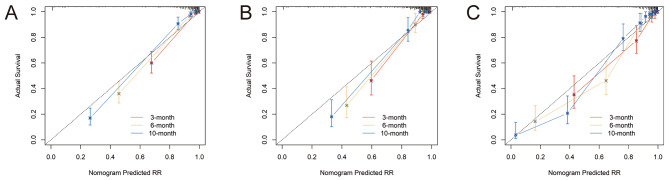
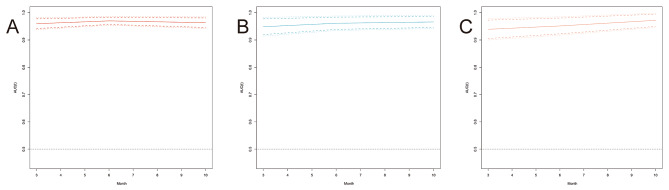
The LASSO regression and multivariate Cox regression were used to screen hemoglobin, diabetes and pneumonia as risk variables combined with Score to develop a column chart model. The C index is 0.927 in the development queue, 0.924 in the internal validation queue, and 0.922 in the external validation queue. At the same time, the predictive model also showed excellent calibration and higher clinical value.
A nomogram predicting readmission of patients with respiratory failure within 365 days based on three independent risk factors and a jointly developed random survival forest algorithm has been developed and validated. This improves the accuracy of predicting patient readmission and provides practical information for individualized treatment decisions.
需要开发和验证一种广泛适用的列线图,以预测呼吸衰竭患者在 365 天内再入院的情况。
我们招募了在盐城第一人民医院和江苏人民医院就诊的呼吸衰竭患者。我们使用最小绝对值收缩和选择算子回归来选择多变量 Cox 比例风险分析中的显著特征。随机生存森林算法用于构建 LASSO 回归后系数为 0 的变量的模型,并确定预测评分。独立风险因素和评分用于开发多变量 COX 回归,以创建折线图。我们使用 Harrell 一致性指数来量化预测准确性,使用接收器操作特征曲线来评估模型性能。此外,我们还使用决策曲线分析来评估临床实用性。
LASSO 回归和多变量 Cox 回归用于筛选血红蛋白、糖尿病和肺炎作为风险变量,并结合评分开发列线图模型。在开发队列中,C 指数为 0.927,内部验证队列中为 0.924,外部验证队列中为 0.922。同时,预测模型也表现出了良好的校准度和更高的临床价值。
基于三个独立风险因素和共同开发的随机生存森林算法,开发并验证了一种预测呼吸衰竭患者 365 天内再入院的列线图。这提高了预测患者再入院的准确性,并为个体化治疗决策提供了实用信息。