Forestry Vocational School, Düzce University, Konuralp Campus, 81620, Düzce, Turkey.
Faculty of Medicine, University of Miyazaki, Miyazaki, Japan.
Sci Rep. 2024 Feb 14;14(1):3733. doi: 10.1038/s41598-024-54330-3.
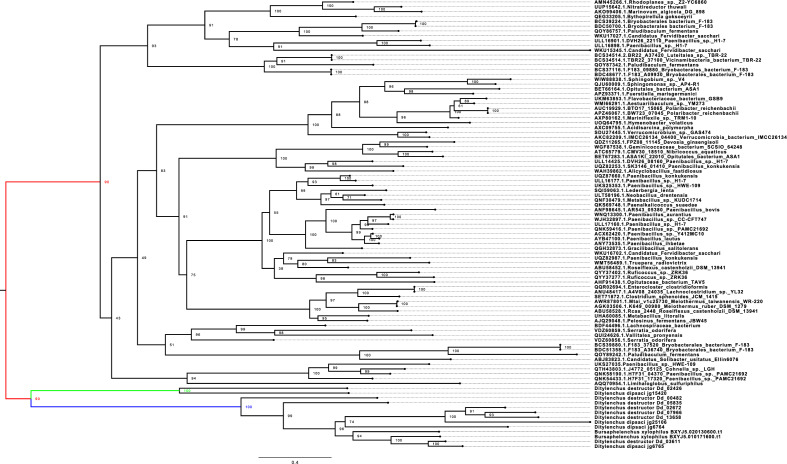
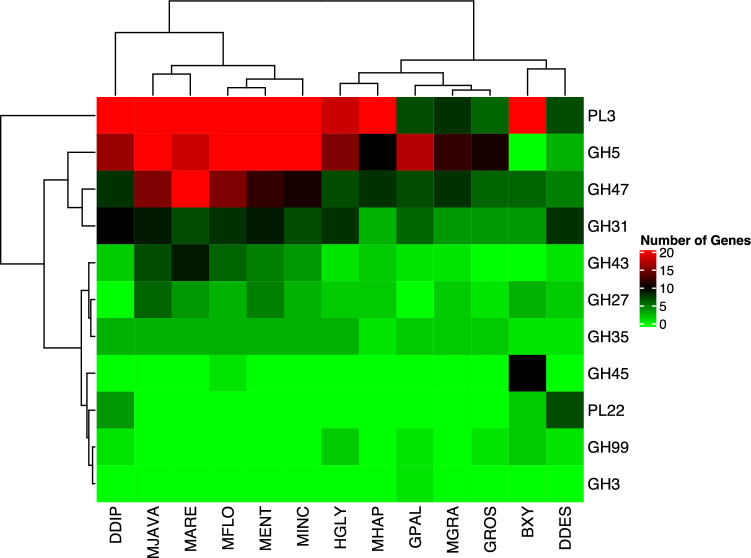
The plant-parasitic nematodes are considered as one of the most destructive pests, from which the migratory and sedentary endoparasitic plant parasitic nematodes infect more than 4000 plant species and cause over $100 billion crop losses annually worldwide. These nematodes use multiple strategies to infect their host and to establish a successful parasitism inside the host such as cell-wall degradation enzymes, inhibition of host defense proteins, and molecular mimicry. In the present study, the main parasitism-associated gene families were identified and compared between the migratory and sedentary endoparasitic nematodes. The results showed that the migratory and sedentary endoparasitic nematodes share a core conserved parasitism mechanism established throughout the evolution of parasitism. However, genes involved in pectin degradation and hydrolase activity are rapidly evolving in the migratory endoparasitic nematodes. Additionally, cell-wall degrading enzymes such as GH45 cellulases and pectate lyase and peptidase and peptidase inhibitors were expanded in the migratory endoparasitic nematodes. The molecular mimicry mechanism was another key finding that differs between the endoparasitic and sedentary parasitic nematodes. The PL22 gene family, which is believed to play a significant role in the molecular mechanisms of nematode parasitism, has been found to be present exclusively in migratory endoparasitic nematodes. Phylogenetic analysis has suggested that it was de novo born in these nematodes. This discovery sheds new light on the molecular evolution of these parasites and has significant implications for our understanding of their biology and pathogenicity. This study contributes to our understanding of core parasitism mechanisms conserved throughout the nematodes and provides unique clues on the evolution of parasitism and the direction shaped by the host.
植物寄生线虫被认为是最具破坏性的害虫之一,其中迁徙性和固着内寄生植物寄生线虫感染了超过 4000 种植物物种,并导致全球每年超过 1000 亿美元的作物损失。这些线虫利用多种策略来感染它们的宿主,并在宿主内部建立成功的寄生,例如细胞壁降解酶、抑制宿主防御蛋白和分子模拟。在本研究中,鉴定了主要的寄生相关基因家族,并比较了迁徙性和固着性内寄生线虫之间的差异。结果表明,迁徙性和固着性内寄生线虫共享一个核心保守的寄生机制,该机制是在寄生进化过程中建立的。然而,参与果胶降解和水解酶活性的基因在迁徙性内寄生线虫中快速进化。此外,细胞壁降解酶,如 GH45 纤维素酶和果胶裂解酶以及肽酶和肽酶抑制剂,在迁徙性内寄生线虫中得到了扩展。分子模拟机制是另一个区别于内寄生和固着性寄生线虫的关键发现。PL22 基因家族被认为在线虫寄生的分子机制中发挥着重要作用,仅存在于迁徙性内寄生线虫中。系统发育分析表明,它是在这些线虫中从头出现的。这一发现为这些寄生虫的分子进化提供了新的线索,对我们理解它们的生物学和致病性具有重要意义。本研究有助于我们理解贯穿线虫的核心寄生机制,并为我们提供了关于寄生进化和宿主塑造方向的独特线索。