Martinez José L, Piciw Jennifer G, Crockett Madeline, Sorci Isabella A, Makwana Nikunj, Sirois Carissa L, Giffin-Rao Yathindar, Bhattacharyya Anita
Waisman Center, University of Wisconsin-Madison, Madison, WI, United States.
Cellular and Molecular Biology Graduate Program, University of Wisconsin-Madison, Madison, WI, United States.
Front Cell Neurosci. 2024 Jan 30;18:1341141. doi: 10.3389/fncel.2024.1341141. eCollection 2024.
Down syndrome, caused by trisomy 21, is a complex developmental disorder associated with intellectual disability and reduced growth of multiple organs. Structural pathologies are present at birth, reflecting embryonic origins. A fundamental unanswered question is how an extra copy of human chromosome 21 contributes to organ-specific pathologies that characterize individuals with Down syndrome, and, relevant to the hallmark intellectual disability in Down syndrome, how trisomy 21 affects neural development. We tested the hypothesis that trisomy 21 exerts effects on human neural development as early as neural induction.
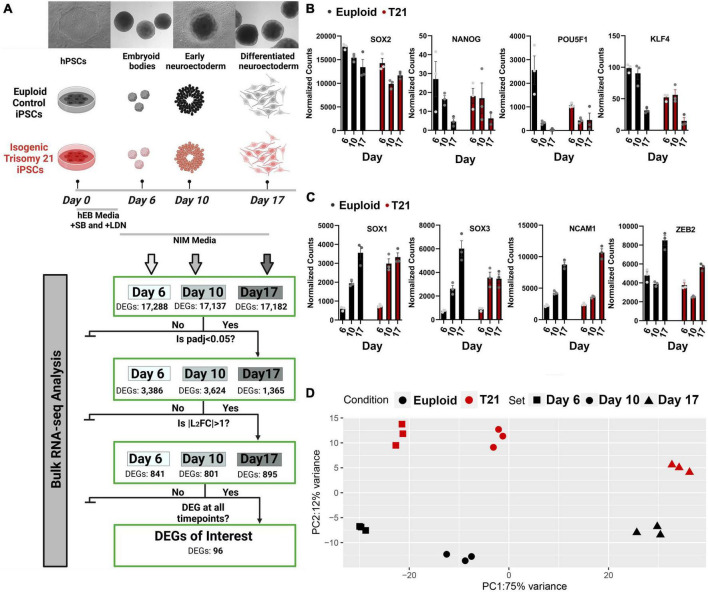
Bulk RNA sequencing was performed on isogenic trisomy 21 and euploid human induced pluripotent stem cells (iPSCs) at successive stages of neural induction: embryoid bodies at Day 6, early neuroectoderm at Day 10, and differentiated neuroectoderm at Day 17.
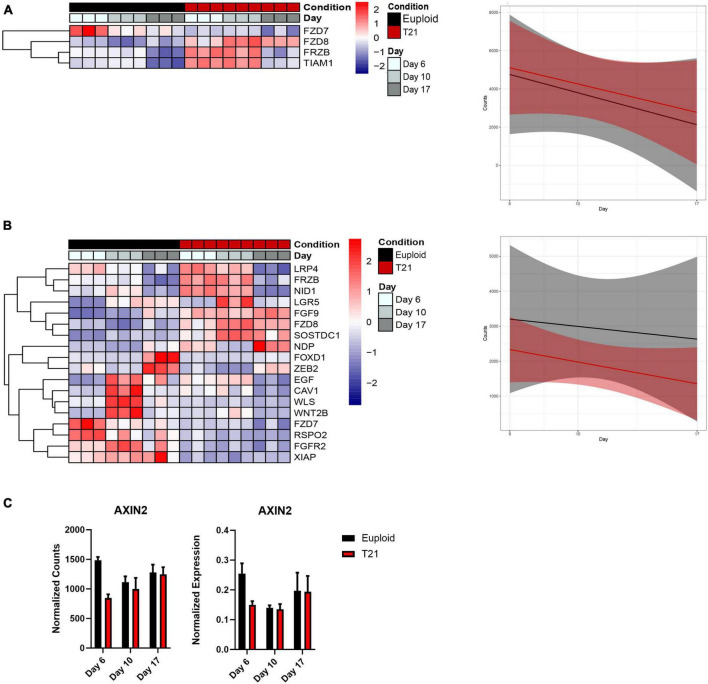
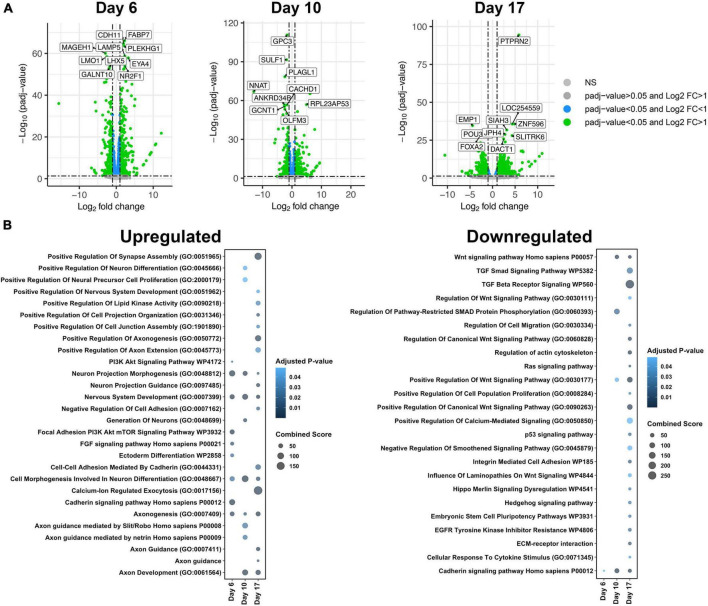
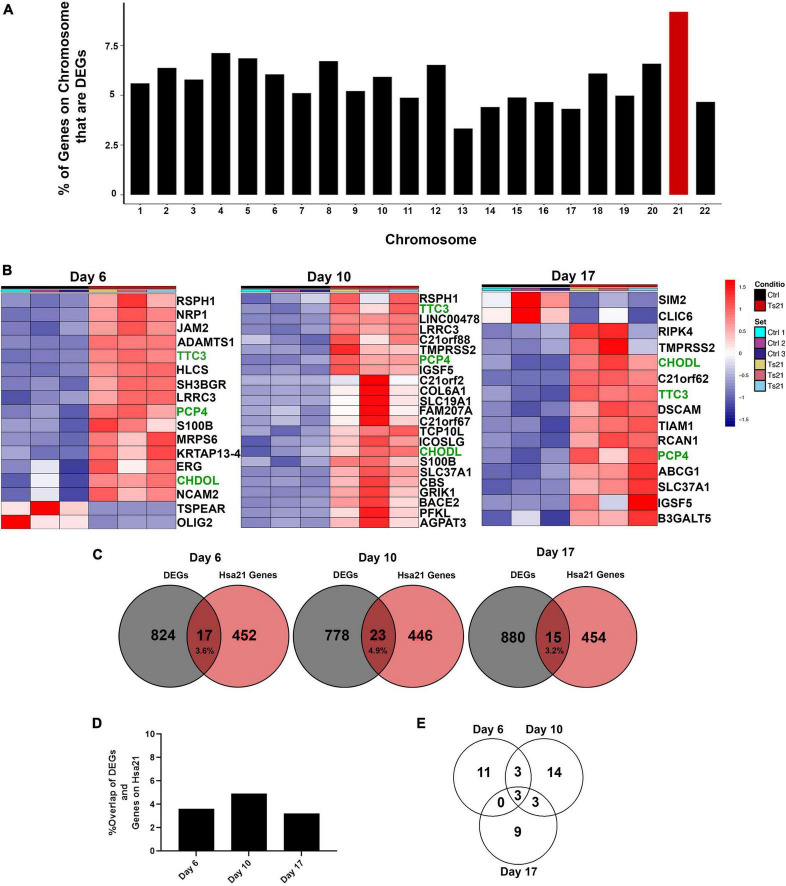
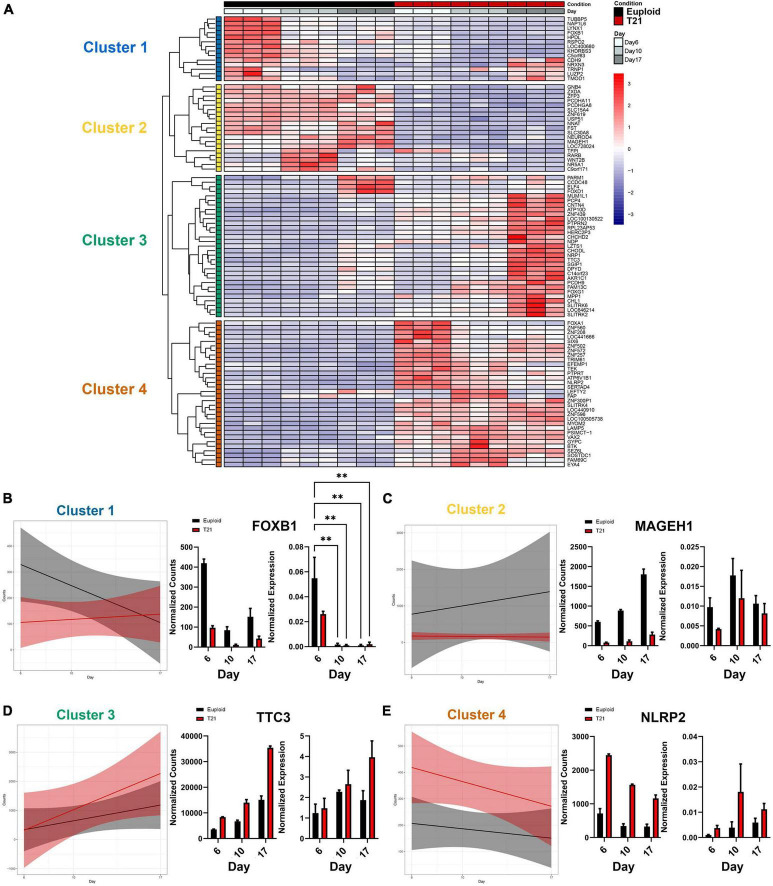
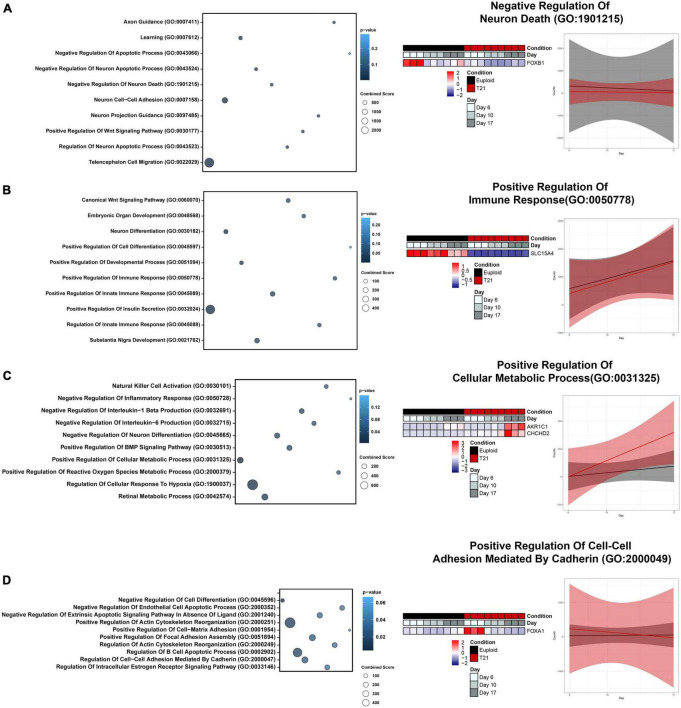
Gene expression analysis revealed over 1,300 differentially expressed genes in trisomy 21 cells along the differentiation pathway compared to euploid controls. Less than 5% of the gene expression changes included upregulated chromosome 21 encoded genes at every timepoint. Genes involved in specific growth factor signaling pathways (WNT and Notch), metabolism (including oxidative stress), and extracellular matrix were altered in trisomy 21 cells. Further analysis uncovered heterochronic expression of genes.
Trisomy 21 impacts discrete developmental pathways at the earliest stages of neural development. The results suggest that metabolic dysfunction arises early in embryogenesis in trisomy 21 and may affect development and function more broadly.
唐氏综合征由21号染色体三体所致,是一种复杂的发育障碍,与智力残疾及多个器官生长受限相关。出生时即存在结构病变,反映了胚胎起源。一个基本的未解问题是,人类21号染色体的额外拷贝如何导致唐氏综合征患者所特有的器官特异性病变,以及与唐氏综合征标志性智力残疾相关的21号染色体三体如何影响神经发育。我们检验了这样一个假说,即21号染色体三体早在神经诱导阶段就对人类神经发育产生影响。
对同基因的21号染色体三体和整倍体人类诱导多能干细胞(iPSC)在神经诱导的连续阶段进行批量RNA测序:第6天的胚状体、第10天的早期神经外胚层和第17天的分化神经外胚层。
基因表达分析显示,与整倍体对照相比,21号染色体三体细胞在分化途径上有超过1300个差异表达基因。在每个时间点,基因表达变化中不到5%包括21号染色体编码基因的上调。参与特定生长因子信号通路(WNT和Notch)、代谢(包括氧化应激)和细胞外基质的基因在21号染色体三体细胞中发生了改变。进一步分析发现了基因的异时表达。
21号染色体三体在神经发育的最早阶段影响离散的发育途径。结果表明,21号染色体三体在胚胎发生早期就出现代谢功能障碍,可能更广泛地影响发育和功能。