Martá-Ariza Mitchell, Leitner Dominique F, Kanshin Evgeny, Suazo Jianina, Giusti Pedrosa Ana, Thierry Manon, Lee Edward B, Devinsky Orrin, Drummond Eleanor, Fortea Juan, Lleó Alberto, Ueberheide Beatrix, Wisniewski Thomas
Department of Neurology, NYU Grossman School of Medicine, New York, NY, USA.
Center for Cognitive Neurology, NYU Grossman School of Medicine, New York, NY, USA.
Acta Neuropathol. 2025 Jan 18;149(1):9. doi: 10.1007/s00401-025-02844-z.
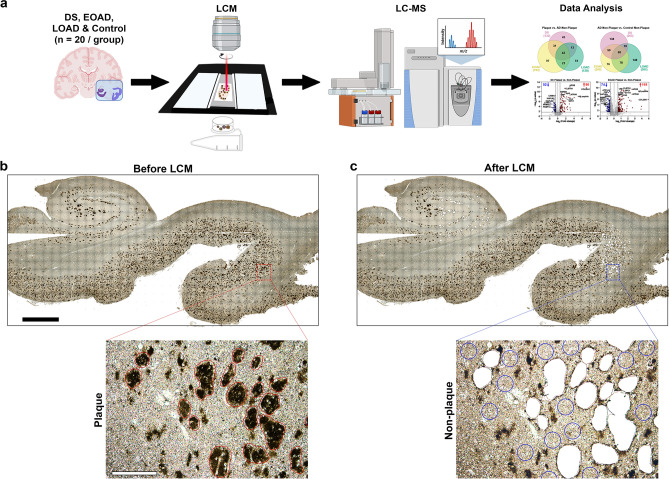
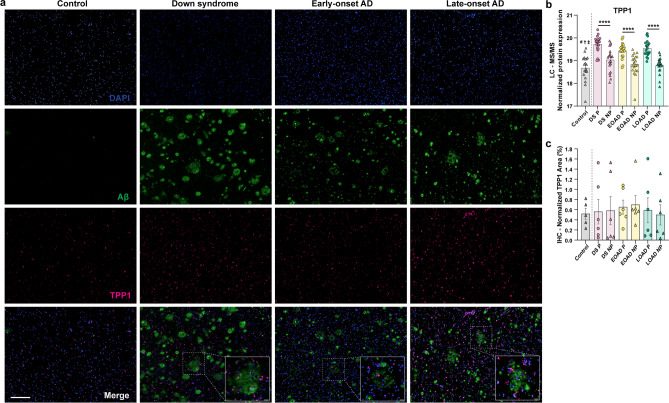
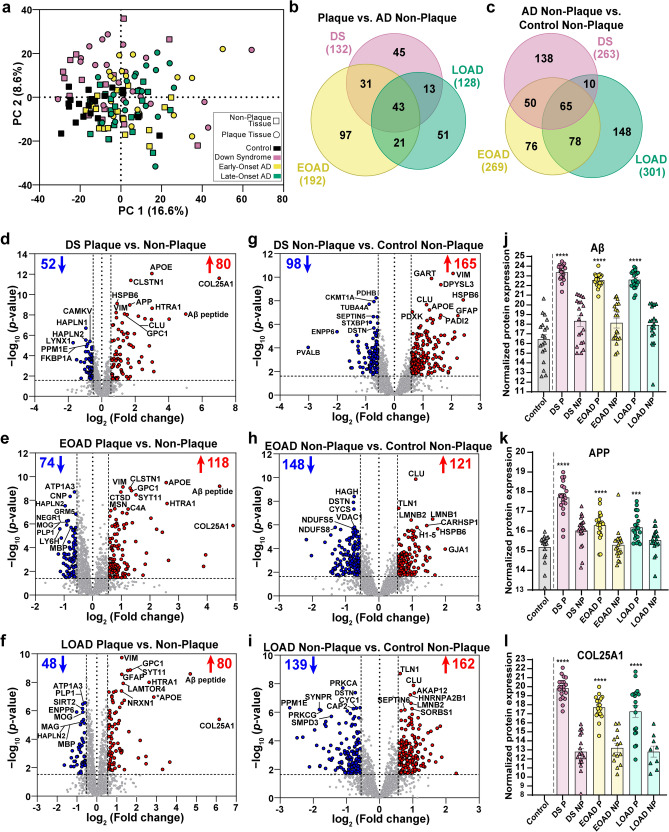
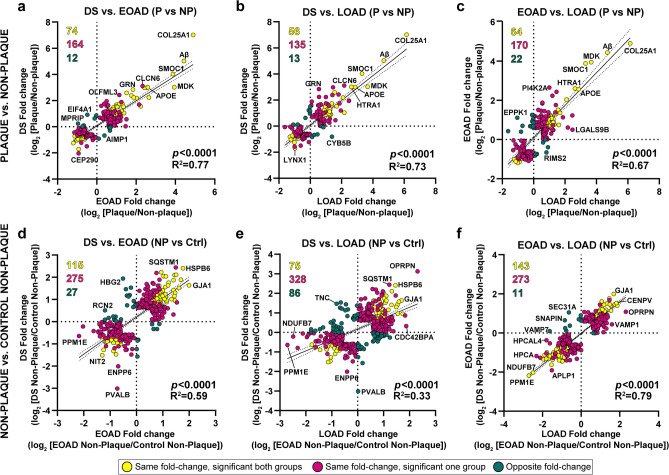
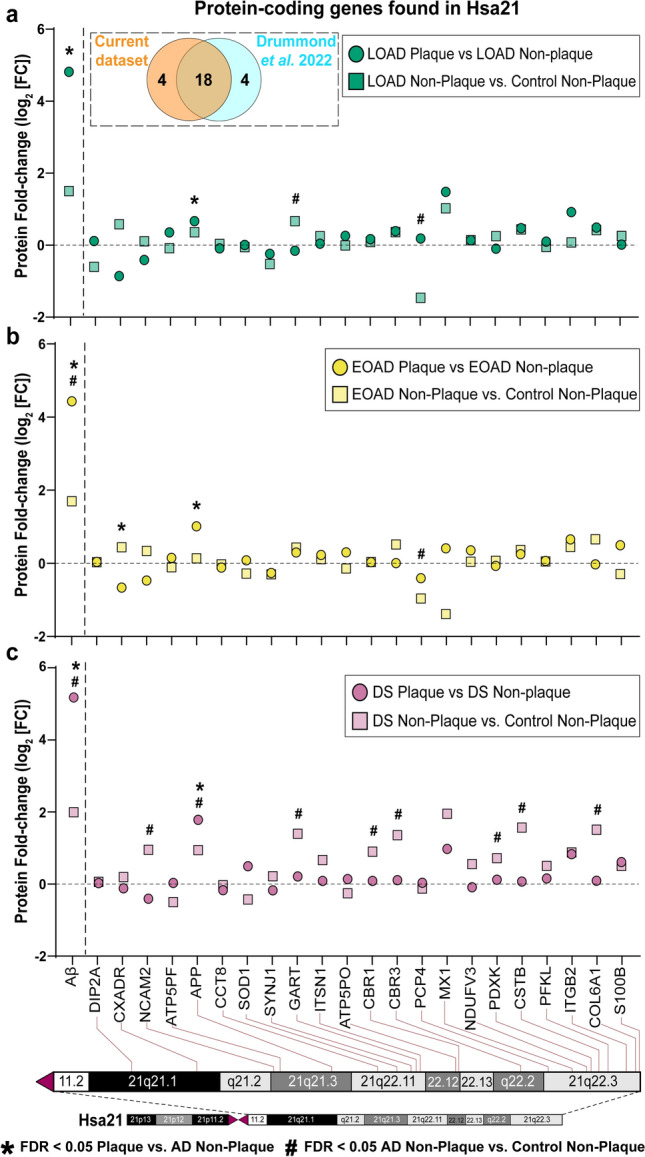
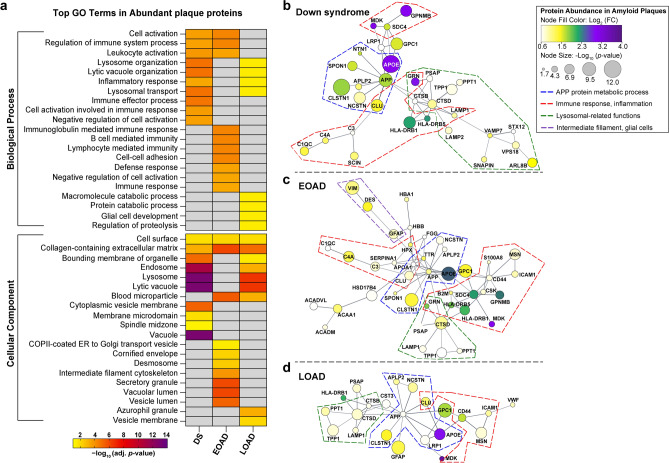
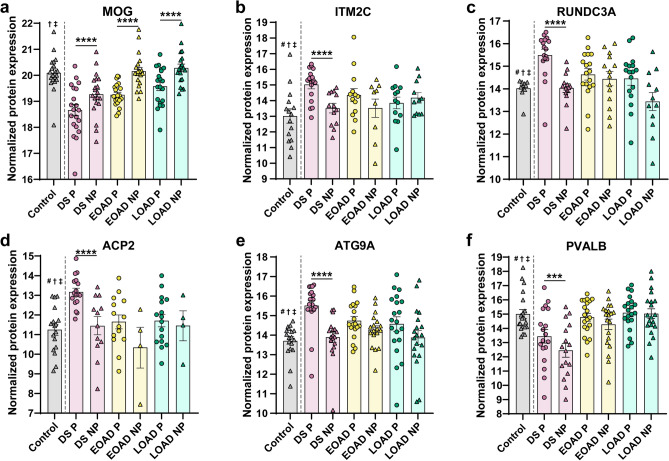
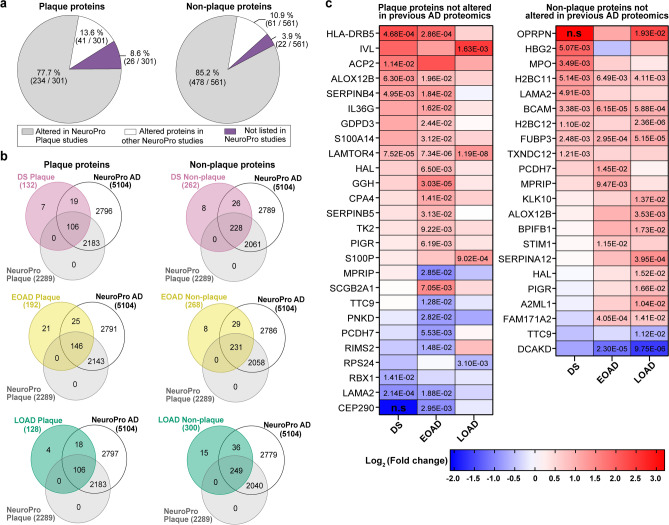
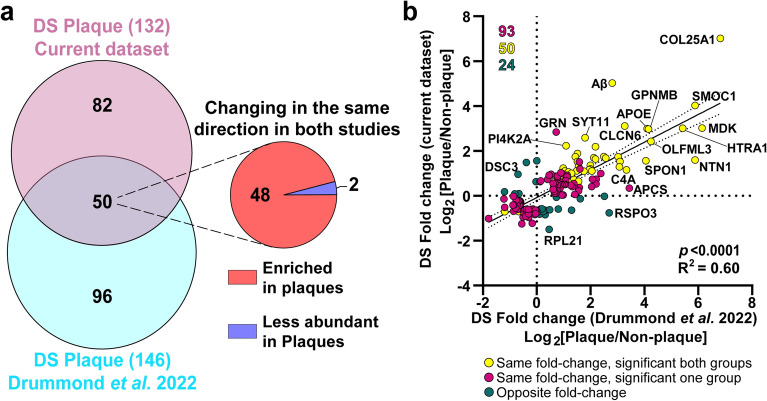
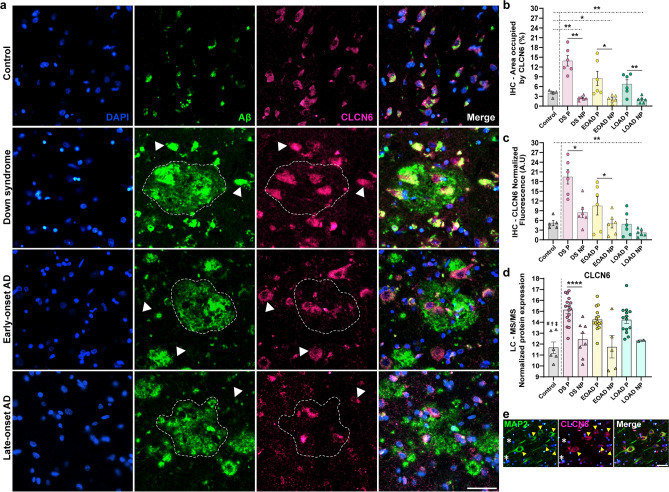
Down syndrome (DS) is strongly associated with Alzheimer's disease (AD) due to APP overexpression, exhibiting Amyloid-β (Aβ) and Tau pathology similar to early-onset (EOAD) and late-onset AD (LOAD). We evaluated the Aβ plaque proteome of DS, EOAD, and LOAD using unbiased localized proteomics on post-mortem paraffin-embedded tissues from four cohorts (n = 20/group): DS (59.8 ± 4.99 y/o), EOAD (63 ± 4.07 y/o), LOAD (82.1 ± 6.37 y/o), and controls (66.4 ± 13.04). We identified differentially abundant proteins when comparing Aβ plaques and neighboring non-plaque tissue (FDR < 5%, fold-change > 1.5) in DS (n = 132), EOAD (n = 192), and LOAD (n = 128), with 43 plaque-associated proteins shared across all groups. Positive correlations were observed between plaque-associated proteins in DS and EOAD (R = .77), DS and LOAD (R = .73), and EOAD and LOAD (R = .67). Top gene ontology biological processes (GOBP) included lysosomal transport (p = 1.29 × 10) for DS, immune system regulation (p = 4.33 × 10) for EOAD, and lysosome organization (p = 0.029) for LOAD. Protein networks revealed a plaque-associated protein signature involving APP metabolism, immune response, and lysosomal functions. In DS, EOAD, and LOAD non-plaque vs. control tissue, we identified 263, 269, and 301 differentially abundant proteins, with 65 altered proteins shared across all cohorts. Non-plaque proteins in DS showed modest correlations with EOAD (R = .59) and LOAD (R = .33) compared to the correlation between EOAD and LOAD (R = .79). Top GOBP term for all groups was chromatin remodeling (p < 0.001), with additional terms for DS including extracellular matrix, and protein-DNA complexes and gene expression regulation for EOAD and LOAD. Our study reveals key functional characteristics of the amyloid plaque proteome in DS, compared to EOAD and LOAD, highlighting shared pathways in endo/lysosomal functions and immune responses. The non-plaque proteome revealed distinct alterations in ECM and chromatin structure, underscoring unique differences between DS and AD subtypes. Our findings enhance our understanding of AD pathogenesis and identify potential biomarkers and therapeutic targets.
唐氏综合征(DS)由于淀粉样前体蛋白(APP)过表达,与阿尔茨海默病(AD)密切相关,表现出与早发型(EOAD)和晚发型AD(LOAD)相似的淀粉样β蛋白(Aβ)和 Tau 病理特征。我们使用无偏局部蛋白质组学技术,对来自四个队列(每组 n = 20)的死后石蜡包埋组织进行研究,评估了 DS、EOAD 和 LOAD 的 Aβ 斑块蛋白质组:DS(59.8 ± 4.99 岁)、EOAD(63 ± 4.07 岁)、LOAD(82.1 ± 6.37 岁)和对照组(66.4 ± 13.04 岁)。在比较 DS(n = 132)、EOAD(n = 192)和 LOAD(n = 128)中 Aβ 斑块与相邻非斑块组织时(错误发现率 < 5%,变化倍数 > 1.5),我们鉴定出了差异丰度蛋白,所有组共有 43 种与斑块相关的蛋白。在 DS 和 EOAD(R = 0.77)、DS 和 LOAD(R = 0.73)以及 EOAD 和 LOAD(R = 0.67)之间观察到与斑块相关蛋白的正相关。DS 的顶级基因本体生物学过程(GOBP)包括溶酶体运输(p = 1.29 × 10),EOAD 的是免疫系统调节(p = 4.33 × 10),LOAD 的是溶酶体组织(p = 0.029)。蛋白质网络揭示了一个与斑块相关的蛋白特征,涉及 APP 代谢、免疫反应和溶酶体功能。在 DS、EOAD 和 LOAD 的非斑块组织与对照组织中,我们分别鉴定出 263、269 和 301 种差异丰度蛋白,所有队列共有 65 种改变的蛋白。与 EOAD 和 LOAD 之间的相关性(R = 0.79)相比,DS 中的非斑块蛋白与 EOAD(R = 0.59)和 LOAD(R = 0.33)显示出适度的相关性。所有组的顶级 GOBP 术语是染色质重塑(p < 0.001),DS 的其他术语包括细胞外基质,EOAD 和 LOAD 的是蛋白质 - DNA 复合物和基因表达调控。我们的研究揭示了与 EOAD 和 LOAD 相比,DS 中淀粉样斑块蛋白质组的关键功能特征,突出了内体/溶酶体功能和免疫反应中的共同途径。非斑块蛋白质组揭示了细胞外基质和染色质结构的明显改变,强调了 DS 与 AD 亚型之间的独特差异。我们的发现增进了我们对 AD 发病机制的理解,并确定了潜在的生物标志物和治疗靶点。