Zargarzadeh Arian, Javanshir Elnaz, Ghaffari Alireza, Mosharkesh Erfan, Anari Babak
Central Toronto Academy, Toronto, Canada.
Cardiovascular Research Center, Tabriz University of Medical Sciences, Tabriz, Iran.
J Cardiovasc Thorac Res. 2023;15(4):204-209. doi: 10.34172/jcvtr.2023.33031. Epub 2023 Dec 30.
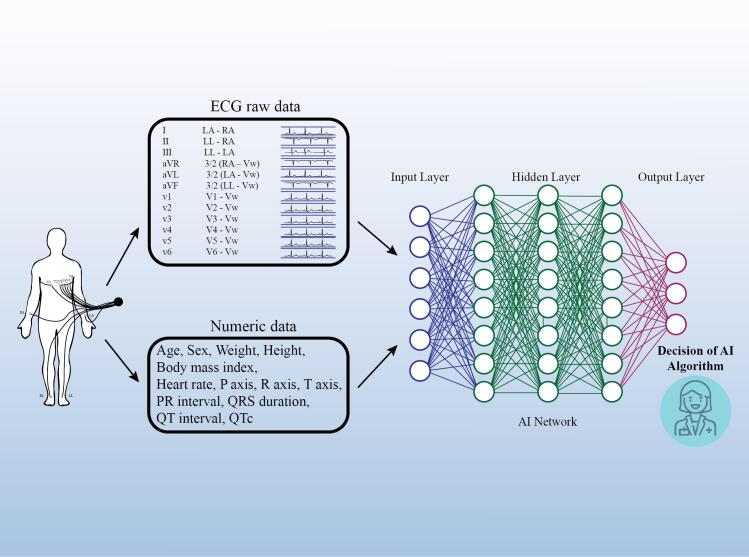
Screening and early detection of cardiovascular disease (CVD) are crucial for managing progress and preventing related morbidity. In recent years, several studies have reported the important role of Artificial intelligence (AI) technology and its integration into various medical sectors. AI applications are able to deal with the massive amounts of data (medical records, ultrasounds, medications, and experimental results) generated in medicine and identify novel details that would otherwise be forgotten in the mass of healthcare data sets. Nowadays, AI algorithms are currently used to improve diagnosis of some CVDs including heart failure, atrial fibrillation, hypertrophic cardiomyopathy and pulmonary hypertension. This review summarized some AI concepts, critical execution requirements, obstacles, and new applications for CVDs.
心血管疾病(CVD)的筛查和早期检测对于控制病情进展和预防相关发病至关重要。近年来,多项研究报告了人工智能(AI)技术的重要作用及其在各个医疗领域的整合。人工智能应用能够处理医学中产生的大量数据(病历、超声、药物和实验结果),并识别出在大量医疗数据集里可能被遗漏的新细节。如今,人工智能算法目前被用于改善某些心血管疾病的诊断,包括心力衰竭、心房颤动、肥厚型心肌病和肺动脉高压。本综述总结了一些人工智能概念、关键实施要求、障碍以及心血管疾病的新应用。