Department of Immunology, Center for Immunotherapy, Institute of Basic Medical Sciences, Peking Union Medical College, Chinese Academy of Medical Sciences, Beijing 100005, China.
National Key Laboratory of Immunity and Inflammation, Institute of Immunology, Naval Medical University, Shanghai 200433, China.
Proc Natl Acad Sci U S A. 2024 Feb 20;121(8):e2314561121. doi: 10.1073/pnas.2314561121. Epub 2024 Feb 15.
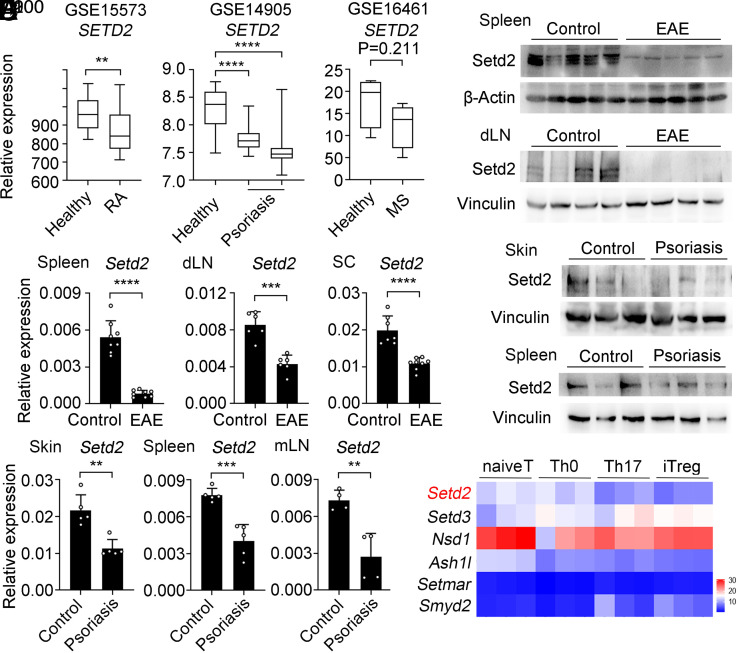
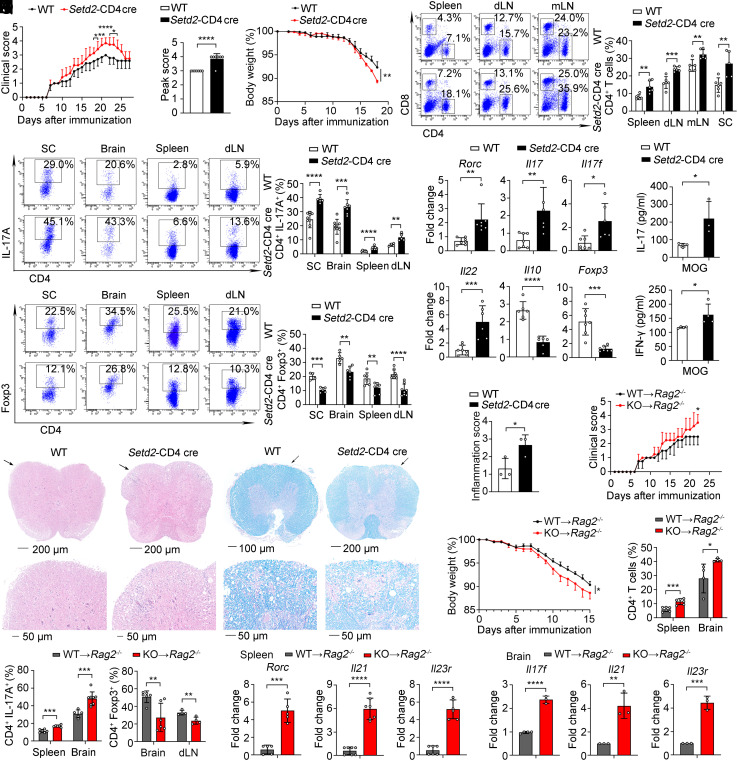
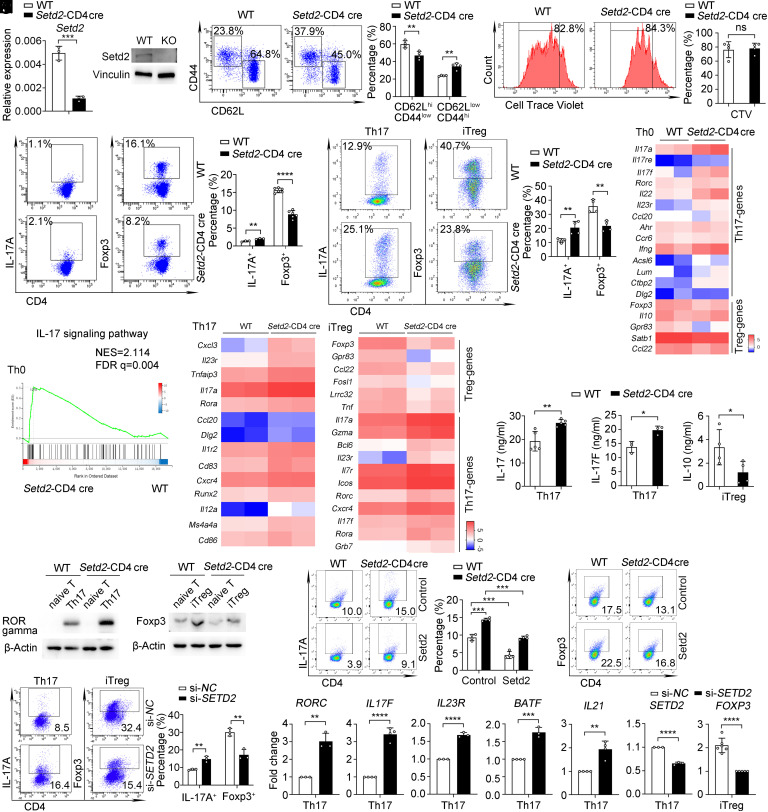
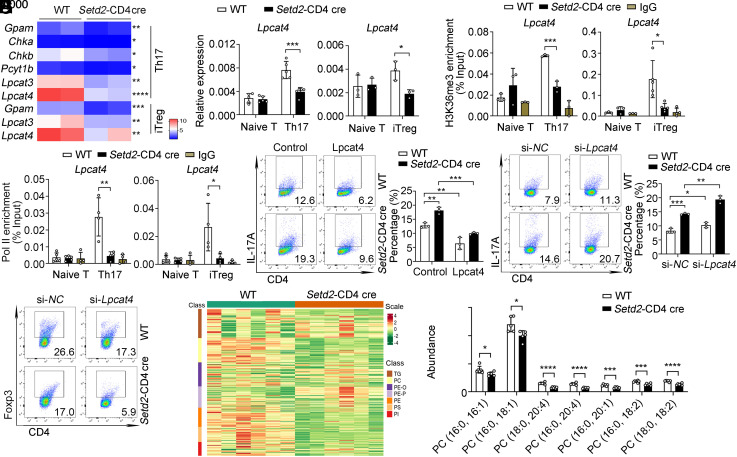
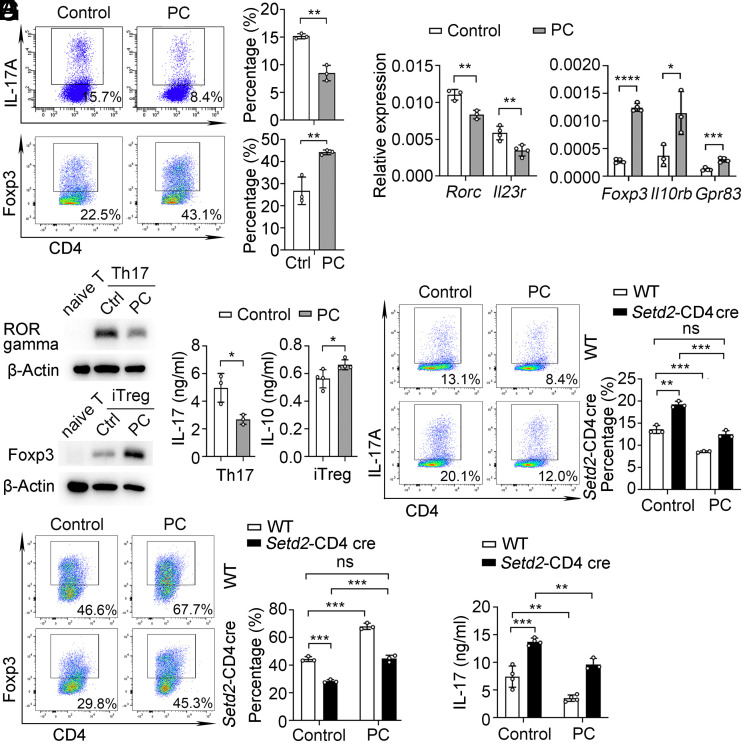
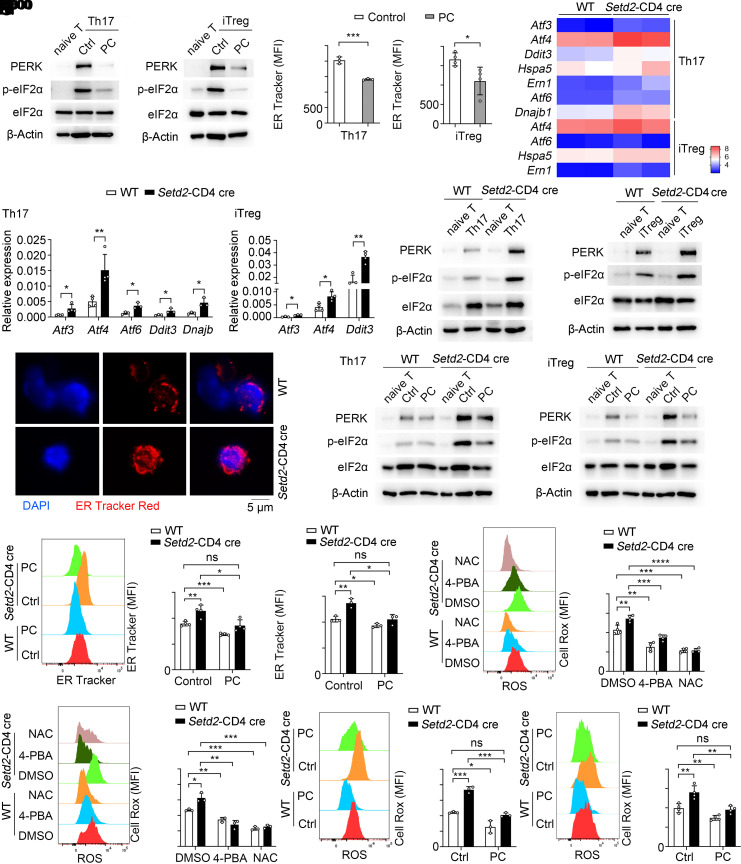
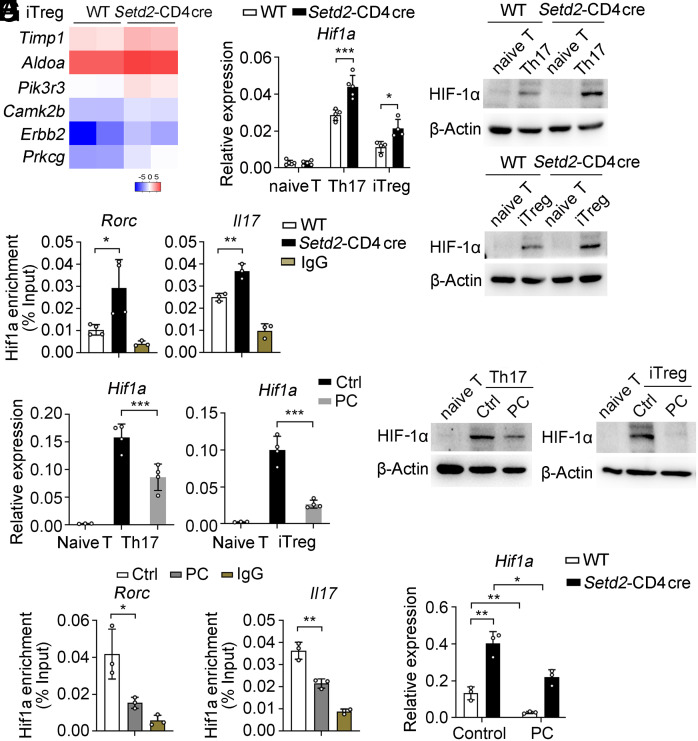
Coordinated metabolic reprogramming and epigenetic remodeling are critical for modulating T cell function and differentiation. However, how the epigenetic modification controls Th17/Treg cell balance via metabolic reprogramming remains obscure. Here, we find that Setd2, a histone H3K36 trimethyltransferase, suppresses Th17 development but promotes iTreg cell polarization via phospholipid remodeling. Mechanistically, Setd2 up-regulates transcriptional expression of lysophosphatidylcholine acyltransferase 4 (Lpcat4) via directly catalyzing H3K36me3 of gene promoter in T cells. Lpcat4-mediated phosphatidylcholine PC(16:0,18:2) generation in turn limits endoplasmic reticulum stress and oxidative stress. These changes decrease HIF-1α transcriptional activity and thus suppress Th17 but enhance Treg development. Consistent with this regulatory paradigm, T cell deficiency of aggravates neuroinflammation and demyelination in experimental autoimmune encephalomyelitis due to imbalanced Th17/Treg cell differentiation. Overall, our data reveal that Setd2 acts as an epigenetic brake for T cell-mediated autoimmunity through phospholipid remodeling, suggesting potential targets for treating neuroinflammatory diseases.
协调的代谢重编程和表观遗传重塑对于调节 T 细胞功能和分化至关重要。然而,表观遗传修饰如何通过代谢重编程来控制 Th17/Treg 细胞平衡仍然不清楚。在这里,我们发现组蛋白 H3K36 三甲基转移酶 Setd2 通过磷脂重塑抑制 Th17 细胞的发育,但促进 iTreg 细胞的极化。在机制上,Setd2 通过直接催化 T 细胞中基因启动子的 H3K36me3,上调了溶血磷脂酰胆碱酰基转移酶 4 (Lpcat4) 的转录表达。Lpcat4 介导的磷脂酰胆碱 PC(16:0,18:2) 的产生反过来限制内质网应激和氧化应激。这些变化降低了 HIF-1α 的转录活性,从而抑制了 Th17 细胞,但增强了 Treg 细胞的发育。与这一调节模式一致,由于 Th17/Treg 细胞分化失衡,实验性自身免疫性脑脊髓炎中 T 细胞缺乏导致神经炎症和脱髓鞘加重。总的来说,我们的数据表明,Setd2 通过磷脂重塑作为 T 细胞介导自身免疫的表观遗传制动器发挥作用,为治疗神经炎症性疾病提供了潜在的靶点。