Department of Bacteriology and Virology, School of Medicine, Shiraz University of Medical Sciences, Shiraz, Iran.
Department of Microbiology, School of Medicine, Shahid Beheshti University of Medical Sciences, Tehran, Iran.
Cell Commun Signal. 2024 Feb 15;22(1):126. doi: 10.1186/s12964-023-01316-9.
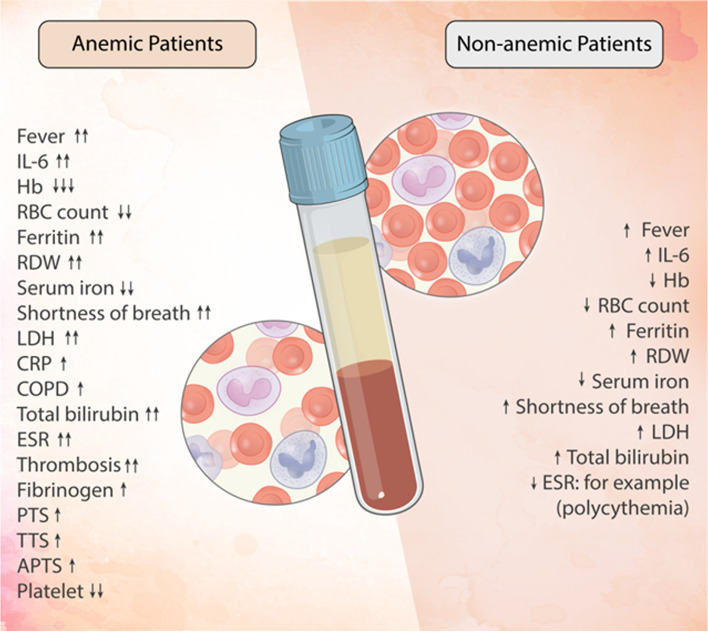
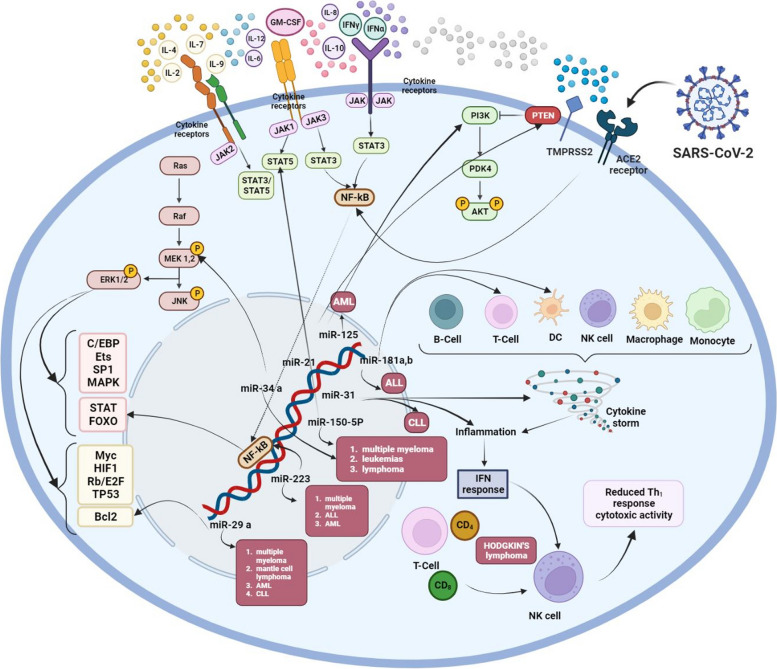
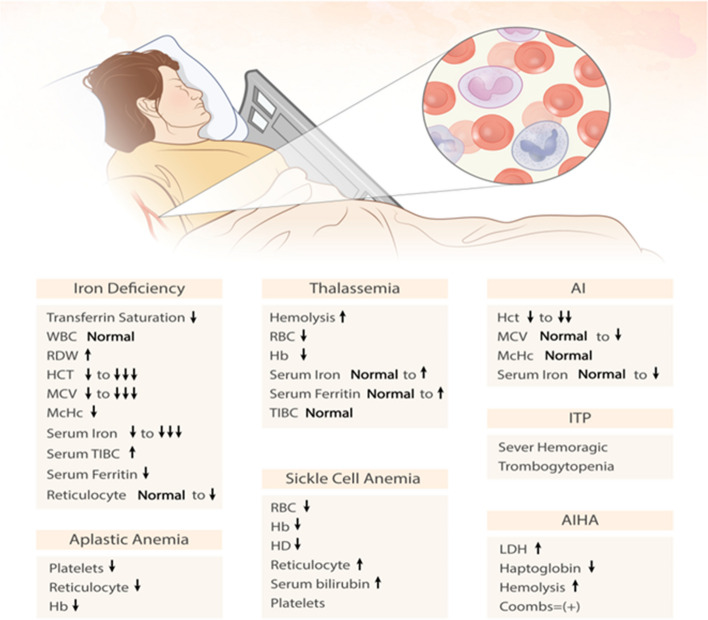
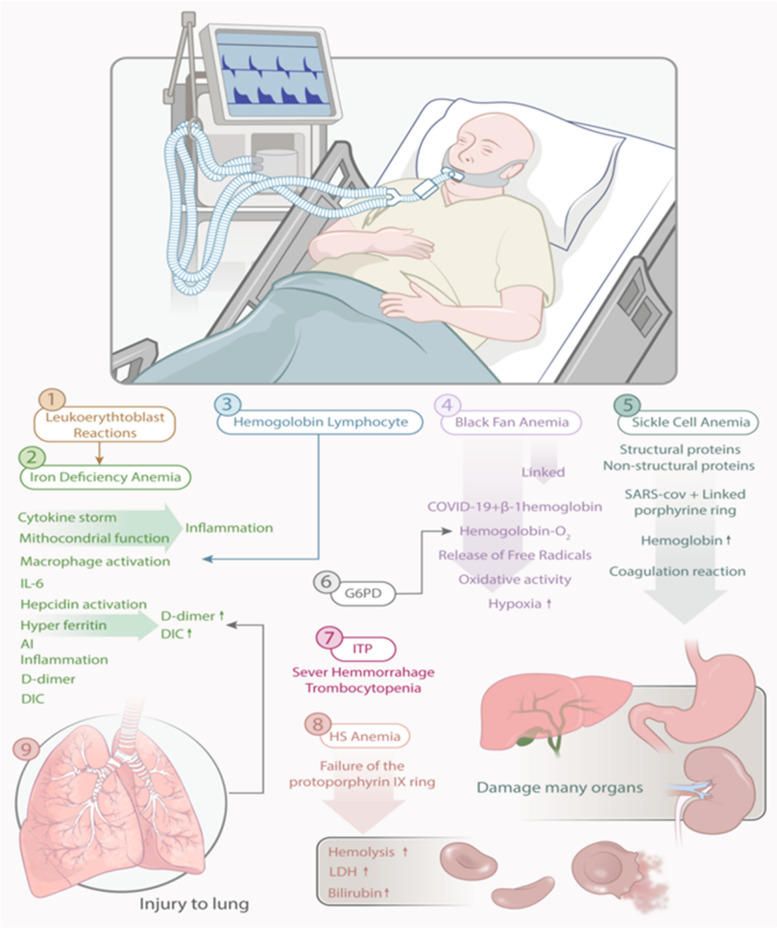
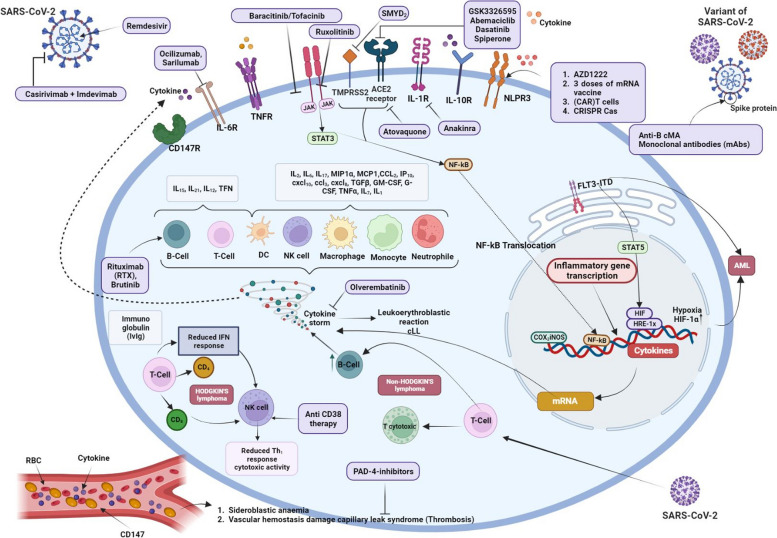
Extensive research in countries with high sociodemographic indices (SDIs) to date has shown that coronavirus disease 2019 (COVID-19) may be directly associated with more severe outcomes among patients living with haematological disorders and malignancies (HDMs). Because individuals with moderate to severe immunodeficiency are likely to undergo persistent infections, shed virus particles for prolonged periods, and lack an inflammatory or abortive phase, this represents an overall risk of morbidity and mortality from COVID-19. In cases suffering from HDMs, further investigation is needed to achieve a better understanding of triviruses and a group of related variants in patients with anemia and HDMs, as well as their treatment through vaccines, drugs, and other methods. Against this background, the present study aimed to delineate the relationship between HDMs and the novel COVID-19, severe acute respiratory syndrome coronavirus 2 (SARS-CoV-2). Besides, effective treatment options for HDM cases were further explored to address this epidemic and its variants. Therefore, learning about how COVID-19 manifests in these patients, along with exploiting the most appropriate treatments, may lead to the development of treatment and care strategies by clinicians and researchers to help patients recover faster. Video Abstract.
迄今为止,在社会人口学指数(SDI)较高的国家进行的广泛研究表明,2019 年冠状病毒病(COVID-19)可能与患有血液系统疾病和恶性肿瘤(HDM)的患者的更严重结局直接相关。由于中度至重度免疫缺陷的个体可能会持续感染,持续排出病毒颗粒,并且缺乏炎症或流产阶段,这代表了 COVID-19 的发病率和死亡率的总体风险。在患有 HDM 的病例中,需要进一步调查以更好地了解贫血和 HDM 患者中的三价病毒和一组相关变体,以及通过疫苗、药物和其他方法对其进行治疗。在此背景下,本研究旨在阐明 HDM 与新型 COVID-19、严重急性呼吸综合征冠状病毒 2(SARS-CoV-2)之间的关系。此外,还进一步探讨了 HDM 病例的有效治疗选择,以应对这一流行病及其变体。因此,了解 COVID-19 在这些患者中的表现,并利用最合适的治疗方法,可能会促使临床医生和研究人员制定治疗和护理策略,帮助患者更快康复。视频摘要。