Department of Bacteriology and Virology, School of Medicine, Shiraz University of Medical Sciences, Shiraz, Iran.
Research and Development Department, Sina Medical Biochemistry Technologies Co. Ltd., Shiraz, 7178795844, Iran.
Cell Commun Signal. 2023 May 15;21(1):110. doi: 10.1186/s12964-023-01104-5.
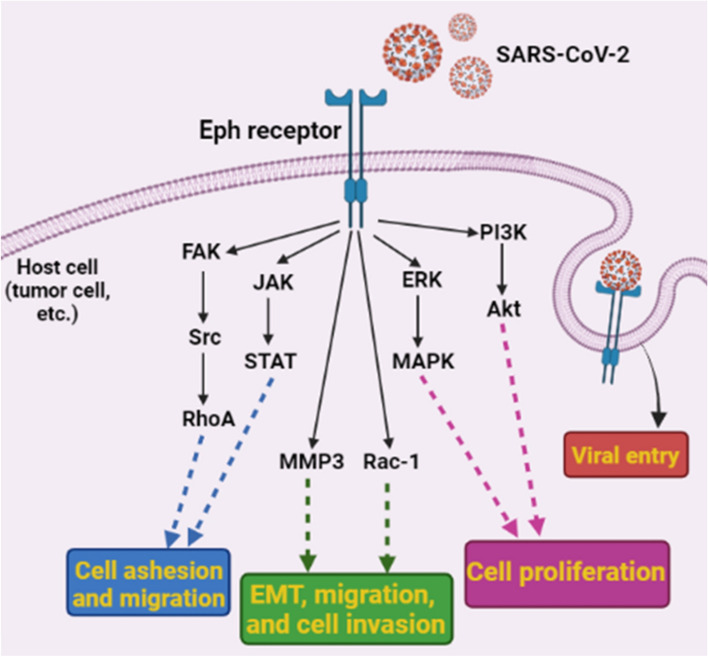
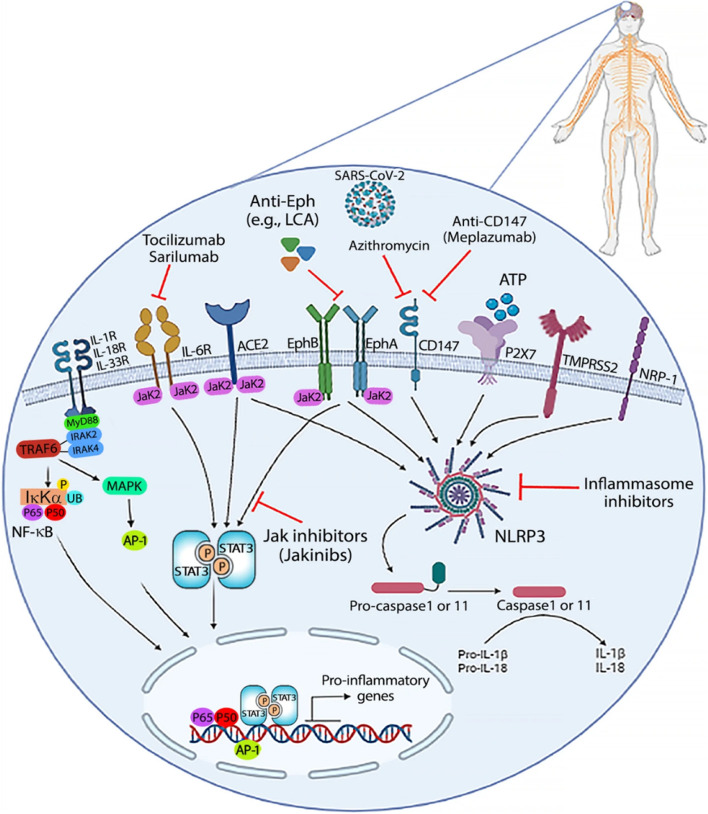
Coronavirus disease 2019 (COVID-19) is caused by a new member of the Coronaviridae family known as severe acute respiratory syndrome coronavirus 2 (SARS-CoV-2). There are structural and non-structural proteins (NSPs) in the genome of this virus. S, M, H, and E proteins are structural proteins, and NSPs include accessory and replicase proteins. The structural and NSP components of SARS-CoV-2 play an important role in its infectivity, and some of them may be important in the pathogenesis of chronic diseases, including cancer, coagulation disorders, neurodegenerative disorders, and cardiovascular diseases. The SARS-CoV-2 proteins interact with targets such as angiotensin-converting enzyme 2 (ACE2) receptor. In addition, SARS-CoV-2 can stimulate pathological intracellular signaling pathways by triggering transcription factor hypoxia-inducible factor-1 (HIF-1), neuropilin-1 (NRP-1), CD147, and Eph receptors, which play important roles in the progression of neurodegenerative diseases like Alzheimer's disease, epilepsy, and multiple sclerosis, and multiple cancers such as glioblastoma, lung malignancies, and leukemias. Several compounds such as polyphenols, doxazosin, baricitinib, and ruxolitinib could inhibit these interactions. It has been demonstrated that the SARS-CoV-2 spike protein has a stronger affinity for human ACE2 than the spike protein of SARS-CoV, leading the current study to hypothesize that the newly produced variant Omicron receptor-binding domain (RBD) binds to human ACE2 more strongly than the primary strain. SARS and Middle East respiratory syndrome (MERS) viruses against structural and NSPs have become resistant to previous vaccines. Therefore, the review of recent studies and the performance of current vaccines and their effects on COVID-19 and related diseases has become a vital need to deal with the current conditions. This review examines the potential role of these SARS-CoV-2 proteins in the initiation of chronic diseases, and it is anticipated that these proteins could serve as components of an effective vaccine or treatment for COVID-19 and related diseases. Video Abstract.
新型冠状病毒病(COVID-19)由冠状病毒科的一个新成员引起,称为严重急性呼吸系统综合征冠状病毒 2(SARS-CoV-2)。该病毒的基因组中存在结构蛋白和非结构蛋白(NSP)。S、M、H 和 E 蛋白是结构蛋白,NSP 包括辅助和复制酶蛋白。SARS-CoV-2 的结构和 NSP 成分在其传染性中起着重要作用,其中一些可能在包括癌症、凝血障碍、神经退行性疾病和心血管疾病在内的慢性疾病的发病机制中起重要作用。SARS-CoV-2 蛋白与血管紧张素转换酶 2(ACE2)受体等靶标相互作用。此外,SARS-CoV-2 通过触发转录因子低氧诱导因子-1(HIF-1)、神经纤毛蛋白-1(NRP-1)、CD147 和 Eph 受体,刺激病理性细胞内信号通路,这些受体在阿尔茨海默病、癫痫和多发性硬化症等神经退行性疾病以及胶质母细胞瘤、肺癌和白血病等多种癌症的进展中发挥重要作用。几种化合物,如多酚、多沙唑嗪、巴瑞替尼和鲁索利替尼,可以抑制这些相互作用。已经证明,SARS-CoV-2 的刺突蛋白与人 ACE2 的亲和力强于 SARS-CoV 的刺突蛋白,这导致当前的研究假设新产生的变异奥密克戎受体结合域(RBD)与人 ACE2 的结合比原始株更强。SARS 和中东呼吸综合征(MERS)病毒对结构和 NSP 的抵抗力已超过以前的疫苗。因此,对最近研究的综述以及当前疫苗的性能及其对 COVID-19 和相关疾病的影响已成为应对当前情况的迫切需要。本综述研究了这些 SARS-CoV-2 蛋白在引发慢性疾病中的潜在作用,并预计这些蛋白可能成为 COVID-19 和相关疾病有效疫苗或治疗方法的组成部分。