Institute for Immunology, School of Medicine, Tsinghua University, Beijing, China.
Beijing Institute of Genomics, Chinese Academy of Sciences, China National Center for Bioinformation, Beijing, China.
mSystems. 2024 Mar 19;9(3):e0121423. doi: 10.1128/msystems.01214-23. Epub 2024 Feb 16.
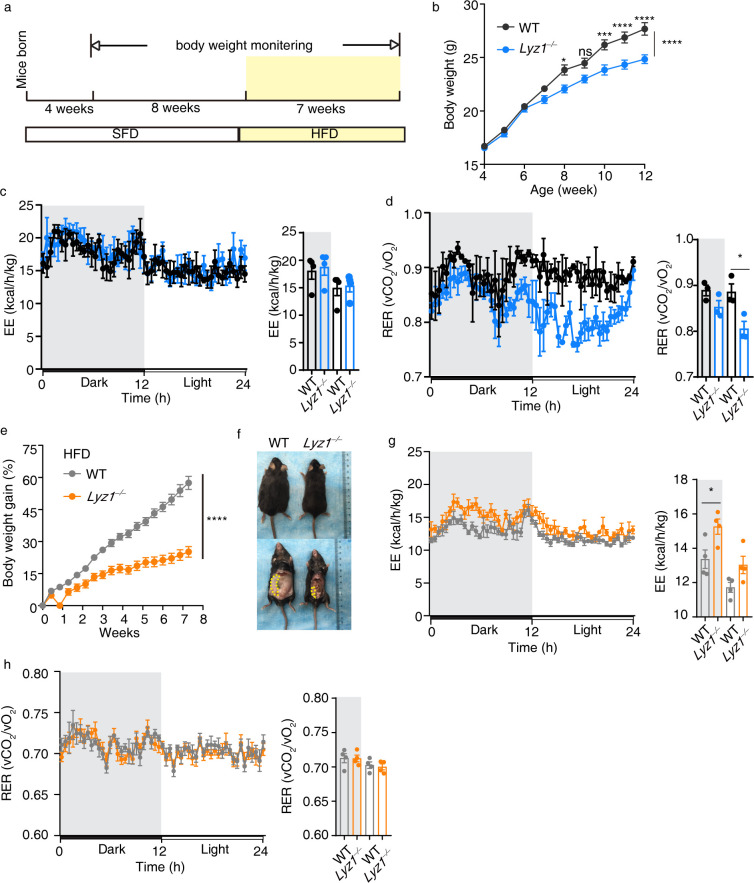
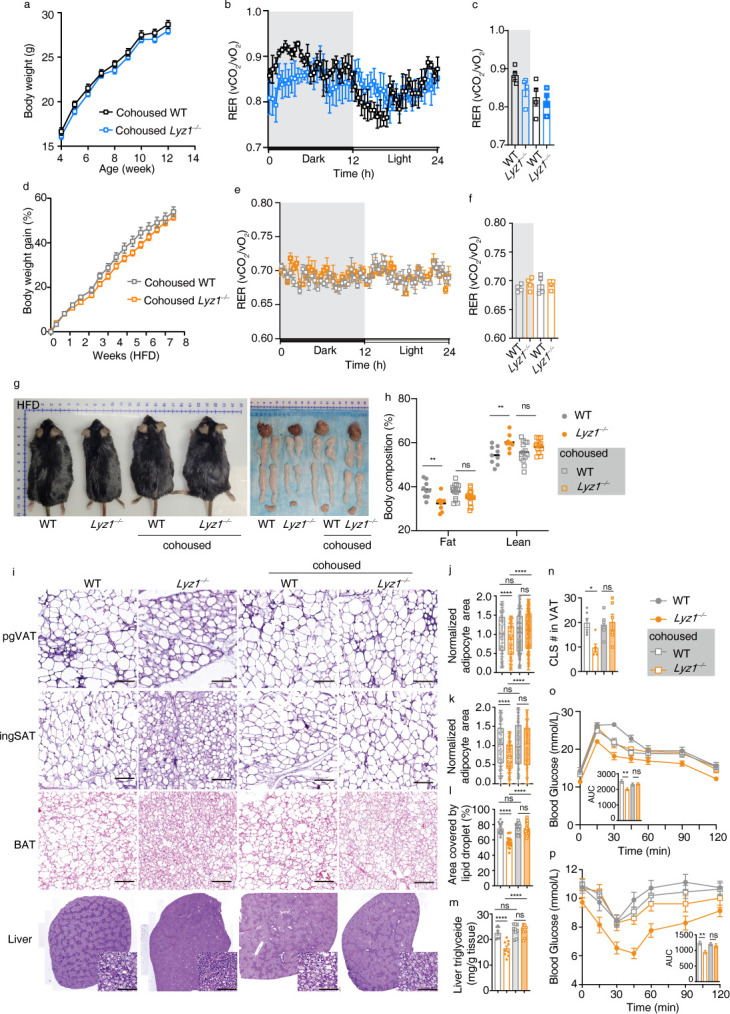
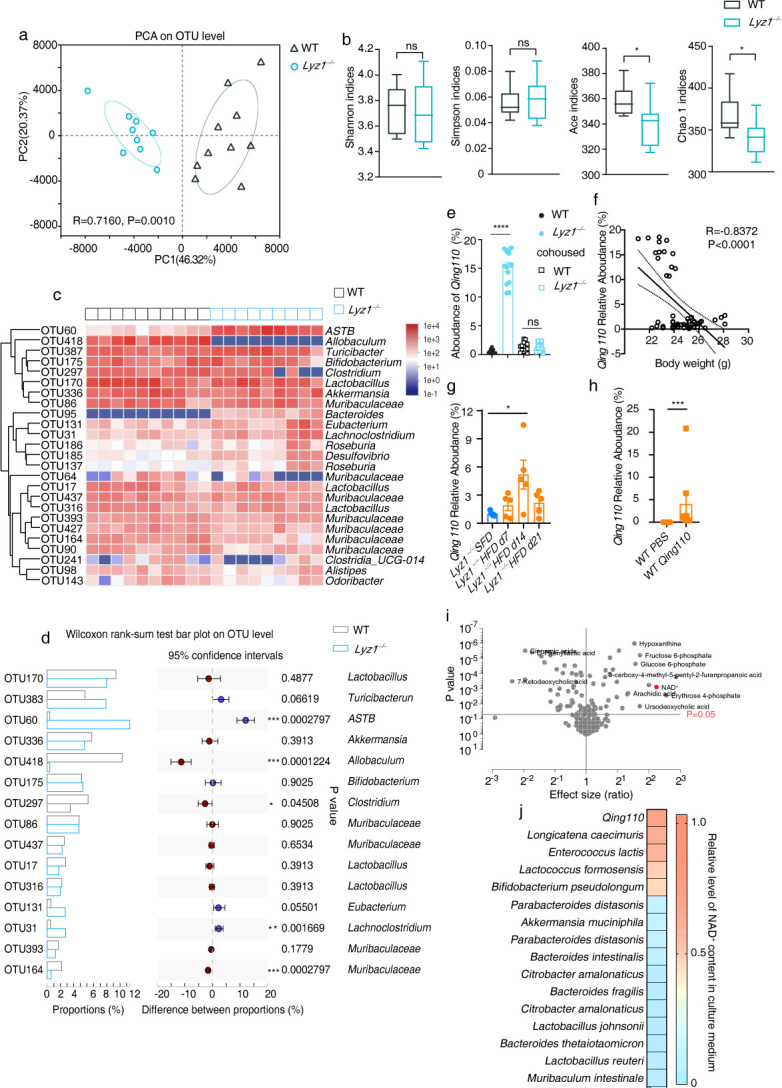
The intestine plays a pivotal role in nutrient absorption and host defense against pathogens, orchestrated in part by antimicrobial peptides secreted by Paneth cells. Among these peptides, lysozyme has multifaceted functions beyond its bactericidal activity. Here, we uncover the intricate relationship between intestinal lysozyme, the gut microbiota, and host metabolism. Lysozyme deficiency in mice led to altered body weight, energy expenditure, and substrate utilization, particularly on a high-fat diet. Interestingly, these metabolic benefits were linked to changes in the gut microbiota composition. Cohousing experiments revealed that the metabolic effects of lysozyme deficiency were microbiota-dependent. 16S rDNA sequencing highlighted differences in microbial communities, with (OTU60) highly enriched in lysozyme knockout mice. Subsequently, a novel bacterium, , corresponding to (OTU60), was isolated. Metabolomic analysis revealed that secreted high levels of NAD, potentially influencing host metabolism. This study sheds light on the complex interplay between intestinal lysozyme, the gut microbiota, and host metabolism, uncovering the potential role of as a key player in modulating metabolic outcomes.
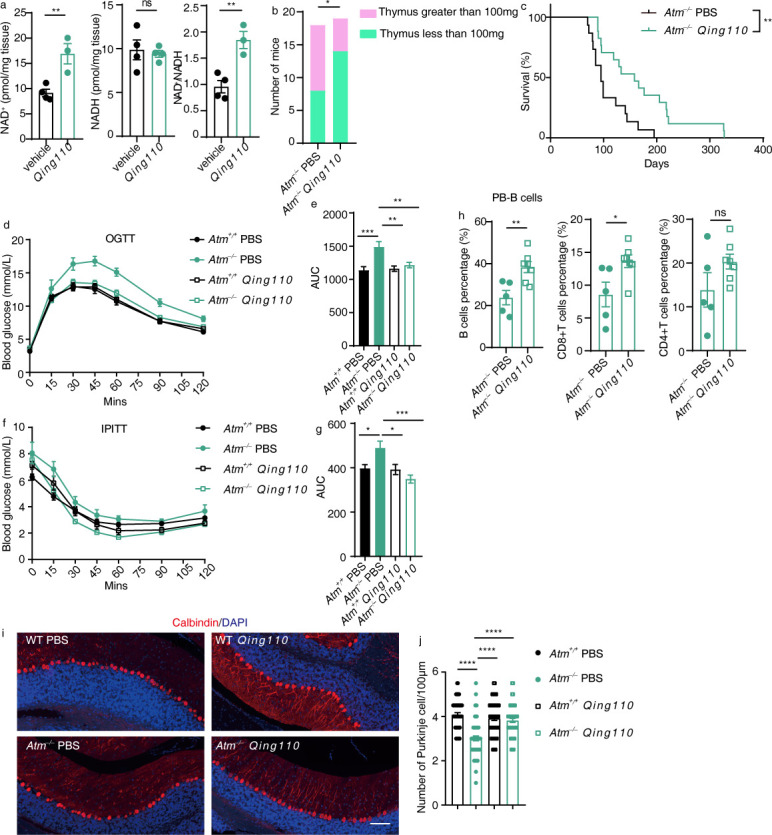
The impact of intestinal lumen lysozyme on intestinal health is complex, arising from its multifaceted interactions with the gut microbiota. Lysozyme can both mitigate and worsen certain health conditions, varying with different scenarios. This underscores the necessity of identifying the specific bacterial responses elicited by lysozyme and understanding their molecular foundations. Our research reveals that a deficiency in intestinal lysozyme1 may offer protection against diet-induced obesity by altering bacterial populations. We discovered a strain of bacterium, , which secretes NAD and is predominantly found in lyz1-deficient mice. demonstrates positive effects in both and mouse models of ataxia telangiectasia. This study sheds light on the intricate role of lysozyme in influencing intestinal health.
肠道在营养吸收和宿主防御病原体方面发挥着关键作用,部分是由潘氏细胞分泌的抗菌肽来协调的。在这些肽中,溶菌酶除了具有杀菌活性外,还有多种功能。在这里,我们揭示了肠道溶菌酶、肠道微生物群和宿主代谢之间复杂的关系。溶菌酶缺乏的小鼠体重、能量消耗和底物利用发生改变,尤其是在高脂肪饮食中。有趣的是,这些代谢益处与肠道微生物群组成的变化有关。同笼实验表明,溶菌酶缺乏的代谢效应依赖于微生物群。16S rDNA 测序突出了微生物群落的差异,(OTU60)在溶菌酶敲除小鼠中高度富集。随后,一种新的细菌,与(OTU60)相对应,被分离出来。代谢组学分析表明,分泌高水平的 NAD,可能影响宿主代谢。这项研究揭示了肠道溶菌酶、肠道微生物群和宿主代谢之间复杂的相互作用,揭示了作为调节代谢结果的关键因素的潜力。
肠腔溶菌酶对肠道健康的影响是复杂的,源于其与肠道微生物群的多方面相互作用。溶菌酶既可以减轻也可以加重某些健康状况,具体取决于不同的情况。这突显了确定溶菌酶引发的特定细菌反应并了解其分子基础的必要性。我们的研究表明,肠道溶菌酶 1 的缺乏可能通过改变细菌种群来保护免受饮食诱导的肥胖。我们发现了一种细菌菌株,它分泌 NAD,主要存在于 lyz1 缺乏的小鼠中。在共济失调毛细血管扩张症的和小鼠模型中都表现出积极的效果。这项研究揭示了溶菌酶在影响肠道健康方面的复杂作用。