Family Guidance Association, Logia, Afar, Ethiopia.
Department of Public Health, College of Medical and Health Sciences, Samara University, Samara, Ethiopia.
BMC Womens Health. 2024 Feb 17;24(1):127. doi: 10.1186/s12905-023-02845-8.
During the coronavirus pandemic, people faced strict preventive measures, including staying at home and maintaining social distance, which led to increasing rates of intimate partner violence. Women have been facing dual health emergencies, including COVID-19 and domestic violence. Despite this, there is a lack of representative data on intimate partner violence during the COVID-19 pandemic and inconsistent findings.
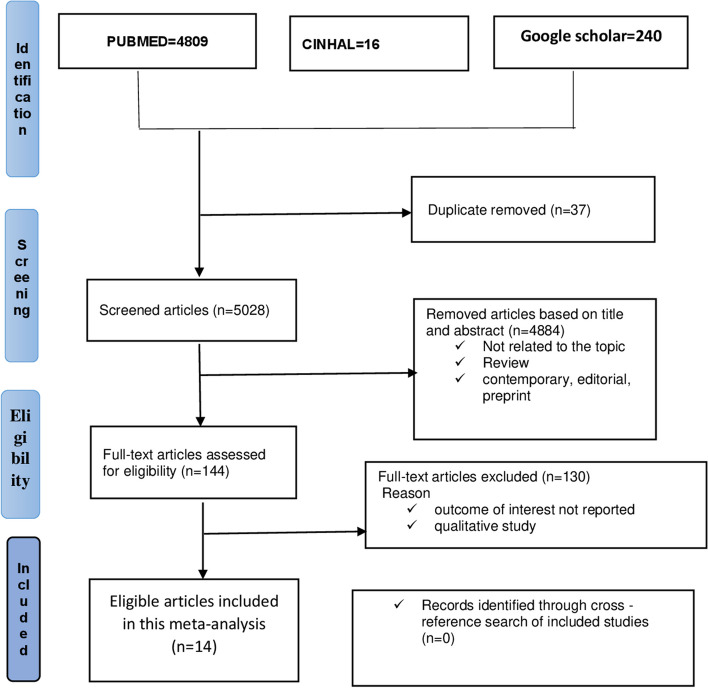
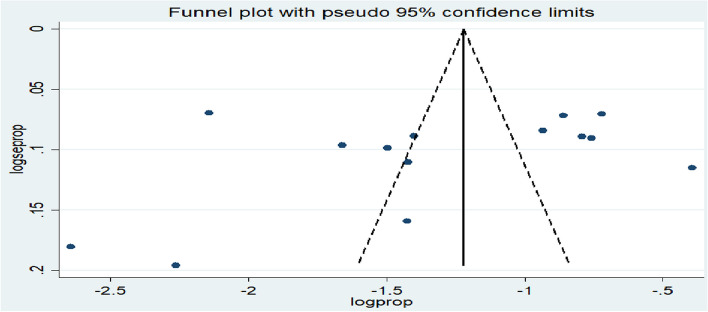
The Preferred Reporting Items for Systematic Reviews and Meta-Analyses guidelines were used to develop the systematic review and meta-analysis. All English-language studies conducted between 31 December 2019 and May 15/2022 were extracted from databases such as PubMed/Medline, CINAHL, and Google Scholar. The quality of the articles was assessed using the Joanna Briggs Institute Meta-Analysis of Statistics Assessment and Review Instrument (JBI-MAStARI). The I was used to assess heterogeneity among studies. Publication bias was assessed using funnel plot inspection and Egger's test. A random effect model was used for the analysis using RevMan and STATA 14 software.
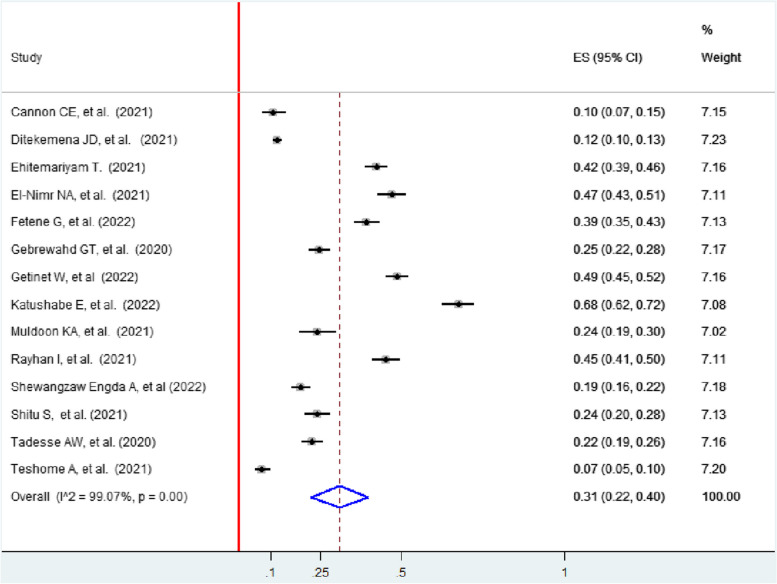
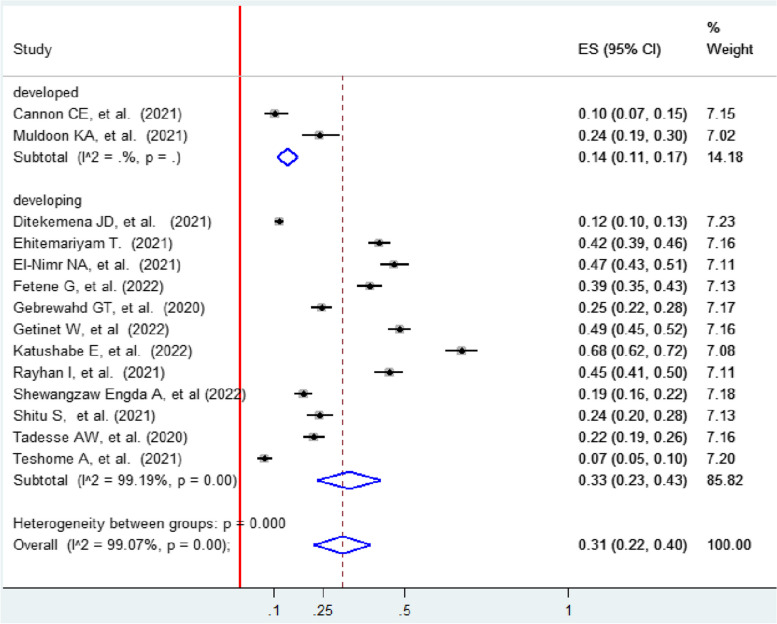
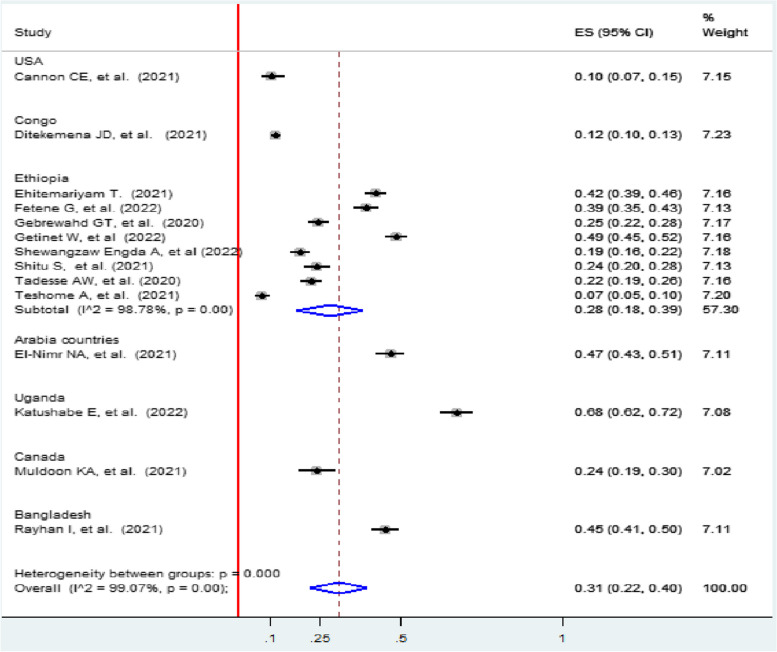
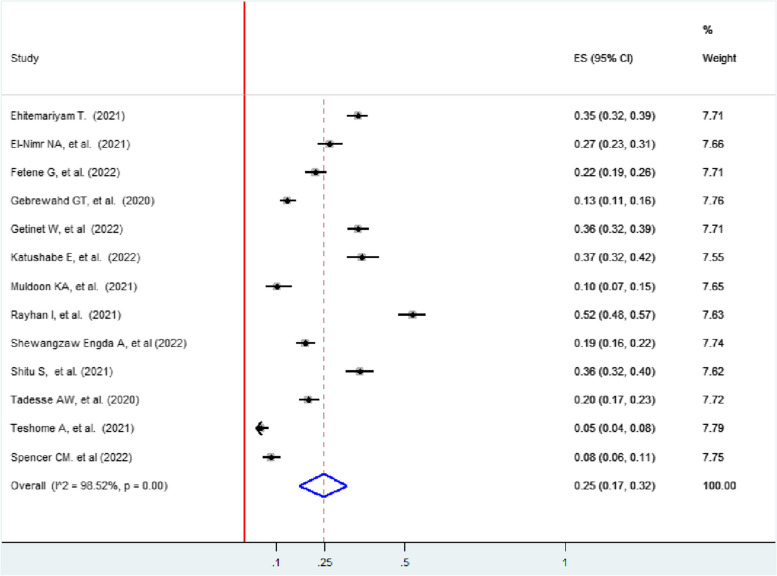
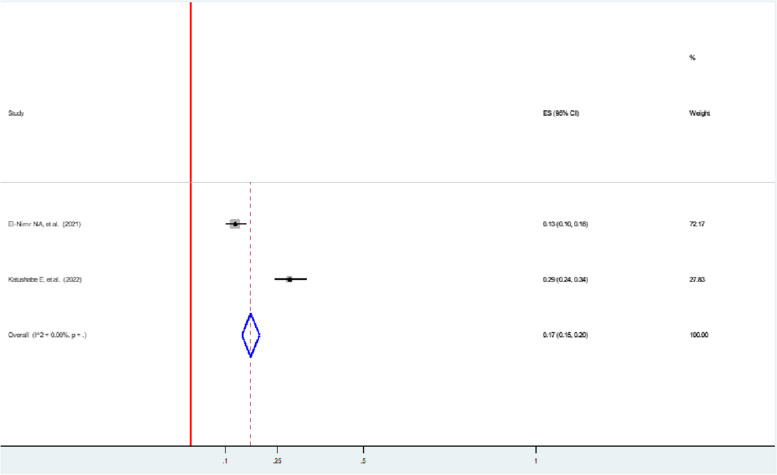
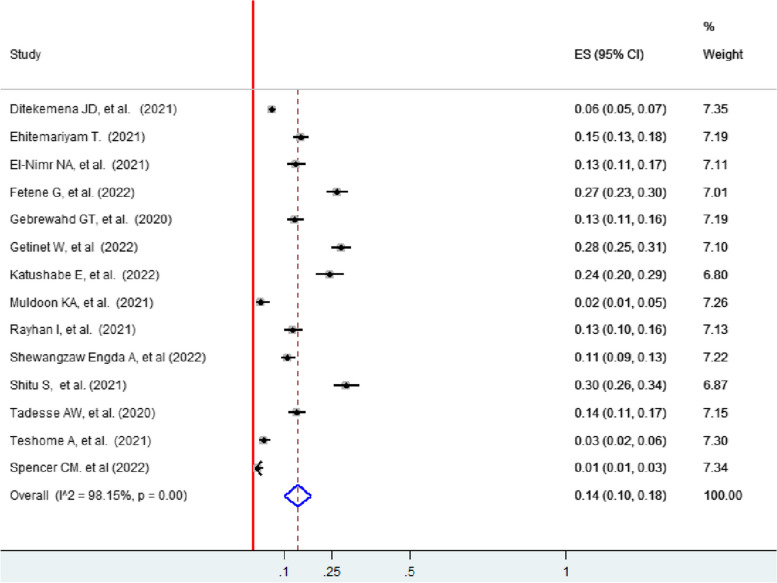
A total of 5065 studies were retrieved, and 14 studies were included in the final meta-analysis. The pooled prevalence of intimate partner violence was 31% (95% CI: 22, 40). Subgroup analysis based on region showed that the highest prevalence of intimate partner violence was in developing regions (33, 95% CI: 23.0, 43.0) compared to developed regions (14, 95% CI: 11.0, 17.0). Subgroup analysis based on country showed that Uganda had the highest prevalence of IPV 68% (95% CI: 62.0, 72.0), and the lowest was in the USA 10% (95% CI: 7.0, 15.0).
Nearly one in three women experienced intimate partner violence during the COVID-19 pandemic. Subgroup analysis based on region showed that the highest prevalence of intimate partner violence was in developing regions (33%). All forms of intimate partner violence (physical, sexual, emotional, and economic) were prevalent. Thus, available interventions should be implemented to alleviate women's intimate partner violence during the COVID-19 pandemic and similar emerging and remerging pandemics, particularly in developing countries.
PROSPERO registration number: CRD42022334613 .
在冠状病毒大流行期间,人们面临着严格的预防措施,包括居家和保持社交距离,这导致亲密伴侣暴力的发生率上升。妇女面临着双重健康危机,包括 COVID-19 和家庭暴力。尽管如此,对于 COVID-19 大流行期间亲密伴侣暴力的代表性数据仍然缺乏,而且结果也不一致。
本系统综述和荟萃分析采用首选报告项目进行系统评价和荟萃分析。从 PubMed/Medline、CINAHL 和 Google Scholar 等数据库中提取了 2019 年 12 月 31 日至 2022 年 5 月 15/20 日期间发表的所有英文研究。使用 Joanna Briggs 研究所荟萃分析统计评估和审查工具(JBI-MAStARI)评估文章的质量。使用 I² 评估研究之间的异质性。使用漏斗图检查和 Egger 检验评估发表偏倚。使用 RevMan 和 STATA 14 软件使用随机效应模型进行分析。
共检索到 5065 项研究,最终有 14 项研究纳入荟萃分析。亲密伴侣暴力的总患病率为 31%(95%CI:22,40)。基于区域的亚组分析显示,发展中地区亲密伴侣暴力的最高患病率为 33%(95%CI:23.0,43.0),而发达地区为 14%(95%CI:11.0,17.0)。基于国家的亚组分析显示,乌干达的 IPV 患病率最高,为 68%(95%CI:62.0,72.0),而美国最低,为 10%(95%CI:7.0,15.0)。
近三分之一的妇女在 COVID-19 大流行期间经历了亲密伴侣暴力。基于区域的亚组分析显示,发展中地区亲密伴侣暴力的最高患病率为 33%。所有形式的亲密伴侣暴力(身体、性、情感和经济)都很普遍。因此,应实施现有干预措施,以减轻妇女在 COVID-19 大流行期间以及类似新出现和重新出现的大流行期间的亲密伴侣暴力,特别是在发展中国家。
PROSPERO 注册号:CRD42022334613。