Department of Neurology, Third Affiliated Hospital of Zunyi Medical University (The First People's Hospital of Zunyi), Zunyi, Guizhou, China.
Medical College of Soochow University, Suzhou, Jiangsu, China.
Cell Mol Neurobiol. 2024 Feb 19;44(1):24. doi: 10.1007/s10571-024-01460-x.
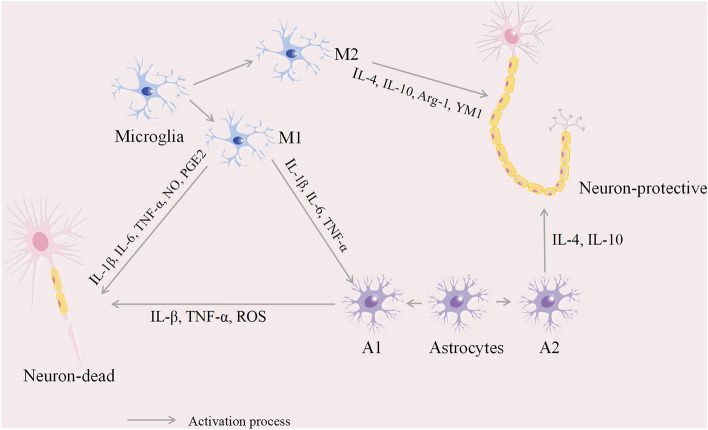
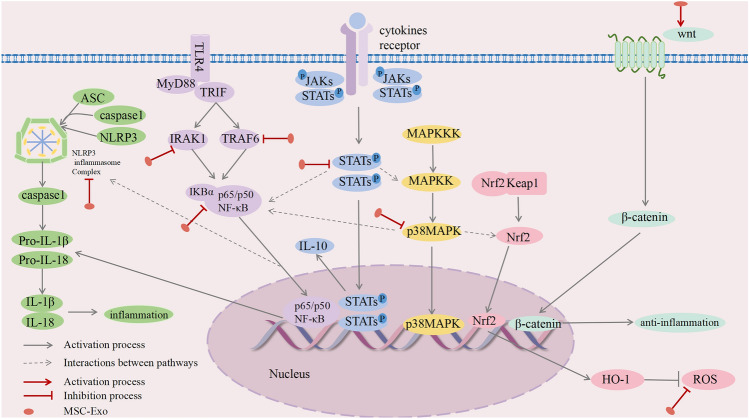
Neuroinflammation is an important pathogenesis of neurological diseases and causes a series of physiopathological changes, such as abnormal activation of glial cells, neuronal degeneration and death, and disruption of the blood‒brain barrier. Therefore, modulating inflammation may be an important therapeutic tool for treating neurological diseases. Mesenchymal stem cells (MSCs), as pluripotent stem cells, have great therapeutic potential for neurological diseases due to their regenerative ability, immunity, and ability to regulate inflammation. However, recent studies have shown that MSC-derived exosomes (MSC-Exos) play a major role in this process and play a key role in neuroprotection by regulating neuroglia. This review summarizes the recent progress made in regulating neuroinflammation by focusing on the mechanisms by which MSC-Exos are involved in the regulation of glial cells through signaling pathways such as the TLR, NF-κB, MAPK, STAT, and NLRP3 pathways to provide some references for subsequent research and therapy.
神经炎症是神经系统疾病的重要发病机制,可引起一系列病理生理变化,如神经胶质细胞异常激活、神经元变性和死亡以及血脑屏障破坏。因此,调节炎症可能是治疗神经系统疾病的重要治疗手段。间充质干细胞(MSCs)作为多能干细胞,因其具有再生能力、免疫调节能力和调节炎症的能力,对神经系统疾病具有很大的治疗潜力。然而,最近的研究表明,MSC 衍生的外泌体(MSC-Exos)在这一过程中起主要作用,并通过调节神经胶质细胞来发挥关键的神经保护作用。本综述通过关注 MSC-Exos 通过 TLR、NF-κB、MAPK、STAT 和 NLRP3 途径等信号通路参与调节神经胶质细胞的机制,总结了调节神经炎症的最新进展,为后续的研究和治疗提供了一些参考。