Broad Institute of MIT and Harvard, Cambridge, MA, USA.
Cincinnati Children's Hospital Medical Center, University of Cincinnati, Cincinnati, OH, USA.
Nat Med. 2024 Feb;30(2):480-487. doi: 10.1038/s41591-024-02796-z. Epub 2024 Feb 19.
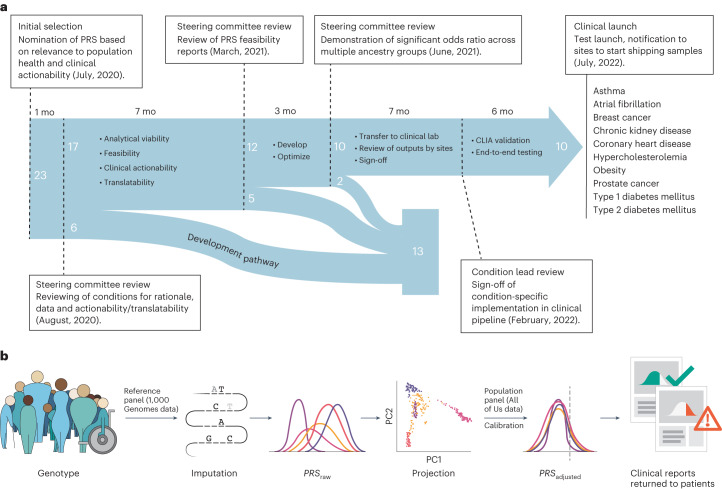
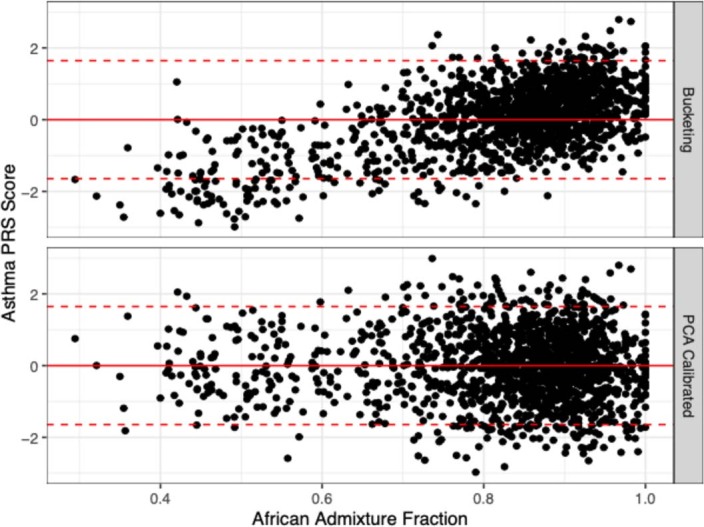
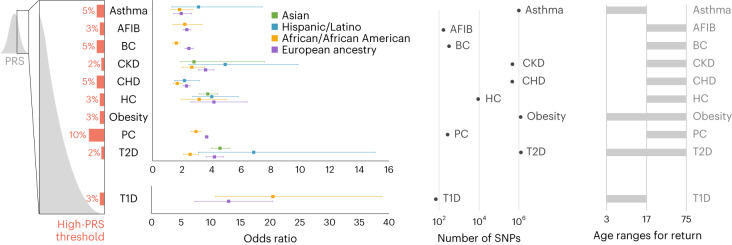
Polygenic risk scores (PRSs) have improved in predictive performance, but several challenges remain to be addressed before PRSs can be implemented in the clinic, including reduced predictive performance of PRSs in diverse populations, and the interpretation and communication of genetic results to both providers and patients. To address these challenges, the National Human Genome Research Institute-funded Electronic Medical Records and Genomics (eMERGE) Network has developed a framework and pipeline for return of a PRS-based genome-informed risk assessment to 25,000 diverse adults and children as part of a clinical study. From an initial list of 23 conditions, ten were selected for implementation based on PRS performance, medical actionability and potential clinical utility, including cardiometabolic diseases and cancer. Standardized metrics were considered in the selection process, with additional consideration given to strength of evidence in African and Hispanic populations. We then developed a pipeline for clinical PRS implementation (score transfer to a clinical laboratory, validation and verification of score performance), and used genetic ancestry to calibrate PRS mean and variance, utilizing genetically diverse data from 13,475 participants of the All of Us Research Program cohort to train and test model parameters. Finally, we created a framework for regulatory compliance and developed a PRS clinical report for return to providers and for inclusion in an additional genome-informed risk assessment. The initial experience from eMERGE can inform the approach needed to implement PRS-based testing in diverse clinical settings.
多基因风险评分 (PRS) 的预测性能有所提高,但在 PRS 能够在临床中实施之前,仍有几个挑战需要解决,包括 PRS 在不同人群中的预测性能降低,以及向提供者和患者解释和传达遗传结果。为了解决这些挑战,国家人类基因组研究所资助的电子病历和基因组学 (eMERGE) 网络已经开发了一个框架和管道,用于将基于 PRS 的基因组知情风险评估返回给 25000 名不同的成年人和儿童,作为临床研究的一部分。从最初的 23 种疾病列表中,根据 PRS 性能、医学可操作性和潜在临床实用性选择了 10 种疾病进行实施,包括心脏代谢疾病和癌症。在选择过程中考虑了标准化指标,并额外考虑了非洲和西班牙裔人群中的证据强度。然后,我们开发了一个临床 PRS 实施的管道(将评分转移到临床实验室,验证和验证评分性能),并利用来自 13475 名全美国人研究计划队列参与者的遗传多样性数据来校准 PRS 的均值和方差,利用遗传多样性数据来训练和测试模型参数。最后,我们创建了一个监管合规框架,并为提供者返回和包含在额外的基因组知情风险评估中创建了 PRS 临床报告。eMERGE 的初步经验可以为在不同临床环境中实施基于 PRS 的测试所需的方法提供信息。