Owen Claire E, Poon Aurora M T, Liu Bonnia, Liew David F L, Yap Lee Pheng, Yang Victor, Leung Jessica L, McMaster Christopher R, Scott Andrew M, Buchanan Russell R C
Department of Rheumatology, Austin Health, Heidelberg, Victoria, Australia.
Department of Medicine, University of Melbourne, Parkville, Victoria, Australia.
Rheumatol Adv Pract. 2024 Feb 20;8(1):rkae003. doi: 10.1093/rap/rkae003. eCollection 2024.
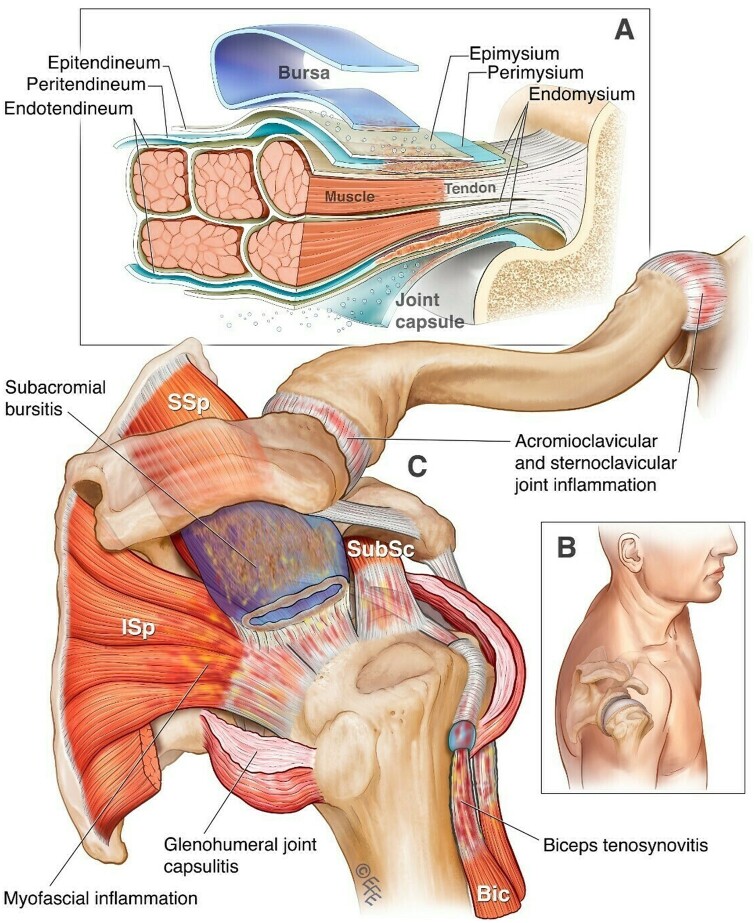
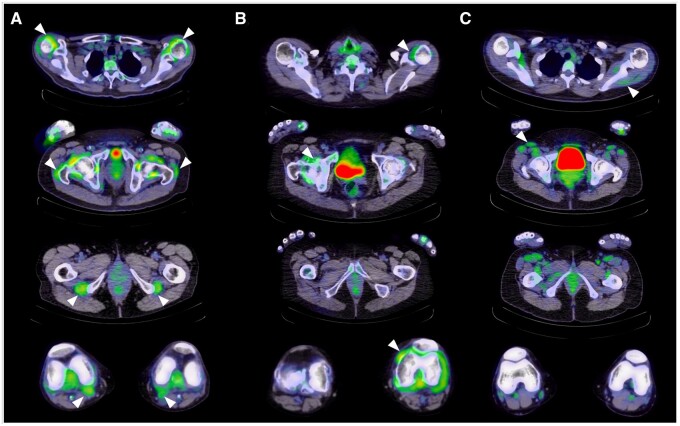
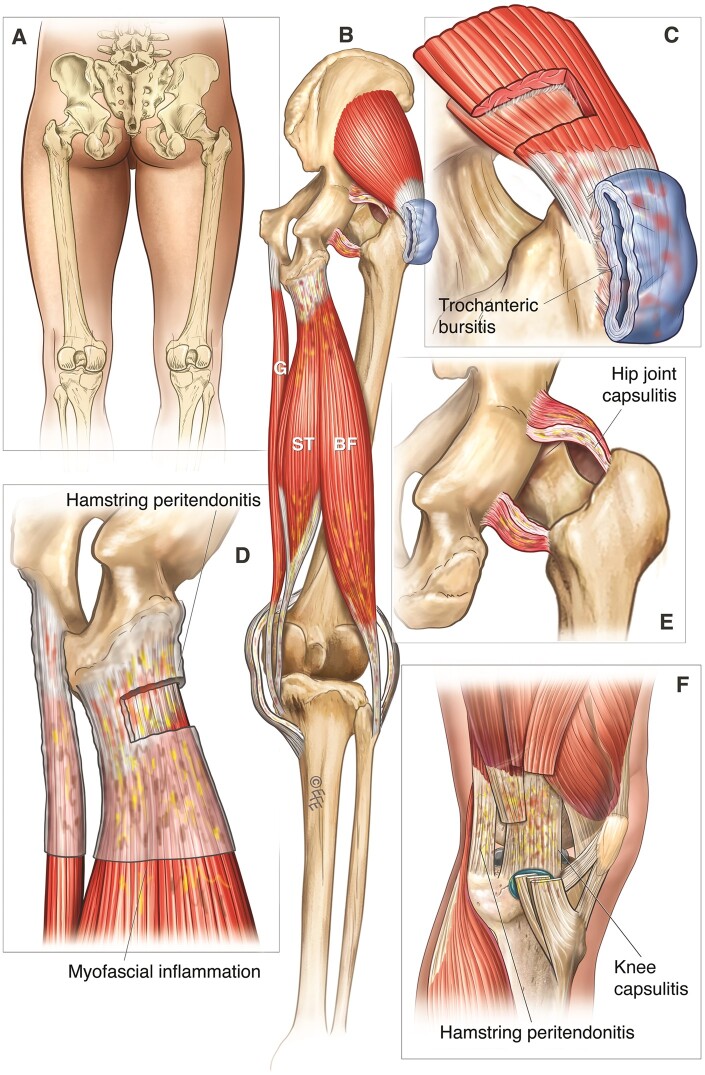
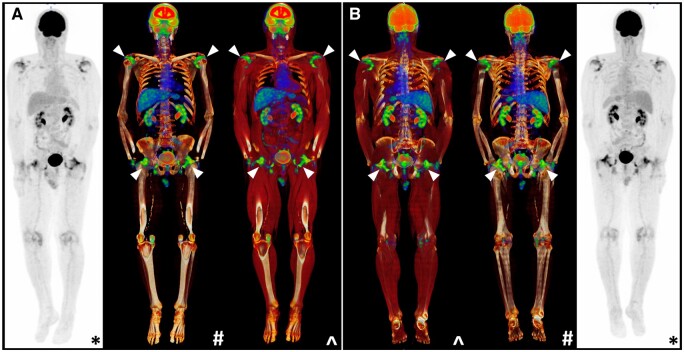
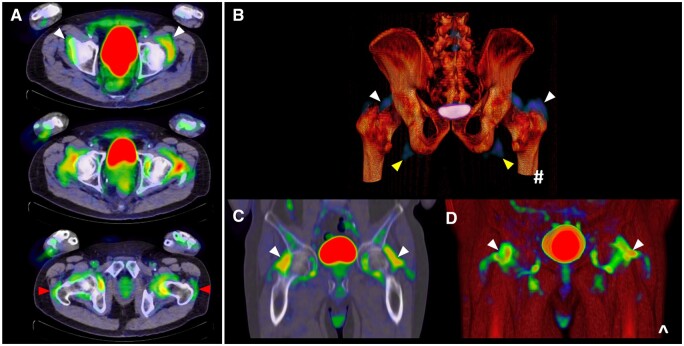
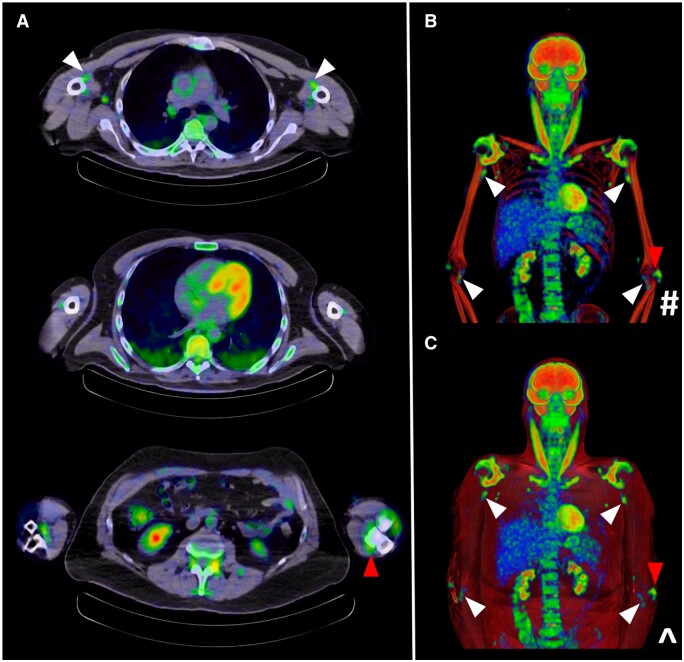
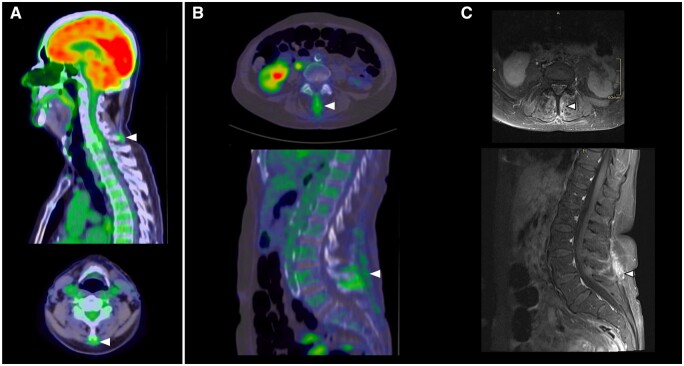
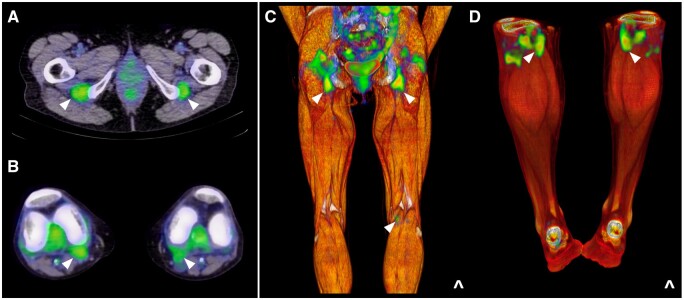
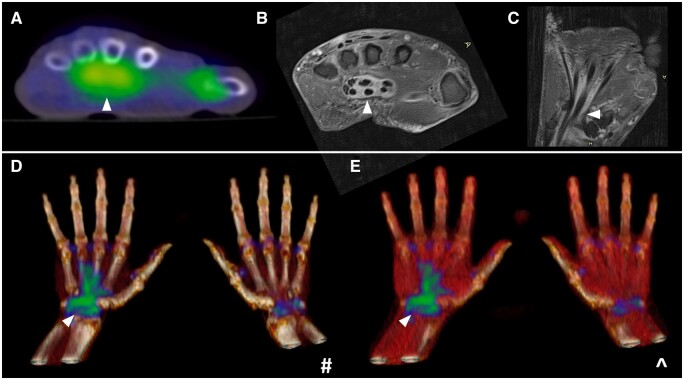
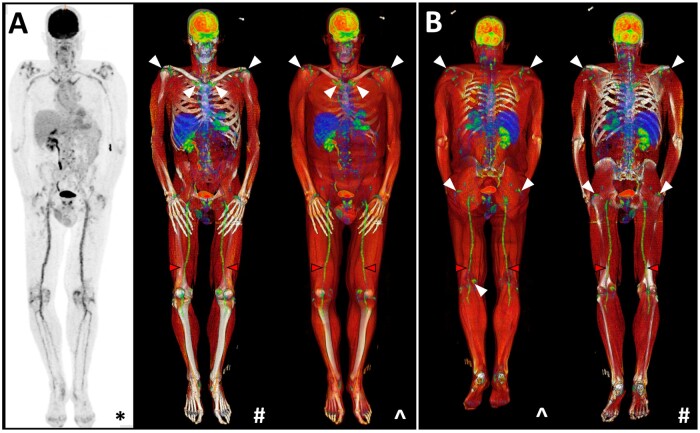
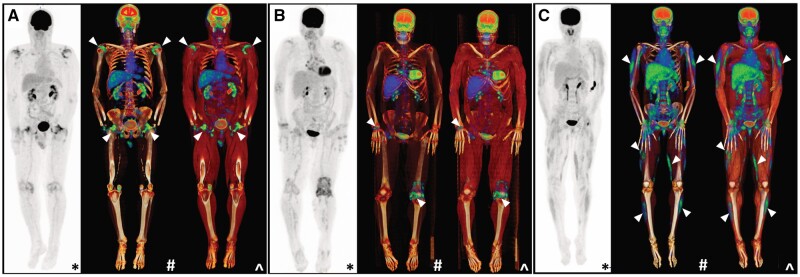
The impact of modern imaging in uncovering the underlying pathology of PMR cannot be understated. Long dismissed as an inflammatory syndrome with links to the large vessel vasculitis giant cell arteritis (GCA), a pathognomonic pattern of musculotendinous inflammation is now attributed to PMR and may be used to confirm its diagnosis. Among the available modalities, F-fluorodeoxyglucose (F-FDG) PET/CT is increasingly recognized for its high sensitivity and specificity, as well as added ability to detect concomitant large vessel GCA and exclude other relevant differentials like infection and malignancy. This atlas provides a contemporary depiction of PMR's pathology and outlines how this knowledge translates into a pattern of findings on whole body F-FDG PET/CT that can reliably confirm its diagnosis.
现代成像技术在揭示巨细胞动脉炎(PMR)潜在病理方面的影响不可小觑。长期以来,PMR一直被视为一种与大血管血管炎巨细胞动脉炎(GCA)相关的炎症综合征,如今一种特征性的肌腱肌肉炎症模式被归因于PMR,可用于确诊。在现有的检查方法中,F-氟脱氧葡萄糖(F-FDG)PET/CT因其高敏感性和特异性,以及能够检测出合并的大血管GCA并排除感染和恶性肿瘤等其他相关鉴别诊断的能力而越来越受到认可。本图谱对PMR的病理进行了当代描述,并概述了这些知识如何转化为全身F-FDG PET/CT上的一种表现模式,从而能够可靠地确诊PMR。