Daems C, Sékulic M, Vulsteke V, van Loo G, D'Hooge R, Callaerts-Végh Z, Callaerts P
Laboratory of Behavioral and Developmental Genetics, Department of Human Genetics, KU Leuven, Leuven, Belgium.
VIB-UGent Center for Inflammation Research, Gent, Belgium.
Brain Behav Immun Health. 2019 Dec 14;2:100018. doi: 10.1016/j.bbih.2019.100018. eCollection 2020 Feb.
Neuropsychiatric lupus (NPSLE) refers to the neurological and psychiatric manifestations that are commonly observed in patients with systemic lupus erythematosus (SLE). An important question regarding the pathogenesis of NPSLE is whether the symptoms are caused primarily by CNS-intrinsic mechanisms or develop as a consequence of systemic autoimmunity. Currently used spontaneous mouse models for SLE have already contributed significantly to unraveling how systemic immunity affects the CNS. However, they are less suited when interested in CNS primary mechanisms. In addition, none of these models are based on genes that are associated with SLE. In this study, we evaluate the influence of A20, a well-known susceptibility locus for SLE, on behavior and CNS-associated changes in inflammatory markers. Furthermore, given the importance of environmental triggers for disease onset and progression, the influence of an acute immunological challenge was evaluated.
Female and male A20 heterozygous mice (A20) and wildtype littermates were tested in an extensive behavioral battery. This was done at the age of 10±2weeks and 24 ± 2 weeks to evaluate the impact of aging. To investigate the contribution of an acute immunological challenge, LPS was injected intracerebroventricularly at the age of 10±2weeks followed by behavioral analysis. Underlying molecular mechanisms were evaluated in gene expression assays on hippocampus and cortex. White blood cell count and blood-brain barrier permeability were analyzed to determine whether peripheral inflammation is a relevant factor.
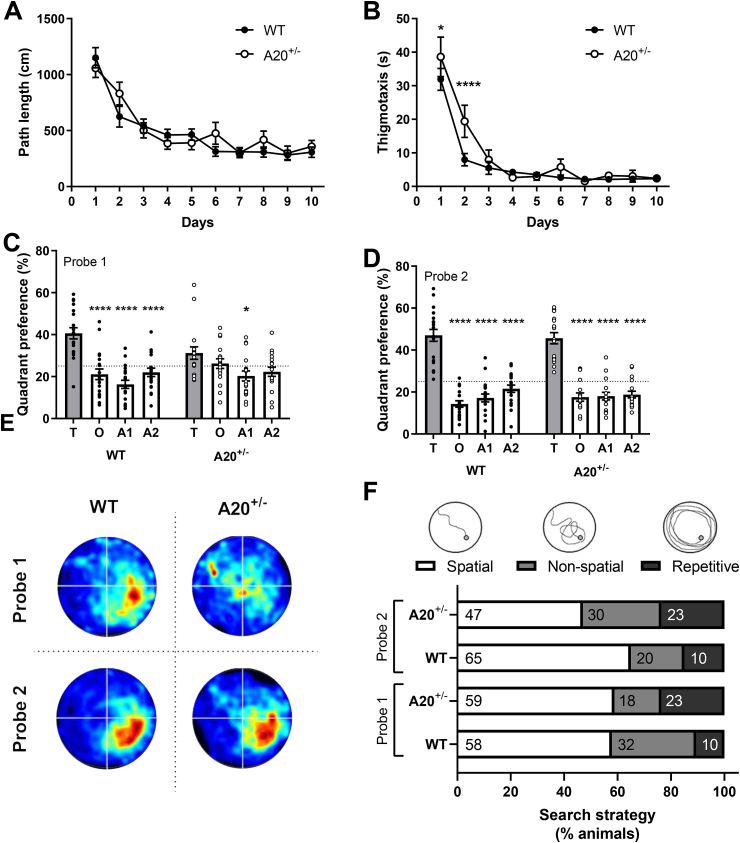
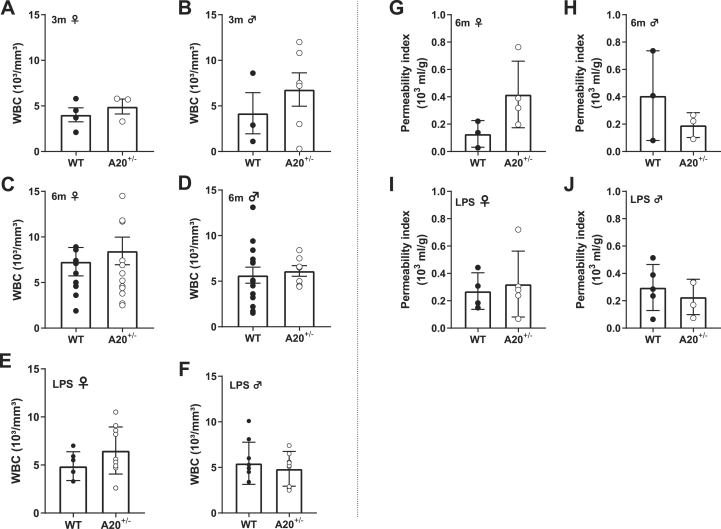
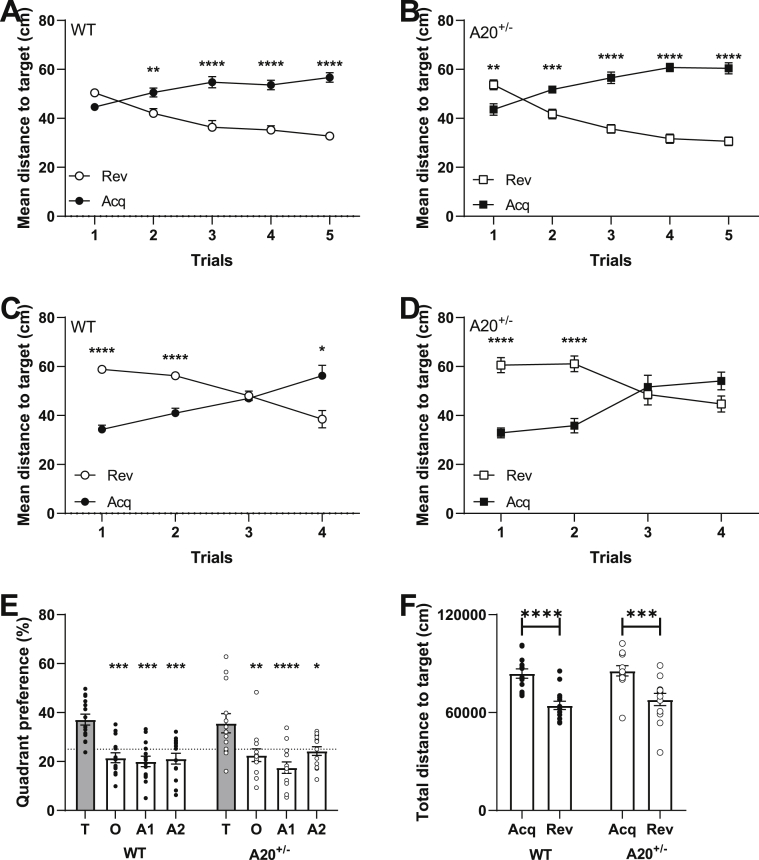
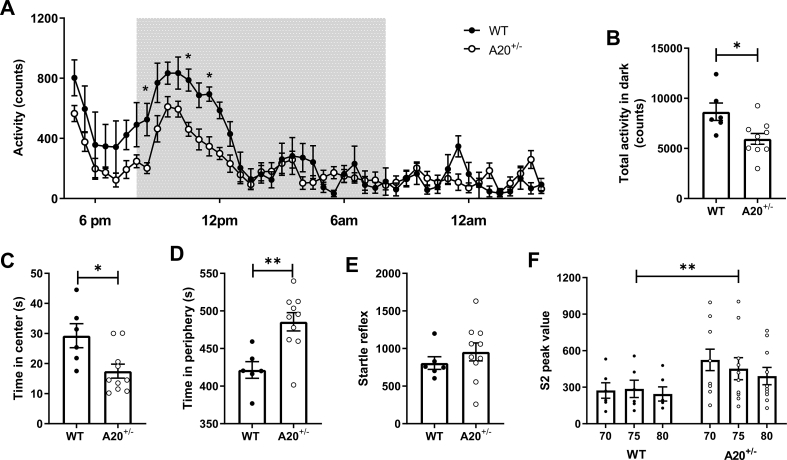
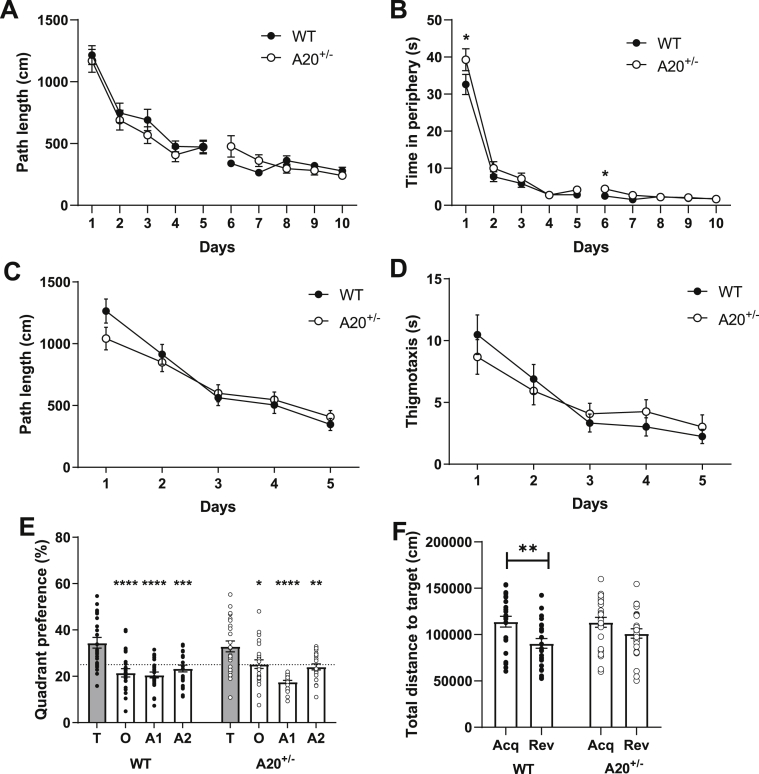
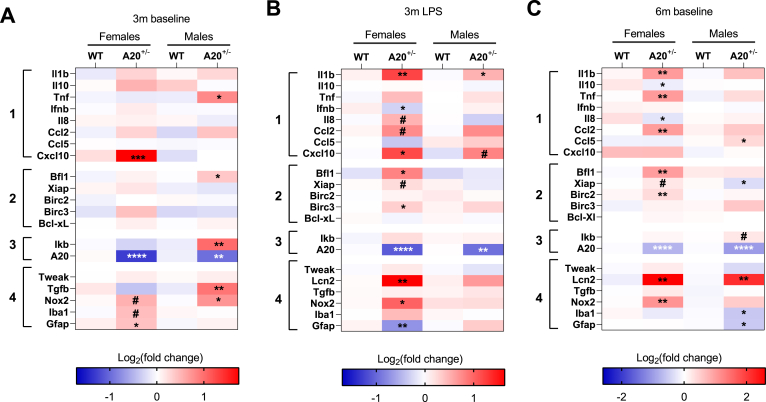
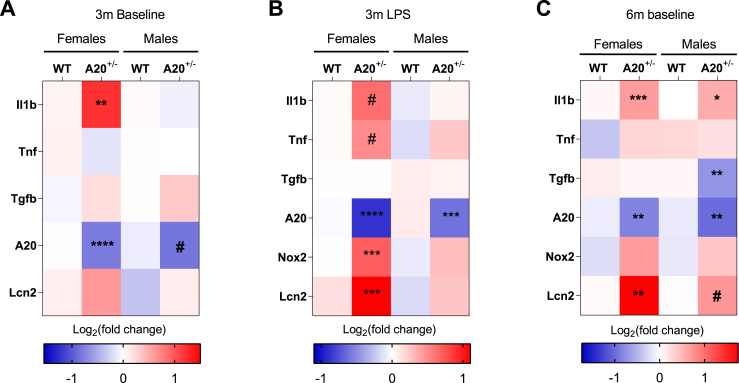
A20 heterozygosity predisposes to cognitive symptoms that were observed at the age of 10 ± 2 weeks and 24 ± 2 weeks. Young A20 males and females showed a subtle cognitive phenotype (10±2weeks) with distinct neuroinflammatory phenotypes. Aging was associated with clear neuroinflammation in female A20 mice only. The genetic predisposition in combination with an environmental stimulus exacerbates the behavioral impairments related to anxiety, cognitive dysfunction and sensorimotor gating. This was predominantly observed in females. Furthermore, signs of neuroinflammation were solely observed in female A20 mice. All above observations were made in the absence of peripheral inflammation and of changes in blood-brain barrier permeability, thus consistent with the CNS-primary hypothesis.
We show that A20 heterozygosity is a predisposing factor for NPSLE. Further mechanistic insight and possible therapeutic interventions can be studied in this mouse model that recapitulates several key hallmarks of the disease.
神经精神性狼疮(NPSLE)是指系统性红斑狼疮(SLE)患者中常见的神经和精神表现。关于NPSLE发病机制的一个重要问题是,其症状主要是由中枢神经系统内在机制引起的,还是作为系统性自身免疫的结果而出现的。目前使用的SLE自发小鼠模型已经为揭示全身免疫如何影响中枢神经系统做出了重大贡献。然而,当关注中枢神经系统的原发性机制时,它们不太适用。此外,这些模型均不是基于与SLE相关的基因构建的。在本研究中,我们评估了SLE的一个著名易感基因座A20对行为以及中枢神经系统相关炎症标志物变化的影响。此外,鉴于环境触发因素对疾病发生和进展的重要性,我们评估了急性免疫刺激的影响。
对雌性和雄性A20杂合小鼠(A20)及其野生型同窝小鼠进行了广泛的行为测试。分别在10±2周龄和24±2周龄时进行测试,以评估衰老的影响。为了研究急性免疫刺激的作用,在10±2周龄时向脑室内注射脂多糖(LPS),随后进行行为分析。通过对海马体和皮质进行基因表达分析来评估潜在的分子机制。分析白细胞计数和血脑屏障通透性,以确定外周炎症是否是一个相关因素。
A20杂合性易导致在10±2周龄和24±2周龄时出现认知症状。年轻的A20雄性和雌性小鼠表现出轻微的认知表型(10±2周龄),伴有明显的神经炎症表型。仅雌性A20小鼠的衰老与明显的神经炎症有关。遗传易感性与环境刺激相结合会加剧与焦虑、认知功能障碍和感觉运动门控相关的行为障碍。这主要在雌性小鼠中观察到。此外,仅在雌性A20小鼠中观察到神经炎症迹象。所有上述观察结果均在无外周炎症和血脑屏障通透性变化的情况下得出,因此与中枢神经系统原发性假说一致。
我们表明,A20杂合性是NPSLE的一个易感因素。可以在这个概括了该疾病几个关键特征的小鼠模型中进一步研究其机制并探索可能的治疗干预措施。