Guangzhou Key Laboratory of Formula-Pattern of Traditional Chinese Medicine, Jinan University, Guangzhou, China.
School of Traditional Chinese Medicine, Beijing University of Chinese Medicine, Beijing, China.
Microbiome. 2024 Feb 20;12(1):34. doi: 10.1186/s40168-024-01756-6.
Remodeling eubiosis of the gut microenvironment may contribute to preventing the occurrence and development of depression. Mounting experimental evidence has shown that complement C3 signaling is associated with the pathogenesis of depression, and disruption of the gut microbiota may be an underlying cause of complement system activation. However, the mechanism by which complement C3 participates in gut-brain crosstalk in the pathogenesis of depression remains unknown.
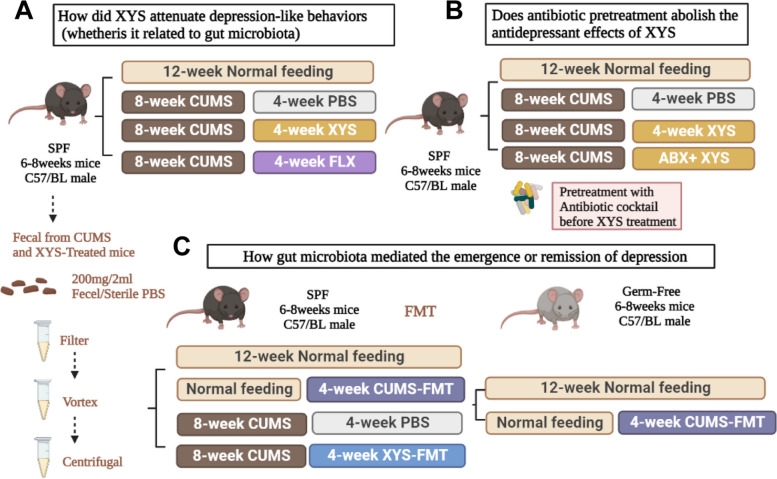
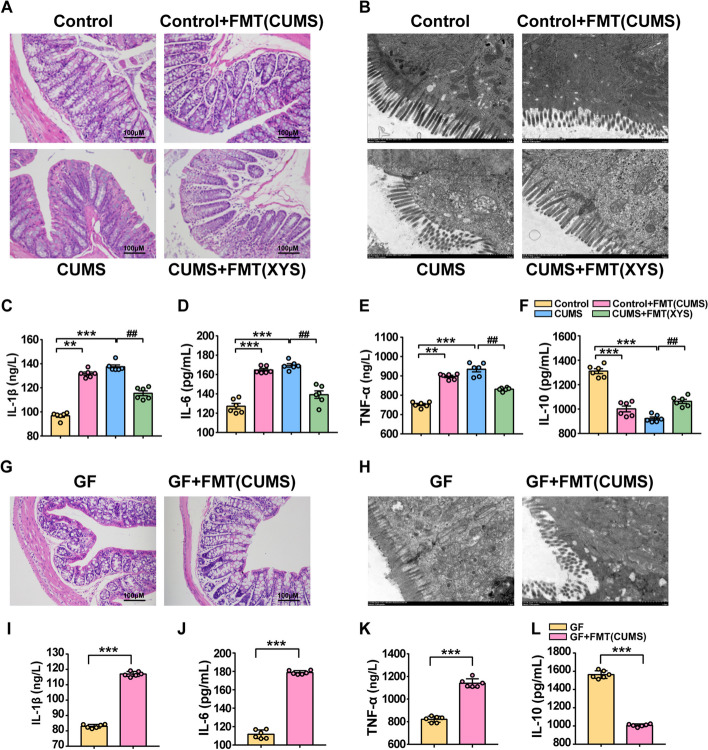
In the present study, we found that chronic unpredictable mild stress (CUMS)-induced mice exhibited obvious depression-like behavior as well as cognitive impairment, which was associated with significant gut dysbiosis, especially enrichment of Proteobacteria and elevation of microbiota-derived lipopolysaccharides (LPS). In addition, peripheral and central complement C3 activation and central C3/CR3-mediated aberrant synaptic pruning in microglia have also been observed. Transplantation of gut microbiota from CUMS-induced depression model mice into specific pathogen-free and germ-free mice induced depression-like behavior and concomitant cognitive impairment in the recipient mice, accompanied by increased activation of the complement C3/CR3 pathway in the prefrontal cortex and abnormalities in microglia-mediated synaptic pruning. Conversely, antidepressants and fecal microbiota transplantation from antidepressant-treated donors improved depression-like behaviors and restored gut microbiome disturbances in depressed mice. Concurrently, inhibition of the complement C3/CR3 pathway, amelioration of abnormal microglia-mediated synaptic pruning, and increased expression of the synapsin and postsynaptic density protein 95 were observed. Collectively, our results revealed that gut dysbiosis induces the development of depression-like behaviors through abnormal synapse pruning in microglia-mediated by complement C3, and the inhibition of abnormal synaptic pruning is the key to targeting microbes to treat depression.
Our findings provide novel insights into the involvement of complement C3/CR3 signaling and aberrant synaptic pruning of chemotactic microglia in gut-brain crosstalk in the pathogenesis of depression. Video Abstract.
重塑肠道微环境的生态平衡可能有助于预防抑郁的发生和发展。越来越多的实验证据表明,补体 C3 信号与抑郁症的发病机制有关,而肠道微生物群的破坏可能是补体系统激活的根本原因。然而,补体 C3 如何参与抑郁症发病机制中的肠-脑相互作用尚不清楚。
在本研究中,我们发现慢性不可预测轻度应激(CUMS)诱导的小鼠表现出明显的抑郁样行为和认知障碍,这与明显的肠道菌群失调有关,尤其是变形菌门的富集和微生物衍生的脂多糖(LPS)的升高。此外,还观察到外周和中枢补体 C3 激活以及中枢 C3/CR3 介导的小胶质细胞异常突触修剪。将 CUMS 诱导的抑郁模型小鼠的肠道微生物群移植到无菌和无菌小鼠中,会导致受体小鼠出现抑郁样行为和伴随的认知障碍,同时伴有补体 C3/CR3 途径在额前皮质中的过度激活和小胶质细胞介导的突触修剪异常。相反,抗抑郁药和来自抗抑郁治疗供体的粪便微生物群移植改善了抑郁小鼠的抑郁样行为并恢复了肠道微生物组的紊乱。同时,观察到补体 C3/CR3 途径的抑制、异常小胶质细胞介导的突触修剪的改善以及突触素和突触后密度蛋白 95 的表达增加。综上所述,我们的研究结果表明,肠道菌群失调通过补体 C3 介导的化学趋化性小胶质细胞异常突触修剪导致抑郁样行为的发展,而抑制异常突触修剪是靶向微生物治疗抑郁症的关键。
我们的研究结果为补体 C3/CR3 信号和趋化性小胶质细胞异常突触修剪在肠道-大脑相互作用中参与抑郁症发病机制提供了新的见解。