Department of rehabilitation medicine, Shunde Hospital, Southern Medical University, Foshan, 528300, China.
State Key Laboratory of Antiviral Drugs, School of Pharmacy, Henan University, Kaifeng, 475004, China.
Cell Commun Signal. 2024 Feb 20;22(1):139. doi: 10.1186/s12964-023-01409-5.
Malaria remains a global health burden, and the emergence and increasing spread of drug resistance to current antimalarials poses a major challenge to malaria control. There is an urgent need to find new drugs or strategies to alleviate this predicament. Celastrol (Cel) is an extensively studied natural bioactive compound that has shown potentially promising antimalarial activity, but its antimalarial mechanism remains largely elusive.
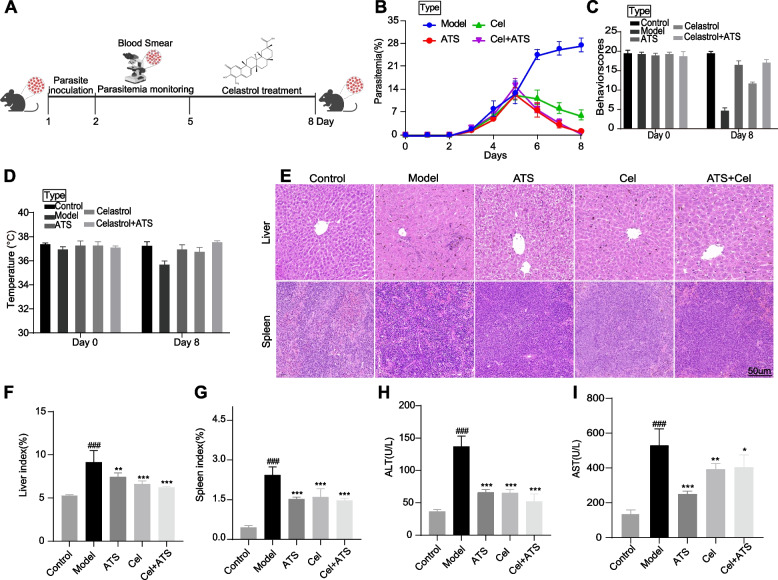
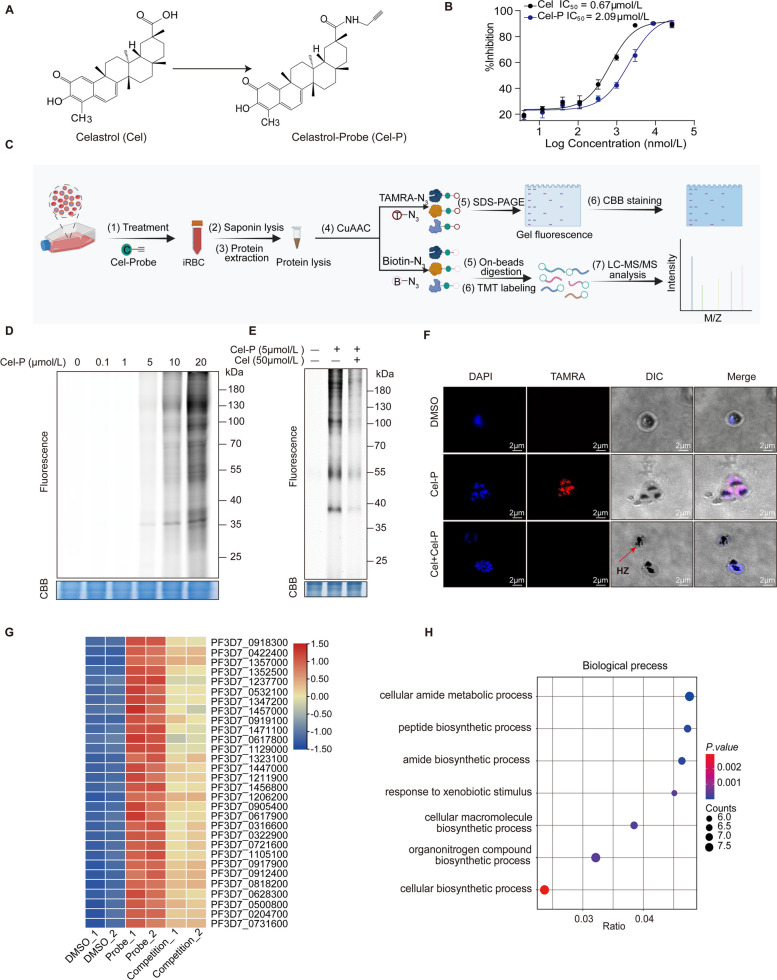
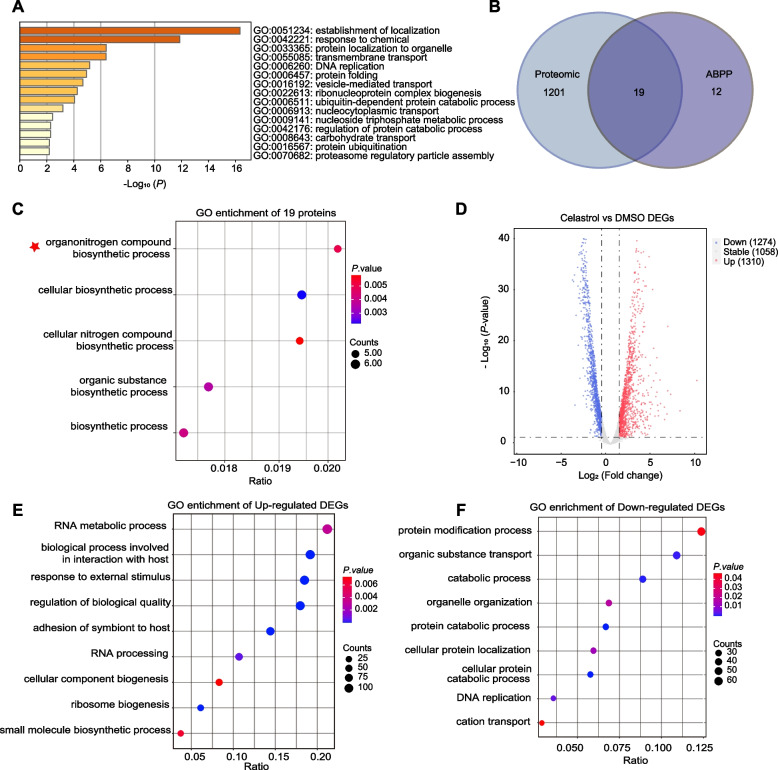
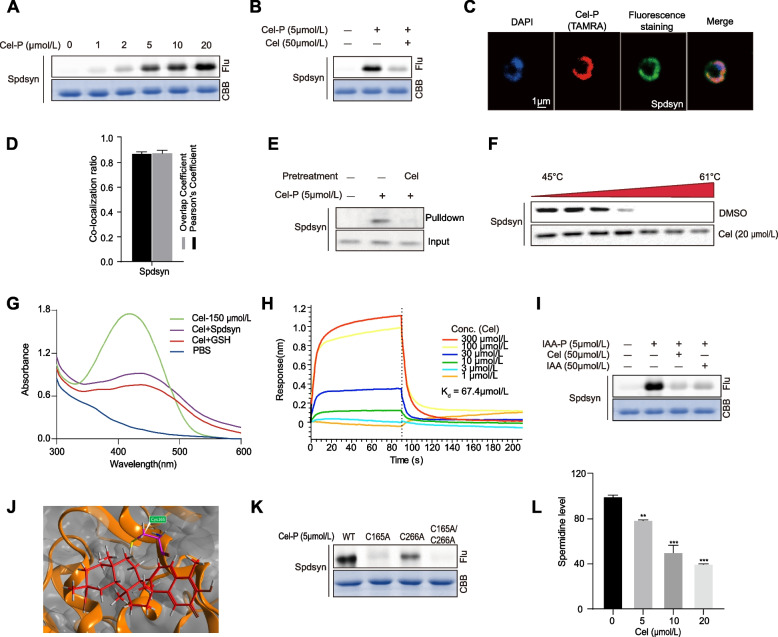
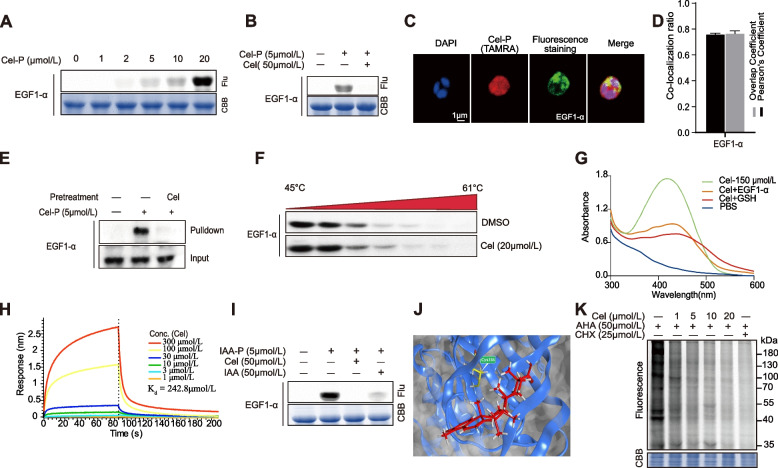
We first established the Plasmodium berghei ANKA-infected C57BL/6 mouse model and systematically evaluated the antimalarial effects of Cel in conjunction with in vitro culture of Plasmodium falciparum. The potential antimalarial targets of Cel were then identified using a Cel activity probe based on the activity-based protein profiling (ABPP) technology. Subsequently, the antimalarial mechanism was analyzed by integrating with proteomics and transcriptomics. The binding of Cel to the identified key target proteins was verified by a series of biochemical experiments and functional assays.
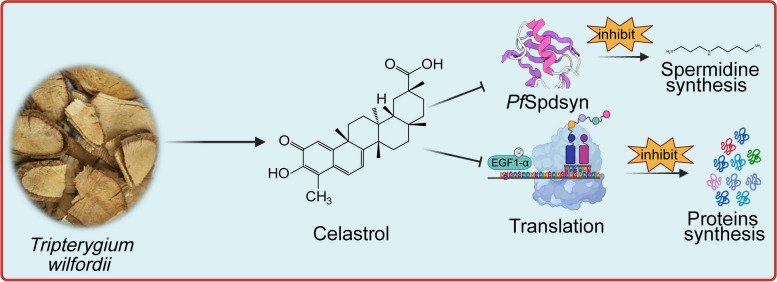
The results of the pharmacodynamic assay showed that Cel has favorable antimalarial activity both in vivo and in vitro. The ABPP-based target profiling showed that Cel can bind to a number of proteins in the parasite. Among the 31 identified potential target proteins of Cel, PfSpdsyn and PfEGF1-α were verified to be two critical target proteins, suggesting the role of Cel in interfering with the de novo synthesis of spermidine and proteins of the parasite, thus exerting its antimalarial effects.
In conclusion, this study reports for the first time the potential antimalarial targets and mechanism of action of Cel using the ABPP strategy. Our work not only support the expansion of Cel as a potential antimalarial agent or adjuvant, but also establishes the necessary theoretical basis for the development of potential antimalarial drugs with pentacyclic triterpenoid structures, as represented by Cel. Video Abstract.
疟疾仍然是全球健康的负担,当前抗疟药物的出现和耐药性的不断增加对疟疾控制构成了重大挑战。迫切需要寻找新的药物或策略来缓解这种困境。鬼臼毒素(Cel)是一种广泛研究的天然生物活性化合物,具有潜在的有希望的抗疟活性,但它的抗疟机制仍很大程度上难以捉摸。
我们首先建立了伯氏疟原虫 ANKA 感染的 C57BL/6 小鼠模型,并系统评估了 Cel 与体外培养的恶性疟原虫相结合的抗疟效果。然后,我们使用基于活性的蛋白质谱(ABPP)技术的 Cel 活性探针来鉴定 Cel 的潜在抗疟靶标。随后,通过整合蛋白质组学和转录组学来分析抗疟机制。通过一系列生化实验和功能测定验证了 Cel 与鉴定的关键靶蛋白的结合。
药效学测定结果表明,Cel 在体内和体外均具有良好的抗疟活性。基于 ABPP 的靶标分析表明,Cel 可以与寄生虫中的许多蛋白质结合。在鉴定的 31 个 Cel 的潜在靶标蛋白中,PfSpdsyn 和 PfEGF1-α被验证为两个关键靶标蛋白,表明 Cel 干扰精脒从头合成和寄生虫蛋白的作用,从而发挥其抗疟作用。
总之,本研究首次使用 ABPP 策略报告了 Cel 的潜在抗疟靶标和作用机制。我们的工作不仅支持 Cel 作为潜在抗疟药物或佐剂的扩展,而且为以 Cel 为代表的具有五环三萜结构的潜在抗疟药物的开发奠定了必要的理论基础。