Artemisinin Research Center, Institute of Chinese Materia Medica, China Academy of Chinese Medical Sciences, Beijing, 100700, China.
Department of Traditional Chinese Medicine, Southern Medical University, Guangzhou, 510515, China.
Mil Med Res. 2022 Jun 14;9(1):30. doi: 10.1186/s40779-022-00390-3.
Malaria is a devastating infectious disease that disproportionally threatens hundreds of millions of people in developing countries. In the history of anti-malaria campaign, chloroquine (CQ) has played an indispensable role, however, its mechanism of action (MoA) is not fully understood.
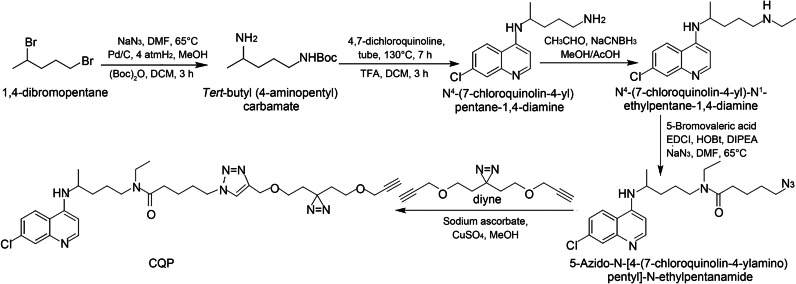
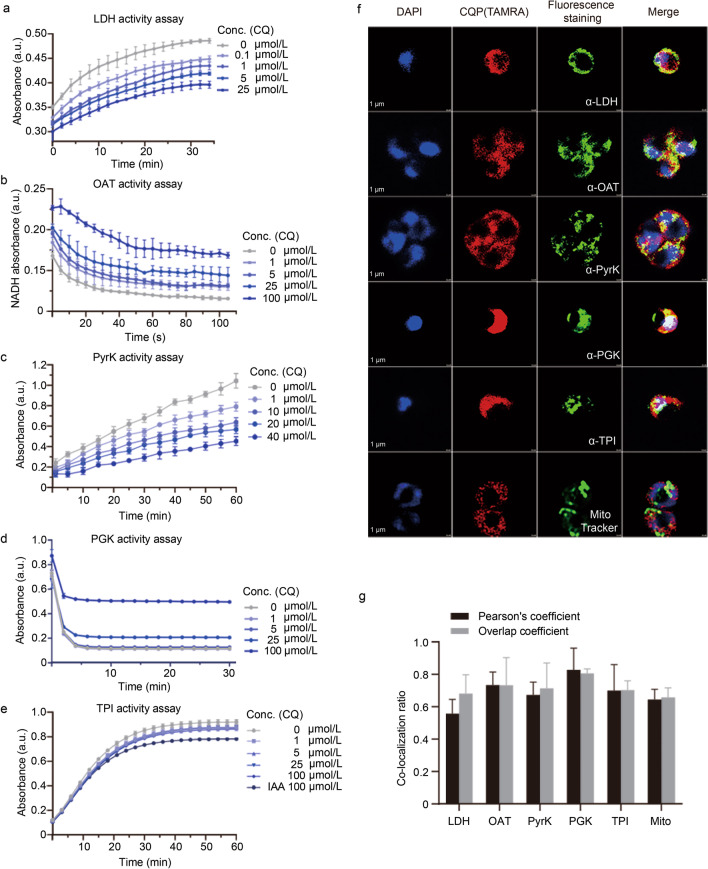
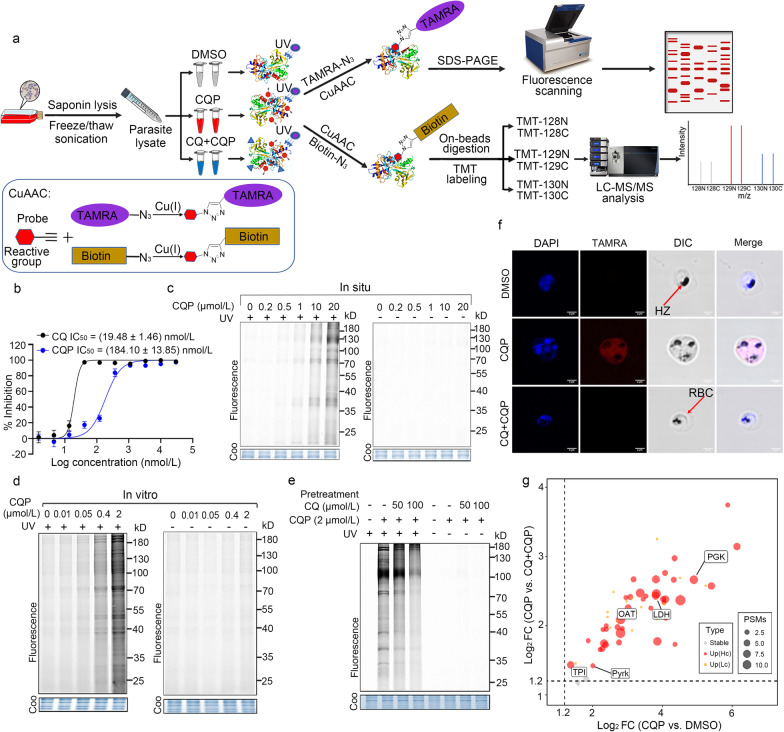
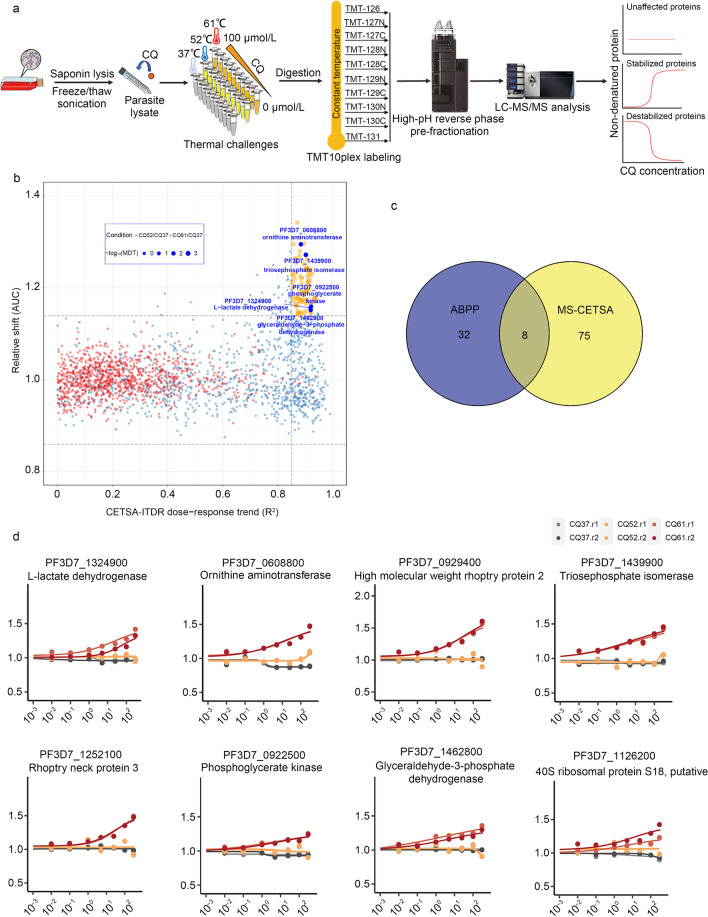
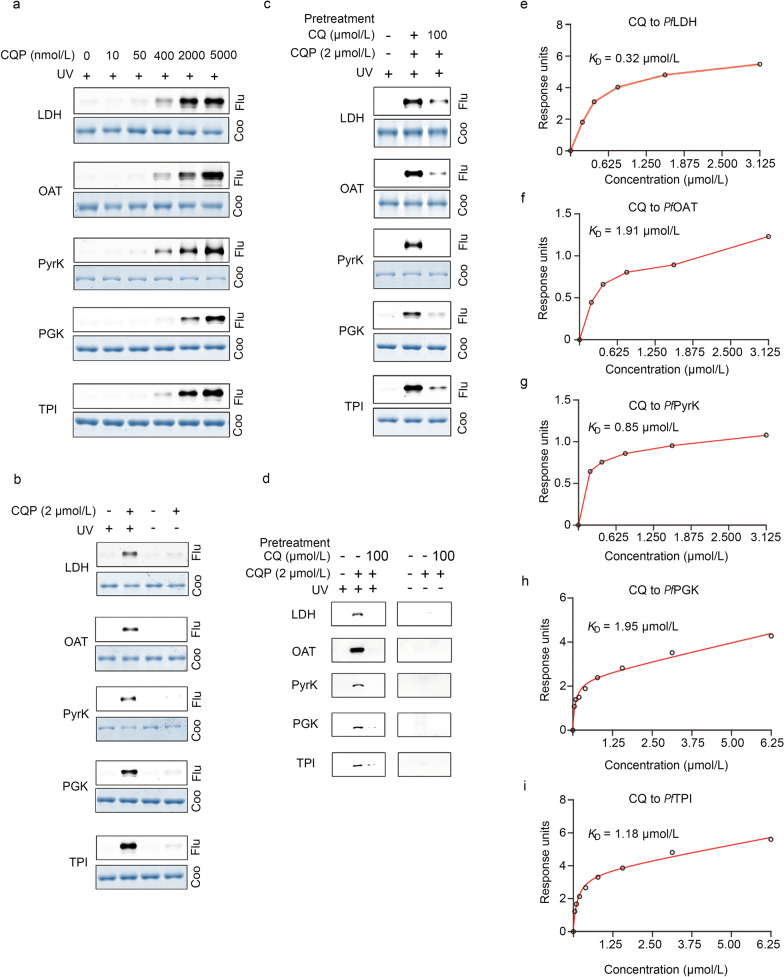
We used the principle of photo-affinity labeling and click chemistry-based functionalization in the design of a CQ probe and developed a combined deconvolution strategy of activity-based protein profiling (ABPP) and mass spectrometry-coupled cellular thermal shift assay (MS-CETSA) that identified the protein targets of CQ in an unbiased manner in this study. The interactions between CQ and these identified potential protein hits were confirmed by biophysical and enzymatic assays.
We developed a novel clickable, photo-affinity chloroquine analog probe (CQP) which retains the antimalarial activity in the nanomole range, and identified a total of 40 proteins that specifically interacted and photo-crosslinked with CQP which was inhibited in the presence of excess CQ. Using MS-CETSA, we identified 83 candidate interacting proteins out of a total of 3375 measured parasite proteins. At the same time, we identified 8 proteins as the most potential hits which were commonly identified by both methods.
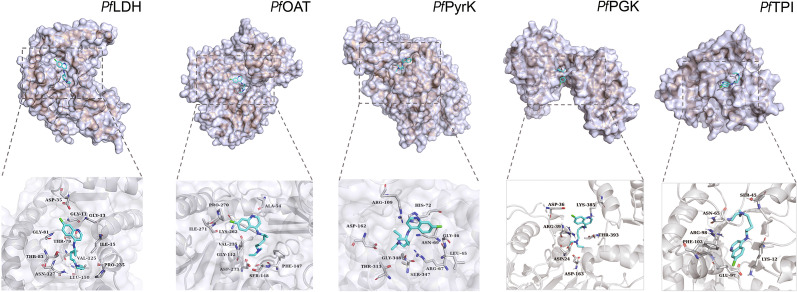
We found that CQ could disrupt glycolysis and energy metabolism of malarial parasites through direct binding with some of the key enzymes, a new mechanism that is different from its well-known inhibitory effect of hemozoin formation. This is the first report of identifying CQ antimalarial targets by a parallel usage of labeled (ABPP) and label-free (MS-CETSA) methods.
疟疾是一种毁灭性的传染病,对数亿发展中国家的人民造成了不成比例的威胁。在抗疟运动的历史上,氯喹(CQ)发挥了不可或缺的作用,但它的作用机制(MoA)尚未完全了解。
我们使用光亲和标记原理和基于点击化学的功能化设计了一种 CQ 探针,并开发了一种组合的去卷积策略,即基于活性的蛋白质谱分析(ABPP)和与细胞热转移测定(MS-CETSA)相结合的质谱分析,该策略在本研究中以无偏倚的方式鉴定了 CQ 的蛋白质靶标。通过生物物理和酶测定证实了 CQ 与这些鉴定的潜在蛋白靶标的相互作用。
我们开发了一种新型的可点击、光亲和氯喹类似物探针(CQP),在纳摩尔范围内保留了抗疟活性,并鉴定了总共 40 种与 CQP 特异性相互作用并发生光交联的蛋白质,这些蛋白质在存在过量 CQ 的情况下被抑制。使用 MS-CETSA,我们从总共 3375 种测量的寄生虫蛋白中鉴定出 83 种候选相互作用蛋白。同时,我们鉴定出 8 种蛋白作为最有潜力的候选蛋白,这两种方法都共同鉴定出了这 8 种蛋白。
我们发现 CQ 可以通过直接与一些关键酶结合,破坏疟原虫的糖酵解和能量代谢,这是一种与它众所周知的抑制血红素形成作用不同的新机制。这是首次通过平行使用标记(ABPP)和无标记(MS-CETSA)方法鉴定 CQ 抗疟靶标的报道。