Department of Obstetrics and Gynecology, Renmin Hospital of Wuhan University, Wuhan, 430060, Hubei, China.
Department of Obstetrics and Gynecology Ultrasound, Renmin Hospital of Wuhan University, Wuhan, 430060, China.
Stem Cell Res Ther. 2024 Feb 20;15(1):49. doi: 10.1186/s13287-024-03646-y.
Clinically, hormone replacement therapy (HRT) is the main treatment for primary ovarian insufficiency (POI). However, HRT may increase the risk of both breast cancer and cardiovascular disease. Exosomes derived from human umbilical cord mesenchymal stem cell (hUC-MSC) have been gradually applied to the therapy of a variety of diseases through inflammation inhibition, immune regulation, and tissue repair functions. However, the application and study of hUC-MSC exosomes in POI remain limited.
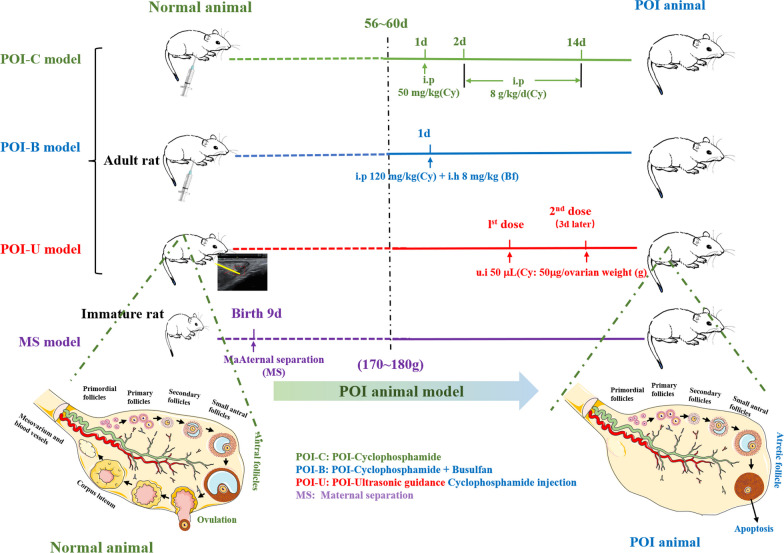
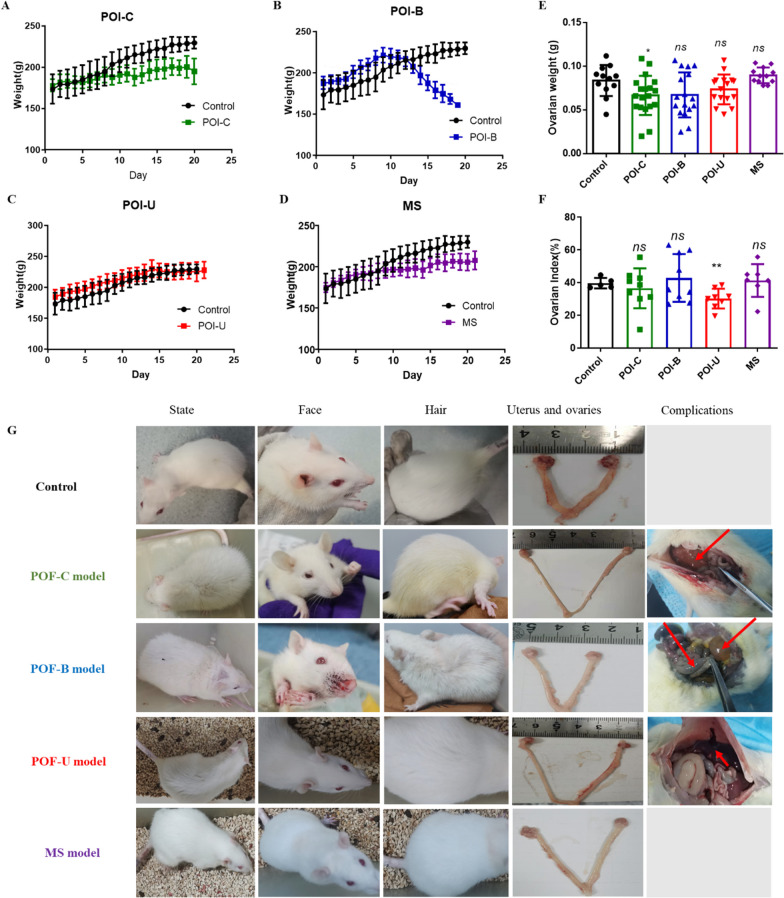
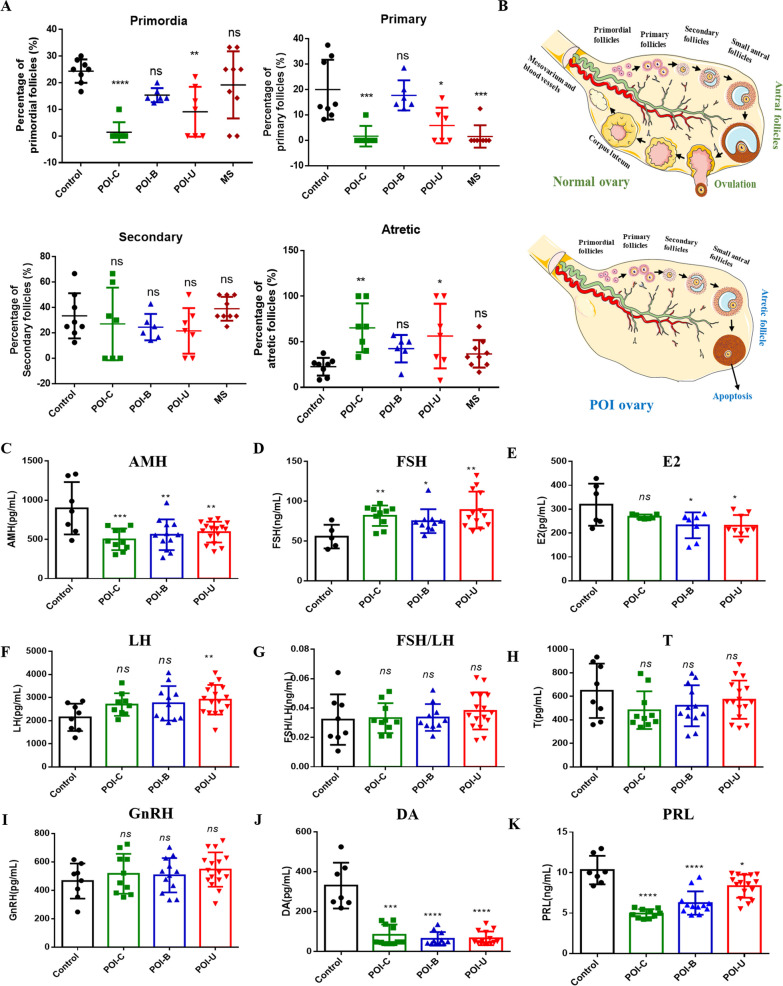
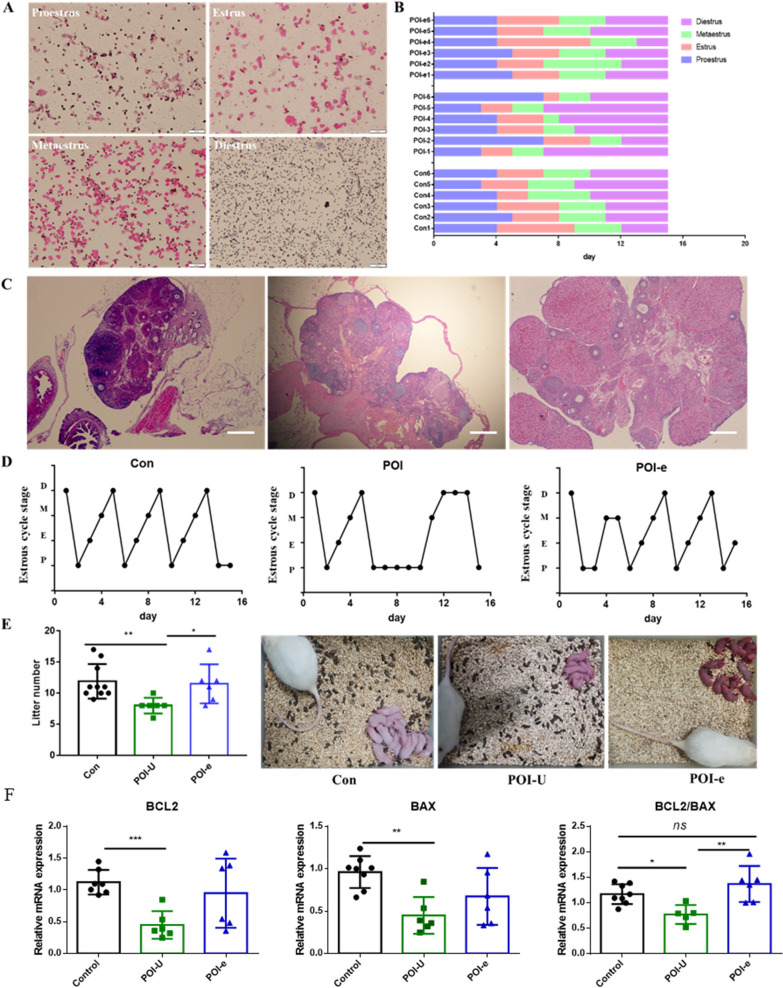
Here, we first constructed four rat animal models: the POI-C model (the "cyclophosphamide-induced" POI model via intraperitoneal injection), the POI-B model (the "busulfan-induced" POI model), the POI-U model (the "cyclophosphamide-induced" POI model under ultrasonic guidance), and MS model (the "maternal separation model"). Second, we compared the body weight, ovarian index, status, Rat Grimace Scale, complications, and mortality rate of different POI rat models. Finally, a transabdominal ultrasound-guided injection of hUC-MSC exosomes was performed, and its therapeuticy effects on the POI animal models were evaluated, including changes in hormone levels, oestrous cycles, ovarian apoptosis levels, and fertility. In addition, we performed RNA-seq to explore the possible mechanism of hUC-MSC exosomes function.
Compared with the POI-C, POI-B, and MS animal models, the POI-U model showed less fluctuation in weight, a lower ovarian index, fewer complications, a lower mortality rate, and a higher model success rate. Second, we successfully identified hUC-MSCs and their exosomes, and performed ultrasound-guided intraovarian hUC-MSCs exosomes injection. Finally, we confirmed that the ultrasound-guided exosome injection (termed POI-e) effectively improved ovarian hormone levels, the oestrous cycle, ovarian function, and fertility. Mechanically, hUC-MSCs may play a therapeutic role by regulating ovarian immune and metabolic functions.
In our study, we innovatively constructed an ultrasound-guided ovarian drug injection method to construct POI-U animal models and hUC-MSC exosomes injection. And we confirmed the therapeutic efficacy of hUC-MSC exosomes on the POI-U animal models. Our study will offer a better choice for new animal models of POI in the future and provides certain guidance for the hUC-MSCs exosome therapy in POI patients.
临床上,激素替代疗法(HRT)是治疗原发性卵巢功能不全(POI)的主要方法。然而,HRT 可能会增加乳腺癌和心血管疾病的风险。人脐带间充质干细胞(hUC-MSC)来源的外泌体通过抑制炎症、免疫调节和组织修复功能,逐渐应用于多种疾病的治疗。然而,hUC-MSC 外泌体在 POI 中的应用和研究仍然有限。
首先,我们构建了四个大鼠动物模型:POI-C 模型(腹腔注射环磷酰胺诱导的 POI 模型)、POI-B 模型(白消安诱导的 POI 模型)、POI-U 模型(超声引导下腹腔注射环磷酰胺诱导的 POI 模型)和 MS 模型(母婴分离模型)。其次,我们比较了不同 POI 大鼠模型的体重、卵巢指数、状态、大鼠苦脸量表、并发症和死亡率。最后,进行了经腹超声引导下 hUC-MSC 外泌体注射,并评估其对 POI 动物模型的治疗效果,包括激素水平、发情周期、卵巢凋亡水平和生育能力的变化。此外,我们进行了 RNA-seq 以探讨 hUC-MSC 外泌体功能的可能机制。
与 POI-C、POI-B 和 MS 动物模型相比,POI-U 模型体重波动较小、卵巢指数较低、并发症较少、死亡率较低、模型成功率较高。其次,我们成功鉴定了 hUC-MSCs 及其外泌体,并进行了超声引导下卵巢内 hUC-MSCs 外泌体注射。最后,我们证实超声引导下外泌体注射(命名为 POI-e)可有效改善卵巢激素水平、发情周期、卵巢功能和生育能力。机制上,hUC-MSCs 可能通过调节卵巢免疫和代谢功能发挥治疗作用。
在本研究中,我们创新性地构建了一种超声引导卵巢药物注射方法,构建了 POI-U 动物模型和 hUC-MSC 外泌体注射,并证实了 hUC-MSC 外泌体对 POI-U 动物模型的治疗效果。我们的研究为未来 POI 的新型动物模型提供了更好的选择,并为 POI 患者的 hUC-MSCs 外泌体治疗提供了一定的指导。