Stowers Institute for Medical Research, Kansas City, MO, 64110, USA.
Division of Biology and Biological Engineering, California Institute of Technology, Pasadena, CA, 91125, USA.
Nat Commun. 2024 Feb 20;15(1):1538. doi: 10.1038/s41467-024-45911-x.
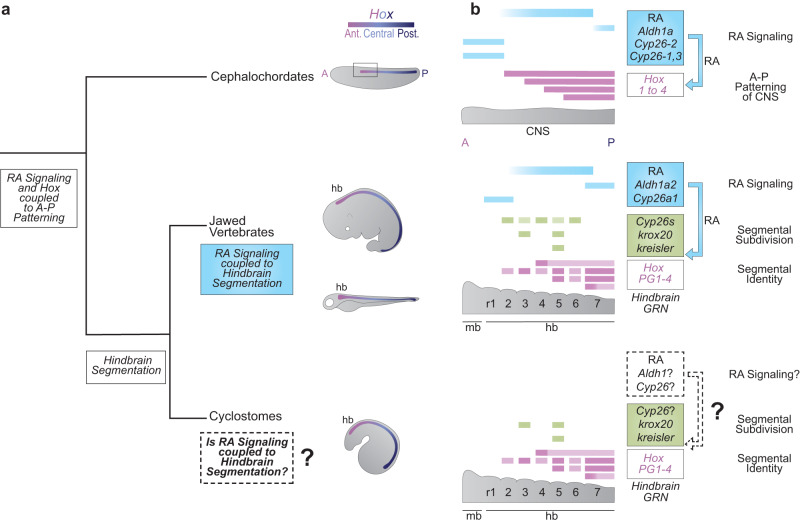
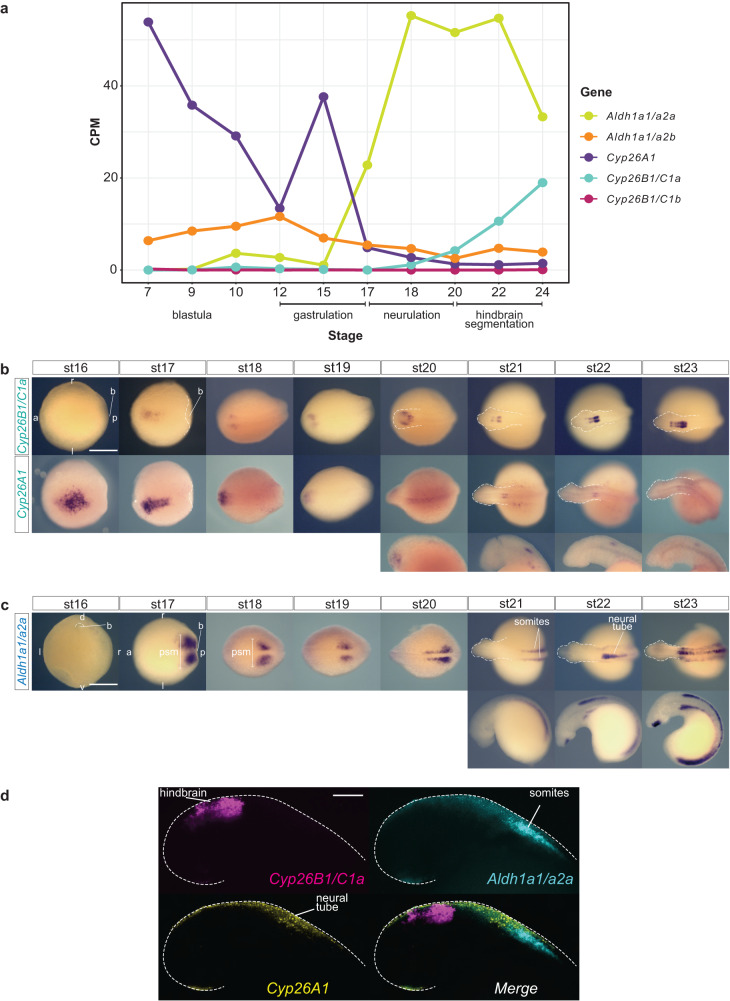
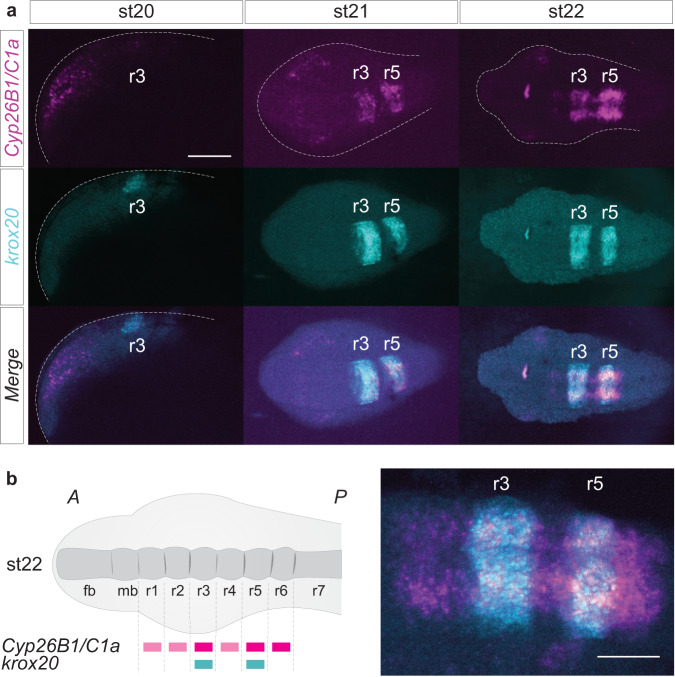
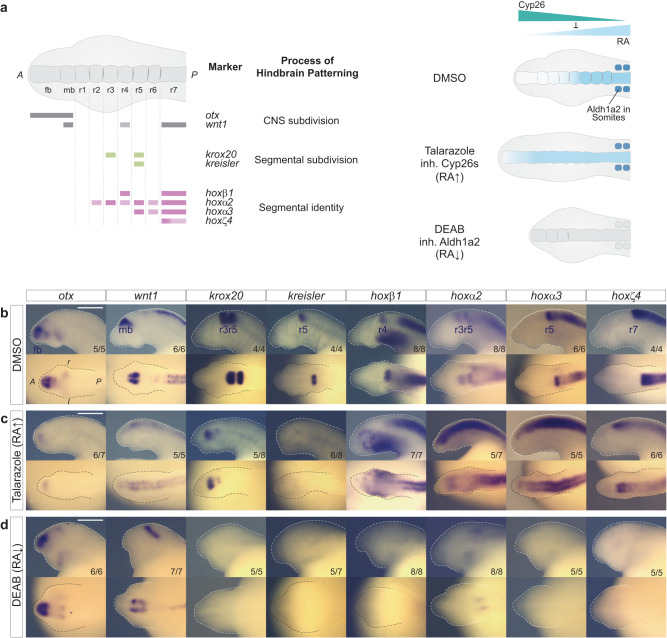
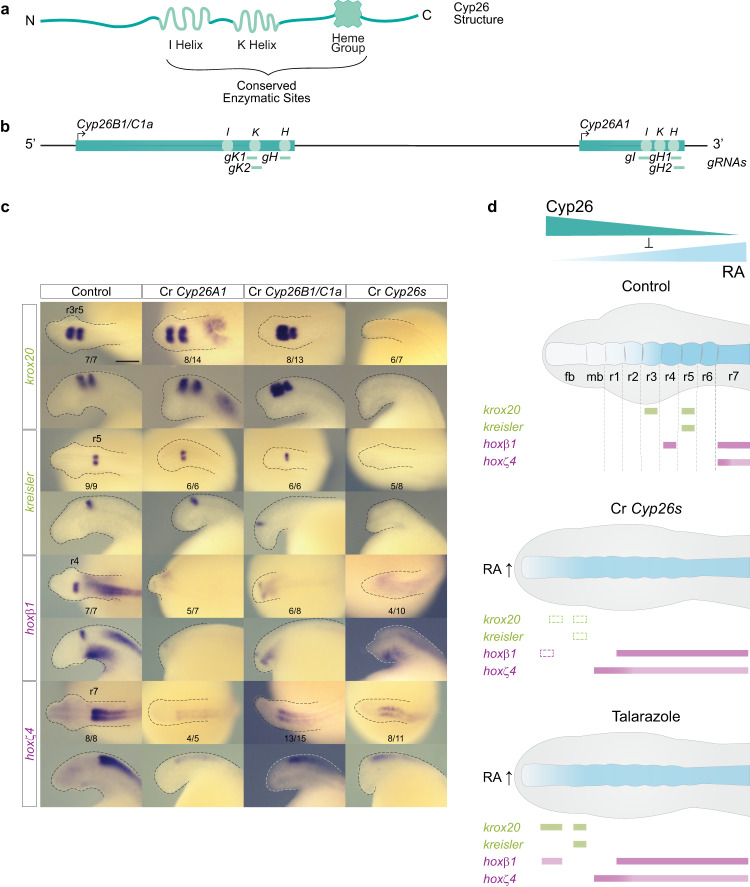
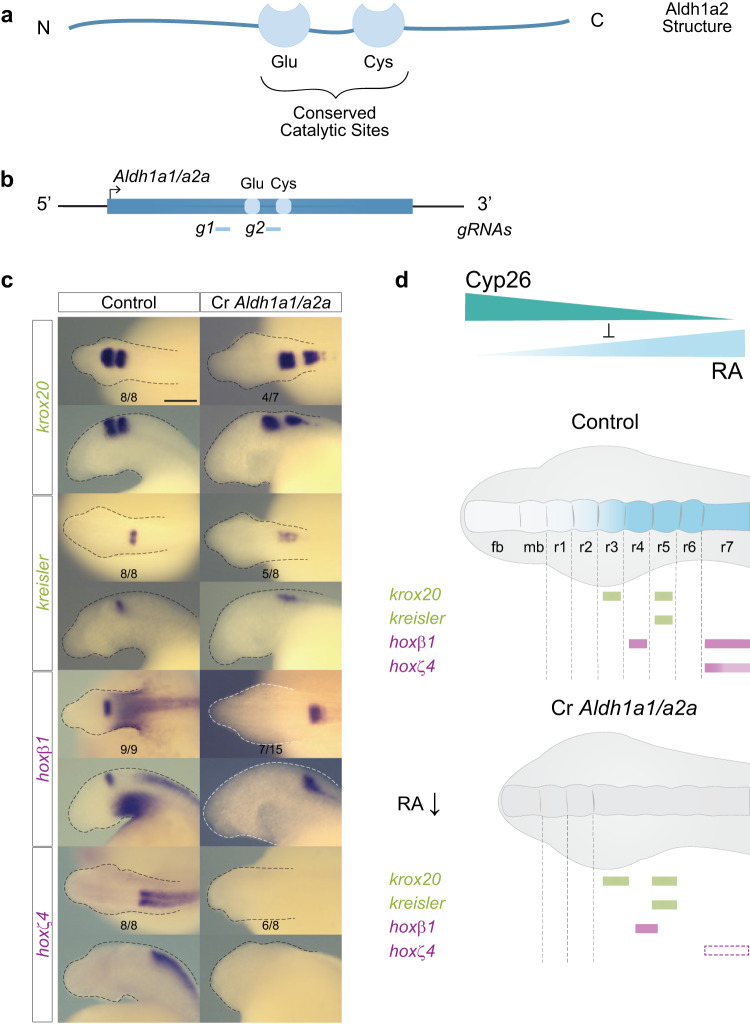
Retinoic acid (RA) is involved in antero-posterior patterning of the chordate body axis and, in jawed vertebrates, has been shown to play a major role at multiple levels of the gene regulatory network (GRN) regulating hindbrain segmentation. Knowing when and how RA became coupled to the core hindbrain GRN is important for understanding how ancient signaling pathways and patterning genes can evolve and generate diversity. Hence, we investigated the link between RA signaling and hindbrain segmentation in the sea lamprey Petromyzon marinus, an important jawless vertebrate model providing clues to decipher ancestral vertebrate features. Combining genomics, gene expression, and functional analyses of major components involved in RA synthesis (Aldh1as) and degradation (Cyp26s), we demonstrate that RA signaling is coupled to hindbrain segmentation in lamprey. Thus, the link between RA signaling and hindbrain segmentation is a pan vertebrate feature of the hindbrain and likely evolved at the base of vertebrates.
视黄酸(RA)参与脊索动物体轴的前后模式形成,并且在有颌脊椎动物中,已被证明在调节后脑分节的基因调控网络(GRN)的多个层次上发挥主要作用。了解 RA 何时以及如何与核心后脑 GRN 偶联对于理解古老的信号通路和模式形成基因如何进化并产生多样性非常重要。因此,我们研究了海七鳃鳗 Petromyzon marinus 中 RA 信号与后脑分节之间的联系,海七鳃鳗是一种重要的无颌脊椎动物模型,为解析祖先脊椎动物特征提供了线索。我们结合基因组学、主要参与 RA 合成(Aldh1as)和降解(Cyp26s)的基因表达和功能分析,证明了 RA 信号与七鳃鳗后脑分节有关。因此,RA 信号与后脑分节之间的联系是后脑的泛脊椎动物特征,并且可能是在脊椎动物的基部进化而来的。