From the Department of Intensive Care, Amsterdam University Medical Centres, location 'AMC', Amsterdam, the Netherlands (RLG, MJS, FP, LAB-K), Mahidol-Oxford Tropical Medicine Research Unit (MORU), Mahidol University, Bangkok, Thailand (MJS), Nuffield Department of Medicine, University of Oxford, Oxford, UK (MJS), Department of Anaesthesia, General Intensive Care and Pain Management, Medical University Wien, Vienna, Austria (MJS, ET), Department of Anaesthesia and Intensive Care, Biomedical and Clinical Sciences, Linköping University, Linköping, Sweden (MSC), Unit of Anaesthesia and Intensive Care, IRCCS Policlinico San Martino, Genoa, Italy (CR), ACHIEVE, Centre of Applied Research, Amsterdam University of Applied Sciences, Faculty of Health, Amsterdam (FP), Department of Intensive Care, Reinier de Graaf Hospital, Delft, the Netherlands (PL.J.H, LAB-K).
Eur J Anaesthesiol. 2024 Jun 1;41(6):438-446. doi: 10.1097/EJA.0000000000001972. Epub 2024 Mar 4.
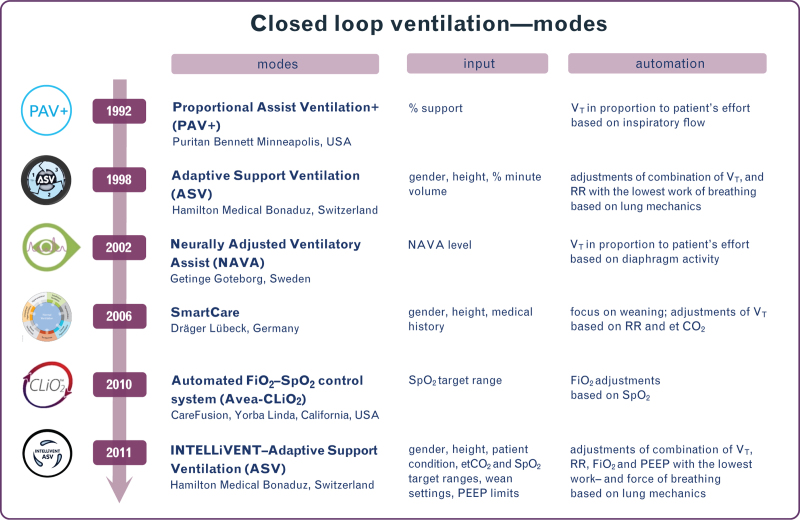
Lung protective ventilation is considered standard of care in the intensive care unit. However, modifying the ventilator settings can be challenging and is time consuming. Closed loop modes of ventilation are increasingly attractive for use in critically ill patients. With closed loop ventilation, settings that are typically managed by the ICU professionals are under control of the ventilator's algorithms.
To describe the effectiveness, safety, efficacy and workload with currently available closed loop ventilation modes.
Systematic review of randomised clinical trials.
A comprehensive systematic search in PubMed, Embase and the Cochrane Central register of Controlled Trials search was performed in January 2023.
Randomised clinical trials that compared closed loop ventilation with conventional ventilation modes and reported on effectiveness, safety, efficacy or workload.
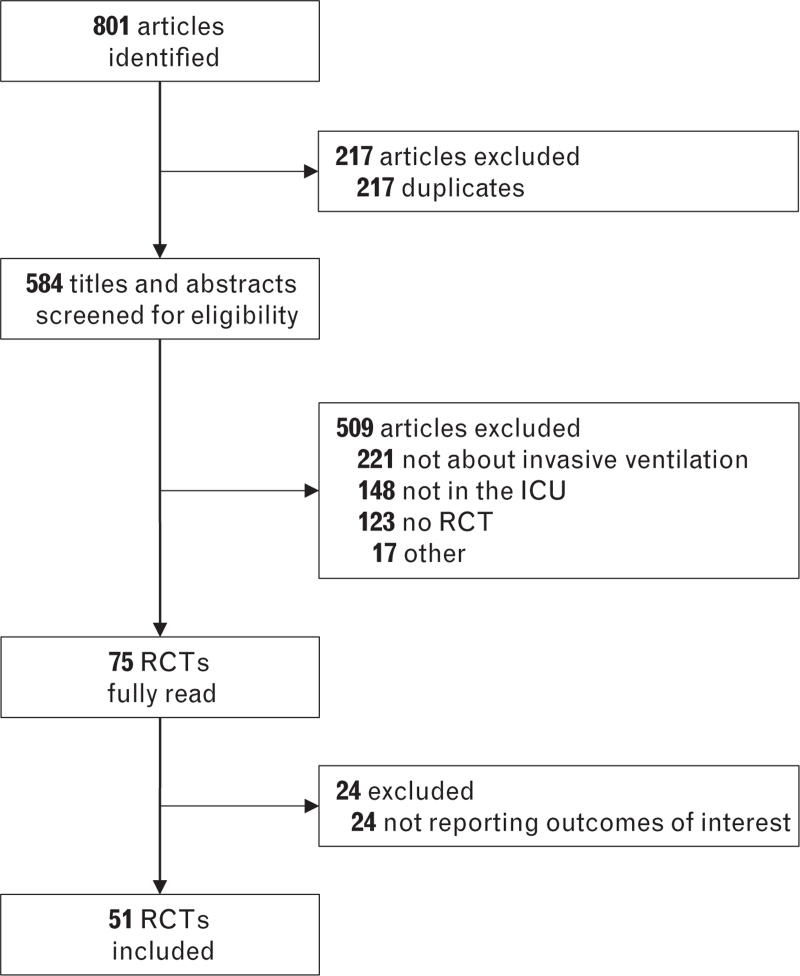
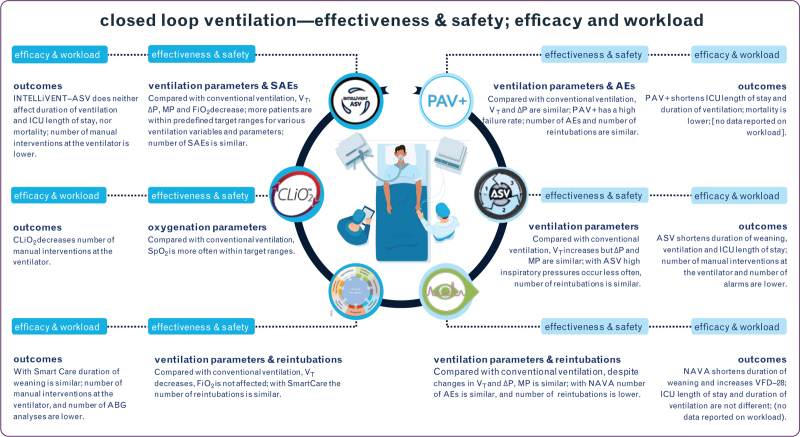
The search identified 51 studies that met the inclusion criteria. Closed loop ventilation, when compared with conventional ventilation, demonstrates enhanced management of crucial ventilator variables and parameters essential for lung protection across diverse patient cohorts. Adverse events were seldom reported. Several studies indicate potential improvements in patient outcomes with closed loop ventilation; however, it is worth noting that these studies might have been underpowered to conclusively demonstrate such benefits. Closed loop ventilation resulted in a reduction of various aspects associated with the workload of ICU professionals but there have been no studies that studied workload in sufficient detail.
Closed loop ventilation modes are at least as effective in choosing correct ventilator settings as ventilation performed by ICU professionals and have the potential to reduce the workload related to ventilation. Nevertheless, there is a lack of sufficient research to comprehensively assess the overall impact of these modes on patient outcomes, and on the workload of ICU staff.
肺保护性通气被认为是重症监护病房的标准治疗方法。然而,修改呼吸机设置可能具有挑战性且耗时。闭环通气模式越来越受到重症患者的青睐。在闭环通气中,通常由 ICU 专业人员管理的设置由呼吸机的算法控制。
描述当前可用的闭环通气模式的有效性、安全性、疗效和工作量。
随机临床试验的系统评价。
2023 年 1 月在 PubMed、Embase 和 Cochrane 中央对照试验注册中心进行了全面的系统搜索。
比较闭环通气与常规通气模式并报告有效性、安全性、疗效或工作量的随机临床试验。
搜索确定了 51 项符合纳入标准的研究。与常规通气相比,闭环通气在各种患者群体中,更能有效地管理关键的呼吸机变量和参数,从而实现肺保护。不良事件很少报告。一些研究表明,闭环通气可能改善患者的结局;但值得注意的是,这些研究可能没有足够的效力来明确证明这些益处。闭环通气减少了与 ICU 专业人员工作量相关的各个方面,但尚无研究充分详细地研究工作量。
闭环通气模式在选择正确的呼吸机设置方面至少与 ICU 专业人员的通气一样有效,并且有可能减轻与通气相关的工作量。然而,目前还缺乏足够的研究来全面评估这些模式对患者结局以及 ICU 工作人员工作量的总体影响。