
比较 ROCKET 驱动与经典 EEG 特征在预测依恋模式中的表现。
Comparative analysis of ROCKET-driven and classic EEG features in predicting attachment styles.
机构信息
Department of Industrial Engineering and Management, Ariel University, Ariel, Israel.
出版信息
BMC Psychol. 2024 Feb 22;12(1):87. doi: 10.1186/s40359-024-01576-1.
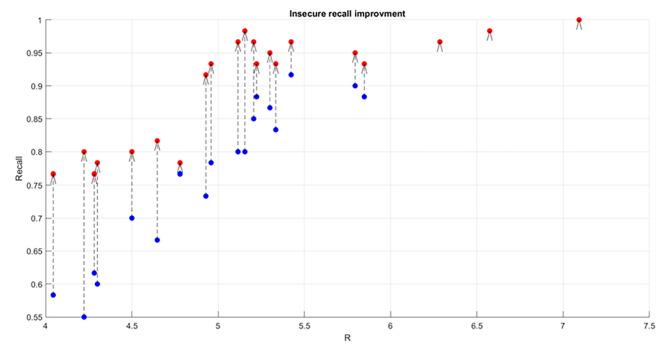
Predicting attachment styles using AI algorithms remains relatively unexplored in scientific literature. This study addresses this gap by employing EEG data to evaluate the effectiveness of ROCKET-driven features versus classic features, both analyzed using the XGBoost machine learning algorithm, for classifying 'secure' or 'insecure' attachment styles.Participants, fourth-year engineering students aged 20-35, first completed the ECR-R questionnaire. A subset then underwent EEG sessions while performing the Arrow Flanker Task, receiving success or failure feedback for each trial.Our findings reveal the effectiveness of both feature sets. The dataset with ROCKET-derived features demonstrated an 88.41% True Positive Rate (TPR) in classifying 'insecure' attachment styles, compared to the classic features dataset, which achieved a notable TPR as well. Visual representations further support ROCKET-derived features' proficiency in identifying insecure attachment tendencies, while the classic features exhibited limitations in classification accuracy. Although the ROCKET-derived features exhibited higher TPR, the classic features also presented a substantial predictive ability.In conclusion, this study advances the integration of AI in psychological assessments, emphasizing the significance of feature selection for specific datasets and applications. While both feature sets effectively classified EEG-based attachment styles, the ROCKET-derived features demonstrated a superior performance across multiple metrics, making them the preferred choice for this study.
使用人工智能算法预测依恋风格在科学文献中仍相对较少被探索。本研究通过使用 EEG 数据来评估 ROCKET 驱动的特征与经典特征的有效性,这两种特征都使用 XGBoost 机器学习算法进行分析,用于对“安全”或“不安全”依恋风格进行分类。
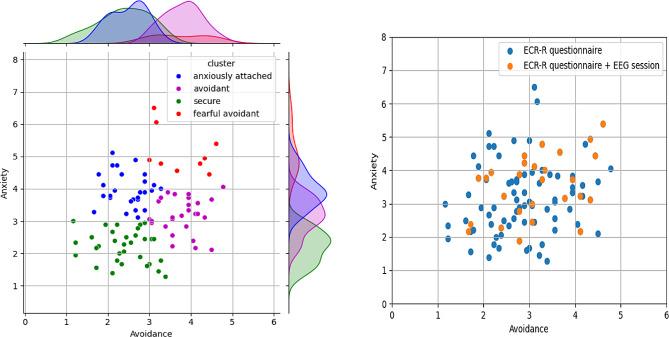
参与者为年龄在 20-35 岁的四年级工科学生,首先完成 ECR-R 问卷。然后,一小部分参与者在执行箭头 Flanker 任务时进行 EEG 会话,每次试验都会收到成功或失败的反馈。
我们的研究结果揭示了这两种特征集的有效性。在分类“不安全”依恋风格方面,具有 ROCKET 衍生特征的数据集实现了 88.41%的真阳性率(TPR),而经典特征数据集也取得了显著的 TPR。可视化表示进一步支持了 ROCKET 衍生特征在识别不安全依恋倾向方面的熟练程度,而经典特征在分类准确性方面存在局限性。尽管 ROCKET 衍生特征表现出更高的 TPR,但经典特征也表现出相当大的预测能力。
总之,本研究推进了人工智能在心理评估中的整合,强调了特征选择对于特定数据集和应用的重要性。虽然这两种特征集都能有效地对基于 EEG 的依恋风格进行分类,但 ROCKET 衍生特征在多个指标上表现出更优的性能,使其成为本研究的首选。


 Zotero 插件