Li Qing, Lan Qiong-Yu, Zhu Wen-Bing, Fan Li-Qing, Huang Chuan
Department of Oncology, The Second Affiliated Hospital of Nanchang University, Nanchang, People's Republic of China.
Human Sperm Bank, Reproductive & Genetic Hospital of CITIC-Xiangya, Changsha, Hunan, People's Republic of China.
Hum Reprod Open. 2024 Jan 30;2024(1):hoae006. doi: 10.1093/hropen/hoae006. eCollection 2024.
Does sperm cryopreservation serve as a feasible and effective method for preserving fertility in adult male patients with cancer?
Sperm cryopreservation is an effective fertility preservation method and may benefit patients with cancer.
Sperm cryopreservation is the only way to efficiently preserve male fertility. It is an important procedure in ART. Recently, due to remarkable advances in cancer treatment, an increasing number of studies have reported the outcomes of sperm cryopreservation in patients with cancer.
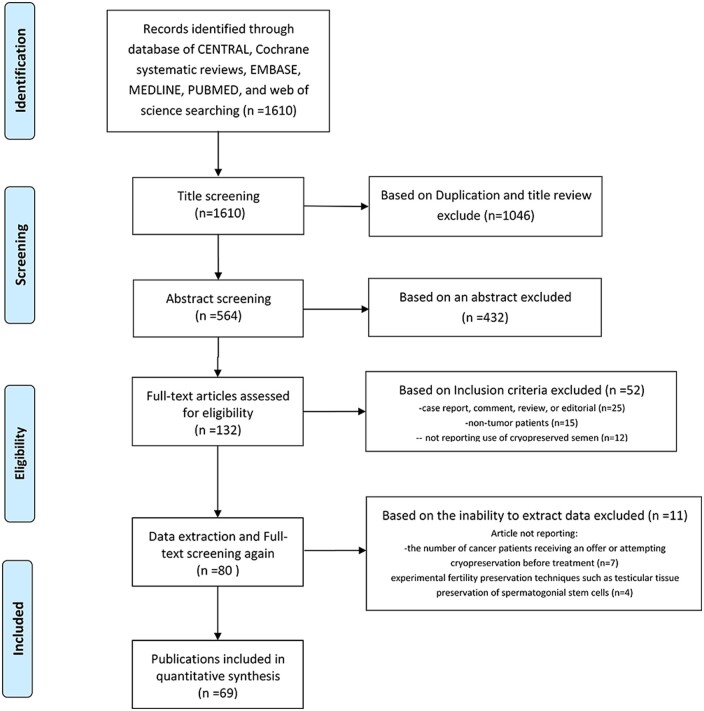
We conducted an extensive literature search for relevant studies published through to 31 December 2021, in the following databases: CENTRAL, CNKI, Cochrane Systematic Reviews, EMBASE, MEDLINE, PUBMED, and Web of Science. The search terms used were '(cryopreservation OR freeze OR freezing OR banking OR cryostorage OR storage) AND (sperm OR semen OR spermatozoon) AND (cancer OR tumor OR malignancy OR neoplasm)'.
PARTICIPANTS/MATERIALS SETTING METHODS: We included all studies that reported offering or attempting to cryopreserve sperm before or during cancer treatment in male patients considered at risk of treatment-related fertility impairment. We evaluated the eligibility of all data in each study. The major exclusion criteria were as follows: non-cancer patients; pediatric and adolescent cancer patients; not reporting the use of cryopreserved sperm; use of fresh semen for ART; not reporting the number of patients with cancer offered sperm cryopreservation or attempting to do so before or during treatment; using an experimental fertility preservation technique such as preservation of testicular tissue or spermatogonial stem cells; duplicate data; abstracts, case report, comments, reviews, or editorials; insufficient data reported. The quality of the included studies was assessed using the Newcastle-Ottawa scale and the Methodological Index for Non-Randomized Studies.
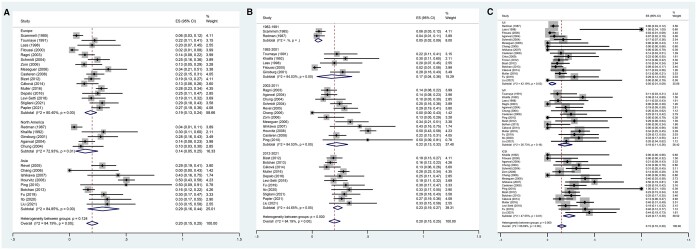
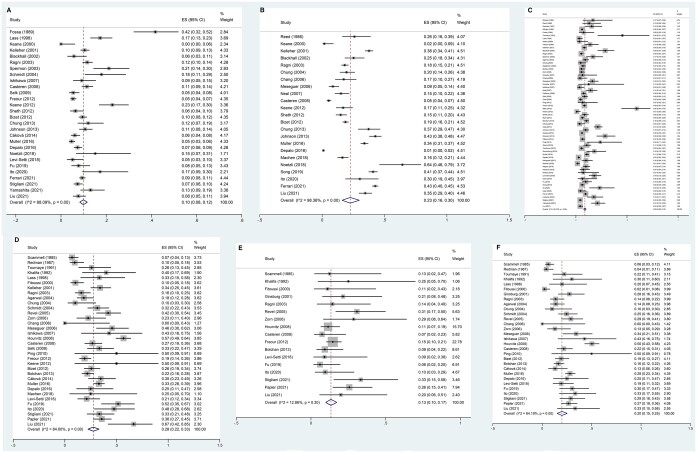
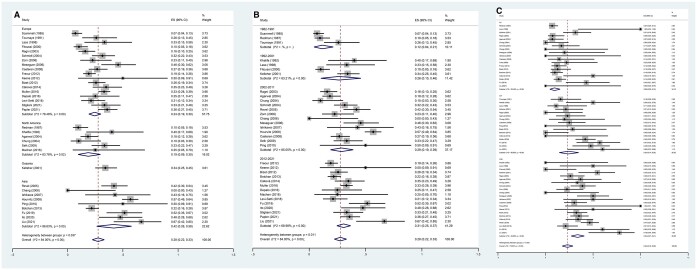
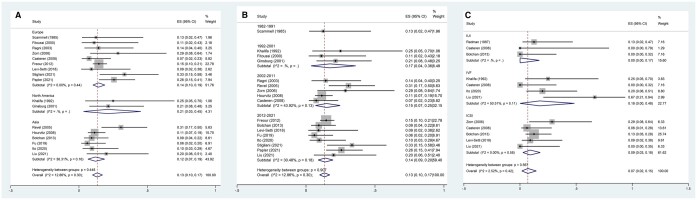
This meta-analysis included 69 non-randomized studies, with 32 234 patients referred for sperm analysis and 23 178 patients cryopreserving at least one sperm sample. The pooled failed-to-cryopreserve rate was 10% (95% CI, 8-12%), and the sperm disposal and sperm use rates were 23% (95% CI, 16-30%) and 9% (95% CI, 8-10%), respectively. The pregnancy, miscarriage, and delivery rates were 28% (95% CI, 22-33%), 13% (95% CI, 10-17%), and 20% (95% CI, 15-25%), respectively. Subgroup analysis showed higher pregnancy and delivery rates, as well as a lower failed-to-cryopreserve rate, in recent studies compared to those released a decade ago. The studies from Asia reported higher sperm disposal and pregnancy rates than in other continents. Our analysis showed clinical pregnancy rates per cycle of 34% (27-41%), 24% (14-35%), and 9% (5-15%) and delivery rates per cycle of 23% (17-30%), 18% (11-26%), and 5% (1-9%) for ICSI, IVF, and IUI, respectively.
As with all meta-analyses, some limitations should be considered. The first limitation of our study is that the data span 36 years. During this time, the World Health Organization has revised its sperm analysis standards, and other important changes have been made. There is also a limitation in that the outcome does not analyze the correlation between the type of cancer and sperm quality. Many of the earlier studies were limited by small sample sizes and a lack of control groups. Furthermore, almost all studies did not consider the severity of the disease, which could potentially have a substantial impact on the results. Consequently, further research should evaluate the effect of the type of cancer and, in particular, the severity of the condition on sperm quality in order to draw more precise conclusions. Similarly, it is inappropriate that most studies failed to differentiate between patients with different types of tumors and instead drew generalized conclusions that are presumed to apply to all patients with cancer. In the present analysis, we did not have in-depth information on patients' disease, and although extensive efforts were made to conduct a thorough systematic review and meta-analysis of the outcomes for patients with various types of tumors, the results must be acknowledged as being subject to bias. However, the use of average results obtained in each study, without the patient-level data, might also represent a source of bias.
Sperm cryopreservation is an effective fertility preservation method and may benefit patients with cancer. The observed utilization rate of frozen sperm at 9% may underestimate the actual usage, as the short follow-up period is inadequate for obtaining comprehensive data on the use of frozen sperm in young cancer survivors. ART plays an important role in fertility preservation and the achievement of pregnancy, with this meta-analysis showing that ICSI delivers better clinical outcomes than IVF or IUI in patients with cancer undergoing fertility preservation.
STUDY FUNDING/COMPETING INTERESTS: This work was supported by the National Natural Science Foundation of China (grant no. 82001634, 81960550), and the China Postdoctoral Science Foundation (2019M661521). There are no competing interests to declare.
CRID 42022314460.
精子冷冻保存是否是成年男性癌症患者保存生育能力的一种可行且有效的方法?
精子冷冻保存是一种有效的生育力保存方法,可能使癌症患者受益。
精子冷冻保存是有效保存男性生育力的唯一方法。它是辅助生殖技术中的一个重要步骤。最近,由于癌症治疗取得了显著进展,越来越多的研究报告了癌症患者精子冷冻保存的结果。
研究设计、规模、持续时间:我们在以下数据库中对截至2021年12月31日发表的相关研究进行了广泛的文献检索:CENTRAL、中国知网、Cochrane系统评价、EMBASE、MEDLINE、PUBMED和科学网。使用的检索词为“(冷冻保存或冷冻或冷藏或库存储存或低温储存或储存)且(精子或精液或精子细胞)且(癌症或肿瘤或恶性肿瘤或赘生物)”。
参与者/材料、设置、方法:我们纳入了所有报告在男性患者癌症治疗前或治疗期间为有治疗相关生育力受损风险的患者提供或尝试冷冻保存精子的研究。我们评估了每项研究中所有数据的合格性。主要排除标准如下:非癌症患者;儿科和青少年癌症患者;未报告使用冷冻保存精子的情况;使用新鲜精液进行辅助生殖技术;未报告在治疗前或治疗期间接受精子冷冻保存或尝试接受精子冷冻保存的癌症患者数量;使用实验性生育力保存技术,如保存睾丸组织或精原干细胞;重复数据;摘要、病例报告、评论、综述或社论;报告数据不足。使用纽卡斯尔-渥太华量表和非随机研究方法学指数评估纳入研究的质量。
这项荟萃分析纳入了69项非随机研究,共有32234名患者接受精子分析,23178名患者冷冻保存了至少一份精子样本。汇总的冷冻失败率为10%(95%置信区间,8%-12%),精子丢弃率和精子使用率分别为23%(95%置信区间,16%-30%)和9%(95%置信区间,8%-10%)。妊娠率、流产率和分娩率分别为28%(95%置信区间,22%-33%)、13%(95%置信区间,10%-17%)和20%(95%置信区间,15%-25%)。亚组分析显示,与十年前发表的研究相比,近期研究的妊娠率和分娩率更高,冷冻失败率更低。来自亚洲的研究报告的精子丢弃率和妊娠率高于其他大洲。我们的分析显示,对于卵胞浆内单精子注射(ICSI)、体外受精(IVF)和宫腔内人工授精(IUI),每个周期的临床妊娠率分别为34%(27%-41%)、24%(14%-35%)和9%(5%-15%),每个周期的分娩率分别为23%(17%-30%)、18%(11%-26%)和5%(1%-9%)。
局限性、谨慎的原因:与所有荟萃分析一样,应考虑一些局限性。我们研究的第一个局限性是数据跨度为36年。在此期间,世界卫生组织修订了其精子分析标准,并且发生了其他重要变化。另一个局限性是结果未分析癌症类型与精子质量之间的相关性。许多早期研究受到样本量小和缺乏对照组的限制。此外,几乎所有研究都未考虑疾病的严重程度,而这可能对结果产生重大影响。因此,进一步的研究应评估癌症类型,特别是疾病严重程度对精子质量的影响,以便得出更精确的结论。同样,大多数研究未能区分不同类型肿瘤的患者,而是得出适用于所有癌症患者的一般性结论,这是不合适的。在本分析中,我们没有关于患者疾病的深入信息,尽管我们进行了广泛的努力,对各类肿瘤患者的结局进行了全面的系统评价和荟萃分析,但结果仍难免存在偏差。然而,在没有患者层面数据的情况下使用每项研究获得的平均结果,也可能是偏差的一个来源。
精子冷冻保存是一种有效的生育力保存方法,可能使癌症患者受益。观察到的冷冻精子利用率为9%,可能低估了实际使用率,因为随访期较短,不足以获取年轻癌症幸存者使用冷冻精子的全面数据。辅助生殖技术在生育力保存和实现妊娠方面发挥着重要作用,这项荟萃分析表明,在接受生育力保存的癌症患者中,ICSI的临床结局优于IVF或IUI。
研究资金/利益冲突:本研究得到了中国国家自然科学基金(项目编号82001634、81960550)和中国博士后科学基金(2019M661521)的支持。不存在利益冲突声明。
CRID 42022314460