• 文献检索
  • 文档翻译
  • 深度研究
  • 学术资讯
  • Suppr Zotero 插件Zotero 插件
  • 邀请有礼
  • 套餐&价格
  • 历史记录
应用&插件
Suppr Zotero 插件Zotero 插件浏览器插件Mac 客户端Windows 客户端微信小程序
定价
高级版会员购买积分包购买API积分包
服务
文献检索文档翻译深度研究API 文档MCP 服务
关于我们
关于 Suppr公司介绍联系我们用户协议隐私条款
关注我们

Suppr 超能文献

核心技术专利:CN118964589B侵权必究
粤ICP备2023148730 号-1Suppr @ 2026

文献检索

告别复杂PubMed语法,用中文像聊天一样搜索,搜遍4000万医学文献。AI智能推荐,让科研检索更轻松。

立即免费搜索

文件翻译

保留排版,准确专业,支持PDF/Word/PPT等文件格式,支持 12+语言互译。

免费翻译文档

深度研究

AI帮你快速写综述,25分钟生成高质量综述,智能提取关键信息,辅助科研写作。

立即免费体验

蛋白质组学研究揭示海角眼镜蛇()毒液中首次存在四级蛋白质结构的证据。

Proteomic Investigation of Cape Cobra () Venom Reveals First Evidence of Quaternary Protein Structures.

机构信息

Department of Chemistry, The University of Adelaide, Adelaide 5005, Australia.

出版信息

Toxins (Basel). 2024 Jan 23;16(2):63. doi: 10.3390/toxins16020063.

DOI:10.3390/toxins16020063
PMID:38393141
原文链接:https://pmc.ncbi.nlm.nih.gov/articles/PMC10892407/
Abstract

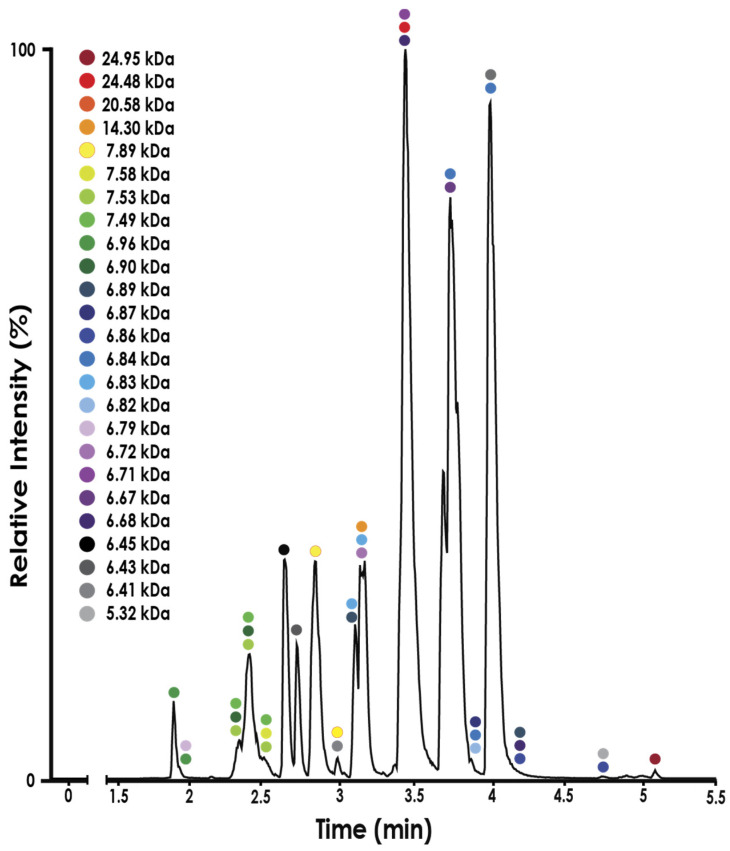
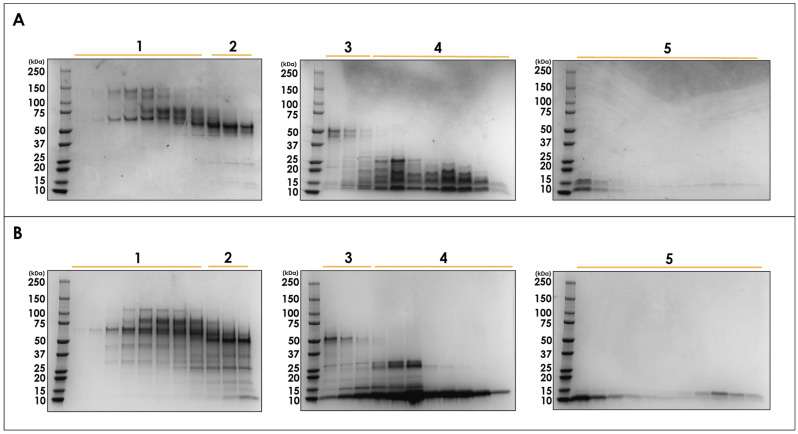
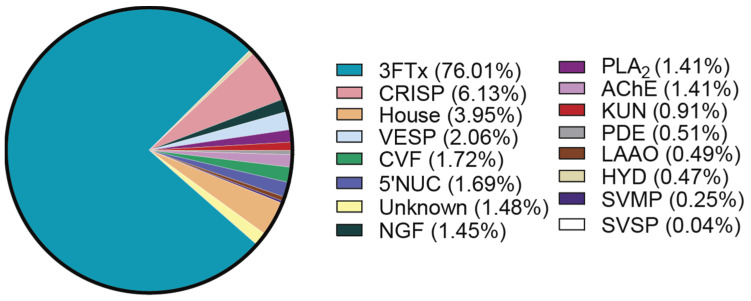
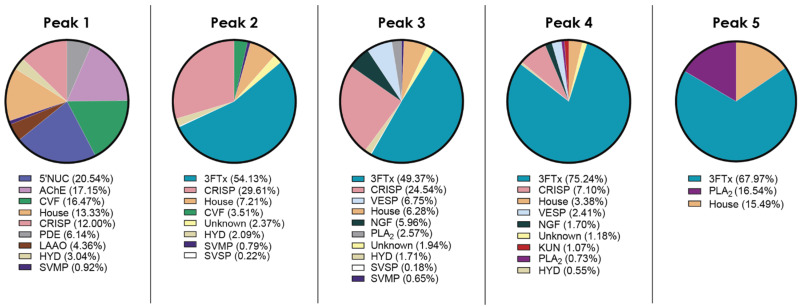
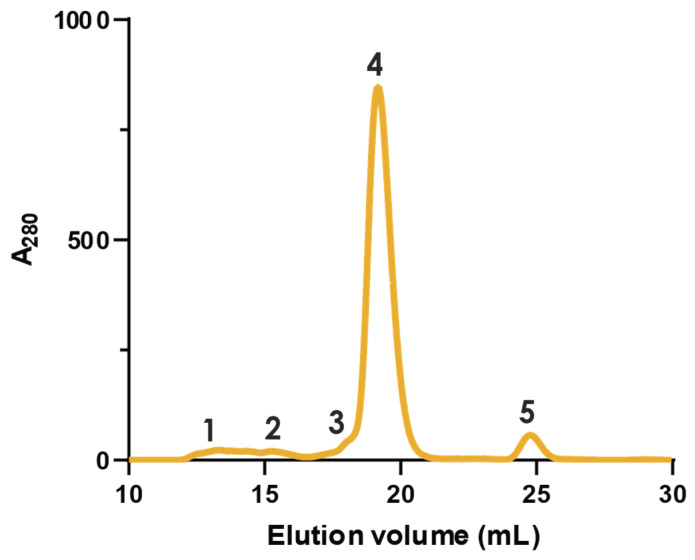
() is classed as a category one snake by the World Health Organization since its envenomation causes high levels of mortality and disability annually. Despite this, there has been little research into the venom composition of , with only one full venom proteome published to date. Our current study separated venom using size exclusion chromatography before utilizing a traditional bottom-up proteomics approach to unravel the composition of the venom proteome. As expected by its clinical presentation, venom was found to consist mainly of neurotoxins, with three-finger toxins (3FTx), making up 76.01% of the total venom proteome. Additionally, cysteine-rich secretory proteins (CRISPs), vespryns (VESPs), cobra venom factors (CVFs), 5'-nucleotidases (5'NUCs), nerve growth factors (NGFs), phospholipase A2s (PLA), acetylcholinesterases (AChEs), Kunitz-type serine protease inhibitor (KUN), phosphodiesterases (PDEs), L-amino acid oxidases (LAAOs), hydrolases (HYDs), snake venom metalloproteinases (SVMPs), and snake venom serine protease (SVSP) toxins were also identified in decreasing order of abundance. Interestingly, contrary to previous reports, we find PLA toxins in venom. This highlights the importance of repeatedly profiling the venom of the same species to account for intra-species variation. Additionally, we report the first evidence of covalent protein complexes in venom, which likely contribute to the potency of this venom.

摘要

()被世界卫生组织归类为一类蛇,因为其毒液每年都会导致高死亡率和残疾率。尽管如此,对的毒液成分的研究很少,迄今为止只发表了一篇完整的毒液蛋白质组学研究。我们目前的研究使用大小排阻色谱法分离毒液,然后利用传统的自上而下的蛋白质组学方法来揭示毒液蛋白质组的组成。根据其临床表现,毒液主要由神经毒素组成,三指毒素(3FTx)占总毒液蛋白质组的 76.01%。此外,富含半胱氨酸的分泌蛋白(CRISPs)、vespryn(VESPs)、眼镜蛇毒液因子(CVFs)、5'-核苷酸酶(5'NUCs)、神经生长因子(NGFs)、磷脂酶 A2(PLA)、乙酰胆碱酯酶(AChEs)、Kunitz 型丝氨酸蛋白酶抑制剂(KUN)、磷酸二酯酶(PDEs)、L-氨基酸氧化酶(LAAOs)、水解酶(HYDs)、蛇毒金属蛋白酶(SVMPs)和蛇毒丝氨酸蛋白酶(SVSP)毒素也按丰度递减的顺序被鉴定出来。有趣的是,与之前的报告相反,我们在毒液中发现了 PLA 毒素。这强调了对同一物种的毒液进行反复分析以解释种内变异的重要性。此外,我们报告了在毒液中首次发现共价蛋白质复合物的证据,这可能有助于提高这种毒液的效力。
https://cdn.ncbi.nlm.nih.gov/pmc/blobs/d193/10892407/19eab90ee314/toxins-16-00063-g005.jpg
https://cdn.ncbi.nlm.nih.gov/pmc/blobs/d193/10892407/dc88739365eb/toxins-16-00063-g001.jpg
https://cdn.ncbi.nlm.nih.gov/pmc/blobs/d193/10892407/495176be0750/toxins-16-00063-g002.jpg
https://cdn.ncbi.nlm.nih.gov/pmc/blobs/d193/10892407/fd08ca9bec15/toxins-16-00063-g003.jpg
https://cdn.ncbi.nlm.nih.gov/pmc/blobs/d193/10892407/0924c918052e/toxins-16-00063-g004.jpg
https://cdn.ncbi.nlm.nih.gov/pmc/blobs/d193/10892407/19eab90ee314/toxins-16-00063-g005.jpg
https://cdn.ncbi.nlm.nih.gov/pmc/blobs/d193/10892407/dc88739365eb/toxins-16-00063-g001.jpg
https://cdn.ncbi.nlm.nih.gov/pmc/blobs/d193/10892407/495176be0750/toxins-16-00063-g002.jpg
https://cdn.ncbi.nlm.nih.gov/pmc/blobs/d193/10892407/fd08ca9bec15/toxins-16-00063-g003.jpg
https://cdn.ncbi.nlm.nih.gov/pmc/blobs/d193/10892407/0924c918052e/toxins-16-00063-g004.jpg
https://cdn.ncbi.nlm.nih.gov/pmc/blobs/d193/10892407/19eab90ee314/toxins-16-00063-g005.jpg

相似文献

1
Proteomic Investigation of Cape Cobra () Venom Reveals First Evidence of Quaternary Protein Structures.蛋白质组学研究揭示海角眼镜蛇()毒液中首次存在四级蛋白质结构的证据。
Toxins (Basel). 2024 Jan 23;16(2):63. doi: 10.3390/toxins16020063.
2
Comparison of proteomic profiles of the venoms of two of the 'Big Four' snakes of India, the Indian cobra (Naja naja) and the common krait (Bungarus caeruleus), and analyses of their toxins.印度“四大毒蛇”中的两种——印度眼镜蛇(眼镜蛇属眼镜蛇)和普通金环蛇(金环蛇属)毒液的蛋白质组学图谱比较及其毒素分析。
Toxicon. 2017 Sep 1;135:33-42. doi: 10.1016/j.toxicon.2017.06.005. Epub 2017 Jun 8.
3
Exploring the venom of the forest cobra snake: Toxicovenomics and antivenom profiling of Naja melanoleuca.探索森林眼镜蛇的毒液:黑曼巴眼镜蛇的毒理蛋白质组学与抗蛇毒血清分析
J Proteomics. 2017 Jan 6;150:98-108. doi: 10.1016/j.jprot.2016.08.024. Epub 2016 Sep 1.
4
Elucidating the biogeographical variation of the venom of Naja naja (spectacled cobra) from Pakistan through a venom-decomplexing proteomic study.通过一项毒液去复合蛋白质组学研究阐明巴基斯坦眼镜蛇(Naja naja)毒液的生物地理变异。
J Proteomics. 2018 Mar 20;175:156-173. doi: 10.1016/j.jprot.2017.12.012. Epub 2017 Dec 24.
5
Transcriptomics-guided bottom-up and top-down venomics of neonate and adult specimens of the arboreal rear-fanged Brown Treesnake, Boiga irregularis, from Guam.基于转录组学的幼年和成年树栖后沟牙棕蛇(Boiga irregularis)样本的从头和自顶向下毒液组学研究,来自关岛。
J Proteomics. 2018 Mar 1;174:71-84. doi: 10.1016/j.jprot.2017.12.020. Epub 2017 Dec 29.
6
Proteomic characteristics of six snake venoms from the Viperidae and Elapidae families in China and their relation to local tissue necrosis.中国六种蝰科和眼镜蛇科蛇毒的蛋白质组学特征及其与局部组织坏死的关系。
Toxicon. 2023 Nov;235:107317. doi: 10.1016/j.toxicon.2023.107317. Epub 2023 Oct 14.
7
Proteomic characterization of six Taiwanese snake venoms: Identification of species-specific proteins and development of a SISCAPA-MRM assay for cobra venom factors.六种台湾蛇毒的蛋白质组学特征分析:鉴定种属特异性蛋白并建立眼镜蛇毒因子的 SISCAPA-MRM 检测方法。
J Proteomics. 2018 Sep 15;187:59-68. doi: 10.1016/j.jprot.2018.06.003. Epub 2018 Jun 19.
8
Proteomic insights into short neurotoxin-driven, highly neurotoxic venom of Philippine cobra (Naja philippinensis) and toxicity correlation of cobra envenomation in Asia.蛋白质组学揭示菲律宾眼镜蛇(Naja philippinensis)短神经毒素驱动的高度神经毒性毒液的特性及亚洲眼镜蛇咬伤的毒性相关性。
J Proteomics. 2019 Aug 30;206:103418. doi: 10.1016/j.jprot.2019.103418. Epub 2019 Jun 12.
9
Snake Venomics and Antivenomics of Cape Cobra () from South Africa: Insights into Venom Toxicity and Cross-Neutralization Activity.南非海角眼镜蛇()的蛇毒组学和抗蛇毒组学:对毒液毒性和交叉中和活性的深入了解。
Toxins (Basel). 2022 Dec 7;14(12):860. doi: 10.3390/toxins14120860.
10
Proteomic analysis of Moroccan cobra Naja haje legionis venom using tandem mass spectrometry.使用串联质谱法对摩洛哥眼镜蛇(Naja haje legionis)毒液进行蛋白质组学分析。
J Proteomics. 2014 Jan 16;96:240-52. doi: 10.1016/j.jprot.2013.11.012. Epub 2013 Nov 22.

引用本文的文献

1
The Proteome of African Spitting and Non-Spitting Cobra Venoms and Cytotoxicity Against Pancreatic Cancer Cells.非洲喷毒眼镜蛇和非喷毒眼镜蛇毒液的蛋白质组及其对胰腺癌细胞的细胞毒性
J Appl Toxicol. 2025 Oct;45(10):2055-2067. doi: 10.1002/jat.4825. Epub 2025 Jun 1.
2
Cobra Three-Finger Toxins Interact with RNA and DNA: Nucleic Acids as Their Putative Biological Targets.眼镜蛇三指毒素与RNA和DNA相互作用:核酸作为其假定的生物学靶点。
Int J Mol Sci. 2025 May 1;26(9):4291. doi: 10.3390/ijms26094291.
3
The Toxin Diversity, Cytotoxicity, and Enzymatic Activity of Cape Cobra () Venom.

本文引用的文献

1
Snake Venomics and Antivenomics of Cape Cobra () from South Africa: Insights into Venom Toxicity and Cross-Neutralization Activity.南非海角眼镜蛇()的蛇毒组学和抗蛇毒组学:对毒液毒性和交叉中和活性的深入了解。
Toxins (Basel). 2022 Dec 7;14(12):860. doi: 10.3390/toxins14120860.
2
Interpopulational variation and ontogenetic shift in the venom composition of Lataste's viper (Vipera latastei, Boscá 1878) from northern Portugal.葡萄牙北部拉塔斯特蝰(Vipera latastei,Boscá 1878)种群间变异和个体发育转变的毒液成分。
J Proteomics. 2022 Jul 15;263:104613. doi: 10.1016/j.jprot.2022.104613. Epub 2022 May 16.
3
A Neurotoxic Snake Venom without Phospholipase A: Proteomics and Cross-Neutralization of the Venom from Senegalese Cobra, (Subgenus: ).
海角眼镜蛇()毒液的毒素多样性、细胞毒性和酶活性。
Toxins (Basel). 2024 Oct 11;16(10):438. doi: 10.3390/toxins16100438.
一种不含磷脂酶 A 的神经毒素蛇毒:来自塞内加尔眼镜蛇(亚属:)毒液的蛋白质组学和交叉中和。
Toxins (Basel). 2021 Jan 14;13(1):60. doi: 10.3390/toxins13010060.
4
Quantitative proteomics of Naja annulifera (sub-Saharan snouted cobra) venom and neutralization activities of two antivenoms in Africa.非洲环纹眼镜蛇(撒哈拉以南吻蝮)毒液的定量蛋白质组学及两种抗蛇毒血清的中和活性
Int J Biol Macromol. 2020 Apr 24. doi: 10.1016/j.ijbiomac.2020.04.173.
5
Interrogating the higher order structures of snake venom proteins using an integrated mass spectrometric approach.利用集成质谱分析方法研究蛇毒蛋白的高级结构。
J Proteomics. 2020 Mar 30;216:103680. doi: 10.1016/j.jprot.2020.103680. Epub 2020 Feb 3.
6
Reviewing evidence of the clinical effectiveness of commercially available antivenoms in sub-Saharan Africa identifies the need for a multi-centre, multi-antivenom clinical trial.审查撒哈拉以南非洲市售抗蛇毒血清临床疗效的证据表明,需要开展一项多中心、多抗蛇毒血清临床试验。
PLoS Negl Trop Dis. 2019 Jun 24;13(6):e0007551. doi: 10.1371/journal.pntd.0007551. eCollection 2019 Jun.
7
The Urgent Need to Develop Novel Strategies for the Diagnosis and Treatment of Snakebites.迫切需要开发新的策略来诊断和治疗蛇咬伤。
Toxins (Basel). 2019 Jun 20;11(6):363. doi: 10.3390/toxins11060363.
8
Distinctive Distribution of Secretory Phospholipases A₂ in the Venoms of Afro-Asian Cobras (Subgenus: , , and ).在亚洲-非洲眼镜蛇属(亚属:、、和)的毒液中分泌型磷脂酶 A₂的独特分布
Toxins (Basel). 2019 Feb 14;11(2):116. doi: 10.3390/toxins11020116.
9
Snakebite burden in Sub-Saharan Africa: estimates from 41 countries.撒哈拉以南非洲地区的蛇咬伤负担:来自41个国家的估计数。
Toxicon. 2019 Mar 1;159:1-4. doi: 10.1016/j.toxicon.2018.12.002. Epub 2018 Dec 27.
10
Global Availability of Antivenoms: The Relevance of Public Manufacturing Laboratories.抗蛇毒血清的全球供应:公共生产实验室的相关性。
Toxins (Basel). 2018 Dec 24;11(1):5. doi: 10.3390/toxins11010005.