Krencnik Tomaz, Jalsovec Tadej, Klemenak Martina, Riznik Petra, Dolinsek Jernej
Department of Pediatrics, University Medical Centre Maribor, 2000 Maribor, Slovenia.
Medical Faculty, University of Maribor, 2000 Maribor, Slovenia.
Diagnostics (Basel). 2024 Feb 6;14(4):356. doi: 10.3390/diagnostics14040356.
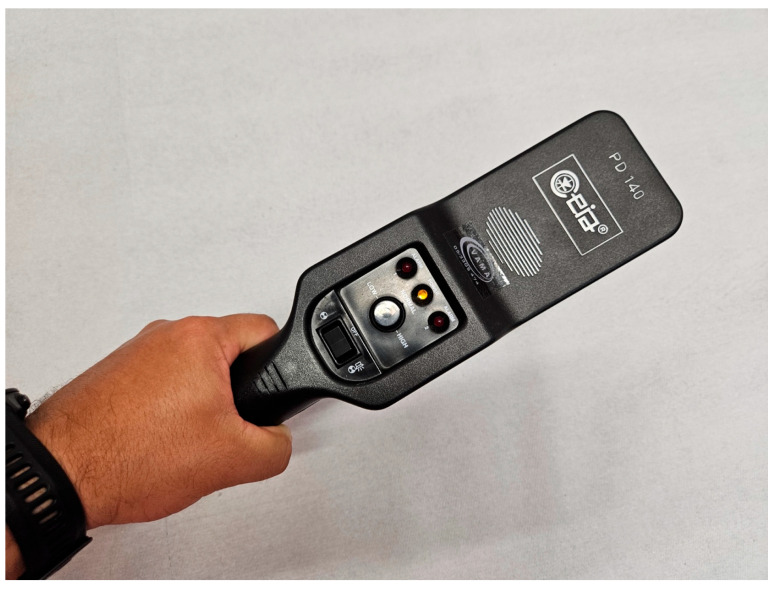
Foreign body (FB) ingestion remains a common cause of pediatric emergency department referrals, and the gold standard for detection is whole-digestive-tract radiographic examination. Our study explores whether handheld metal detectors (HHMD) can effectively identify the presence and location of ingested metal objects, potentially reducing the need for additional radiographic examination.
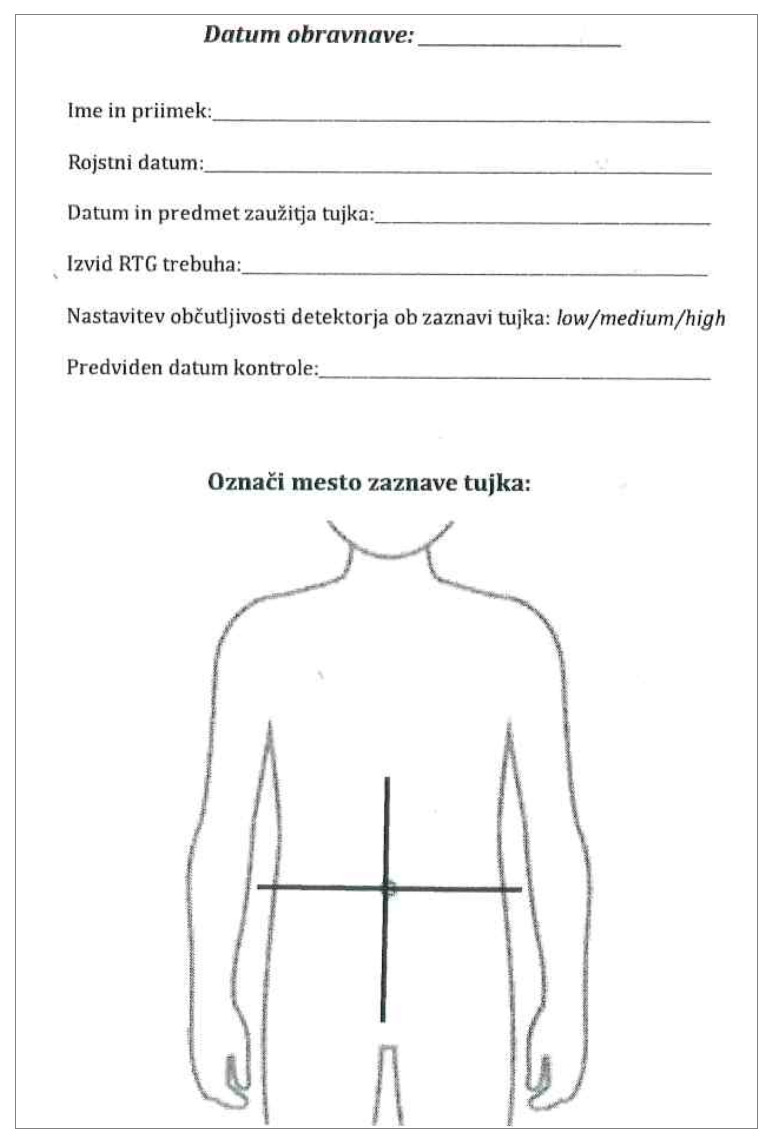
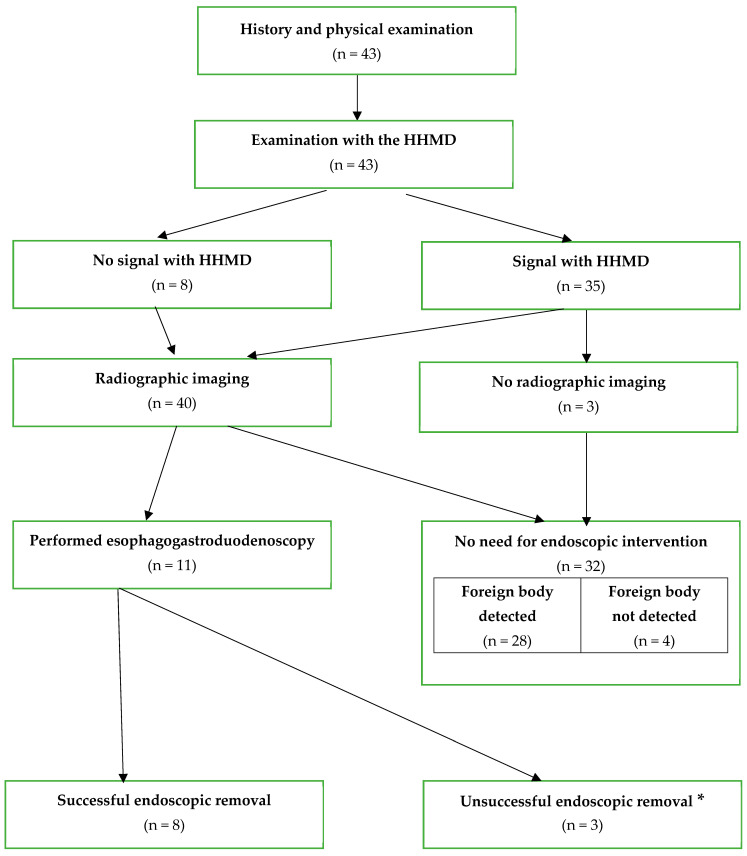
We collected medical data from children with suspected metal FB ingestion who were referred to our emergency department (October 2017-March 2023), focusing on object type and correlating metal detector findings with radiographic images.
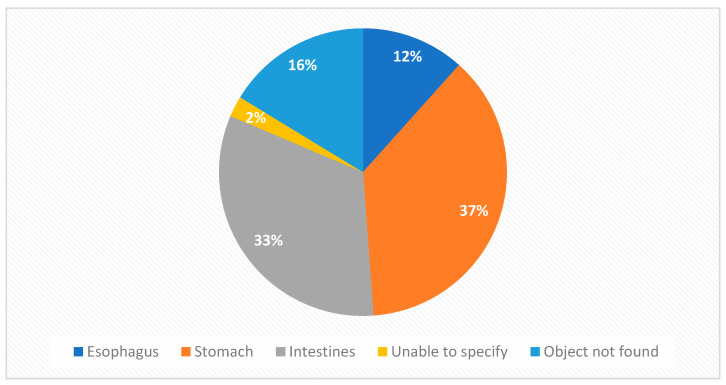
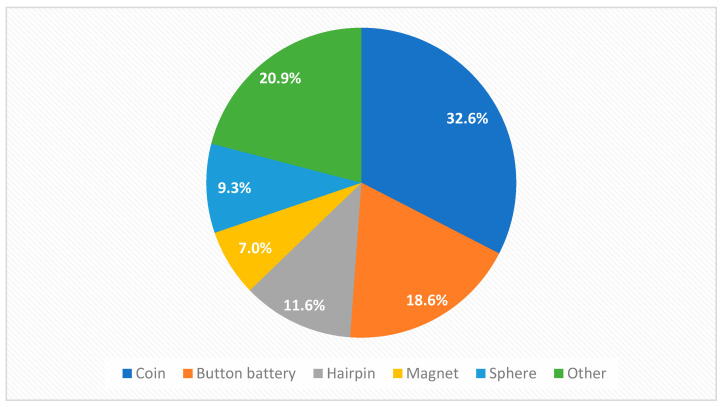
Data from 43 children (39.5% female; mean age: 4 y) referred to our emergency department were analyzed. Coins (32.6%), button batteries (18.6%), and hairpins (11.6%) were the most common ingested objects. Metal detectors detected the presence of FBs in 81.4% of cases (sensitivity: 89.7%; specificity: 100%). Radiographs, taken for 40 children, showed that the most common locations were the stomach (37%) and intestine (33%). The metal detector signals matched the radiography results in 69.8% of cases. According to HHMD, 34.9% of objects were accessible via endoscopy, contrasting with 51.2% via radiography ( < 0.05).
While the findings obtained using handheld metal detectors often correlate well with radiograph findings in detecting metal FBs, for an important number of children, this confirmation is lacking, especially when determining the exact location of an object.
异物摄入仍是儿科急诊科转诊的常见原因,检测的金标准是全消化道X光检查。我们的研究探讨了手持金属探测器(HHMD)是否能有效识别摄入金属物体的存在和位置,从而有可能减少额外X光检查的需求。
我们收集了2017年10月至2023年3月转诊至我们急诊科的疑似金属异物摄入儿童的医疗数据,重点关注物体类型,并将金属探测器的结果与X光图像进行关联。
对转诊至我们急诊科的43名儿童(女性占39.5%;平均年龄:4岁)的数据进行了分析。硬币(32.6%)、纽扣电池(18.6%)和发夹(11.6%)是最常见的摄入物体。金属探测器在81.4%的病例中检测到异物存在(敏感性:89.7%;特异性:100%)。对40名儿童进行的X光检查显示,最常见的位置是胃(37%)和肠道(33%)。金属探测器信号与X光检查结果在69.8%的病例中相符。根据手持金属探测器的结果判断,34.9%的物体可通过内窥镜取出,而通过X光检查判断这一比例为51.2%(P<0.05)。
虽然使用手持金属探测器获得的结果在检测金属异物方面通常与X光检查结果有很好的相关性,但对于相当数量的儿童来说,缺乏这种确认,尤其是在确定物体的确切位置时。