Hölzen Laura, Schultes Bernd, Meyhöfer Sebastian M, Meyhöfer Svenja
Institute for Endocrinology & Diabetes, University of Lübeck, 23562 Lübeck, Germany.
Department of Internal Medicine 1, Endocrinology & Diabetes, University of Lübeck, 23562 Lübeck, Germany.
Biomedicines. 2024 Feb 8;12(2):391. doi: 10.3390/biomedicines12020391.
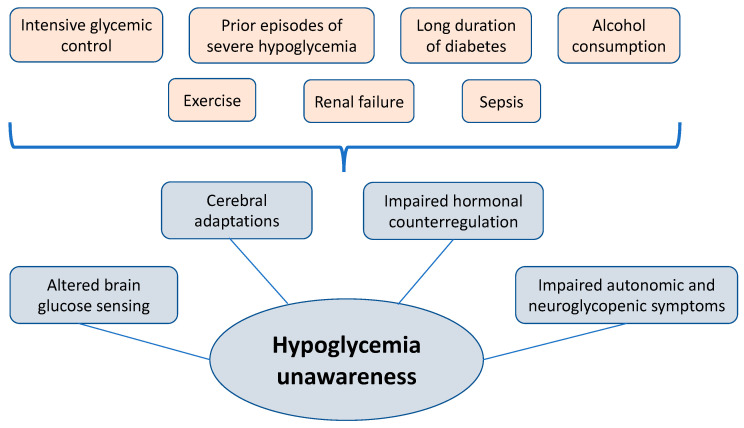
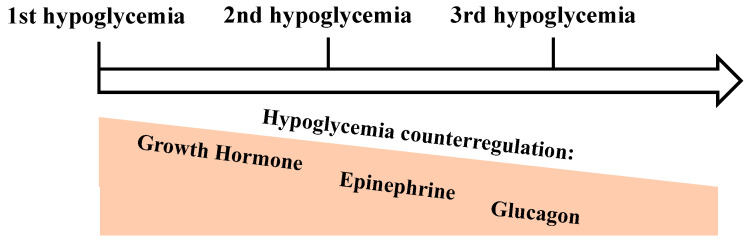
Hypoglycemia is a particular problem in people with diabetes while it can also occur in other clinical circumstances. Hypoglycemia unawareness describes a condition in which autonomic and neuroglycopenic symptoms of hypoglycemia decrease and hence are hardly perceivable. A failure to recognize hypoglycemia in time can lead to unconsciousness, seizure, and even death. The risk factors include intensive glycemic control, prior episodes of severe hypoglycemia, long duration of diabetes, alcohol consumption, exercise, renal failure, and sepsis. The pathophysiological mechanisms are manifold, but mainly concern altered brain glucose sensing, cerebral adaptations, and an impaired hormonal counterregulation with an attenuated release of glucagon, epinephrine, growth hormone, and other hormones, as well as impaired autonomous and neuroglycopenic symptoms. Physiologically, this counterregulatory response causes blood glucose levels to rise. The impaired hormonal counterregulatory response to recurrent hypoglycemia can lead to a vicious cycle of frequent and poorly recognized hypoglycemic episodes. There is a shift in glycemic threshold to trigger hormonal counterregulation, resulting in hypoglycemia-associated autonomic failure and leading to the clinical syndrome of hypoglycemia unawareness. This clinical syndrome represents a particularly great challenge in diabetes treatment and, thus, prevention of hypoglycemia is crucial in diabetes management. This mini-review provides an overview of hypoglycemia and the associated severe complication of impaired hypoglycemia awareness and its symptoms, pathophysiology, risk factors, consequences, as well as therapeutic strategies.
低血糖在糖尿病患者中是一个特殊问题,同时也可能发生在其他临床情况下。低血糖无意识是指低血糖的自主神经症状和神经低血糖症状减轻,因此难以察觉的一种情况。不能及时识别低血糖会导致昏迷、癫痫发作甚至死亡。危险因素包括强化血糖控制、既往严重低血糖发作、糖尿病病程长、饮酒、运动、肾衰竭和脓毒症。其病理生理机制是多方面的,但主要涉及大脑葡萄糖感知改变、大脑适应性变化以及激素反调节受损,包括胰高血糖素、肾上腺素、生长激素和其他激素的释放减弱,以及自主神经症状和神经低血糖症状受损。生理上,这种反调节反应会使血糖水平升高。对反复低血糖的激素反调节反应受损会导致频繁且难以识别的低血糖发作的恶性循环。触发激素反调节的血糖阈值发生变化,导致低血糖相关自主神经功能衰竭,并引发低血糖无意识的临床综合征。这种临床综合征在糖尿病治疗中是一个特别大的挑战,因此,预防低血糖在糖尿病管理中至关重要。本综述概述了低血糖以及低血糖意识受损及其症状、病理生理学、危险因素、后果和治疗策略等相关严重并发症。