Pawaskar Rishaan, Huang Kevin Zhang, Pham Helen, Nagrial Adnan, Wong Mark, O'Neill Siobhan, Pleass Henry, Yuen Lawrence, Lam Vincent W T, Richardson Arthur, Pang Tony, Nahm Christopher B
Department of Upper GI Surgery, Westmead Hospital, Sydney, NSW 2145, Australia.
Westmead Hospital, Sydney, NSW 2145, Australia.
Cancers (Basel). 2024 Feb 7;16(4):698. doi: 10.3390/cancers16040698.
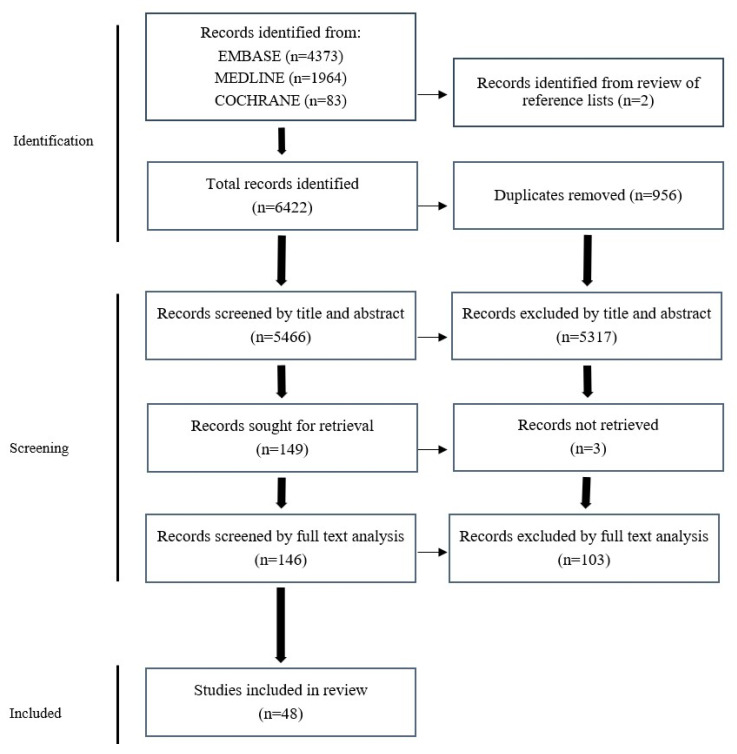
Perihilar cholangiocarcinoma (pCCA) is an uncommon malignancy with generally poor prognosis. Surgery is the primary curative treatment; however, the perioperative mortality and morbidity rates are high, with a low 5-year survival rate. Use of preoperative prognostic biomarkers to predict survival outcomes after surgery for pCCA are not well-established currently. This systematic review aimed to identify and summarise preoperative biomarkers associated with survival in pCCA, thereby potentially improving treatment decision-making. The Embase, Medline, and Cochrane databases were searched, and a systematic review was performed using the PRISMA guidelines. English-language studies examining the association between serum and/or tissue-derived biomarkers in pCCA and overall and/or disease-free survival were included. Our systematic review identified 64 biomarkers across 48 relevant studies. Raised serum CA19-9, bilirubin, CEA, neutrophil-to-lymphocyte ratio (NLR), platelet-to-lymphocyte ratio (PLR) and tumour MMP9, and low serum albumin were most associated with poorer survival; however, the cutoff values used widely varied. Several promising molecular markers with prognostic significance were also identified, including tumour HMGA2, MUC5AC/6, IDH1, PIWIL2, and DNA index. In conclusion, several biomarkers have been identified in serum and tumour specimens that prognosticate overall and disease-free survival after pCCA resection. These, however, require external validation in large cohort studies and/or in preoperatively obtained specimens, especially tissue biopsy, to recommend their use.
肝门部胆管癌(pCCA)是一种罕见的恶性肿瘤,预后通常较差。手术是主要的根治性治疗方法;然而,围手术期死亡率和发病率较高,5年生存率较低。目前,术前预后生物标志物在预测pCCA手术后生存结果方面尚未得到充分确立。本系统评价旨在识别和总结与pCCA生存相关的术前生物标志物,从而潜在地改善治疗决策。检索了Embase、Medline和Cochrane数据库,并按照PRISMA指南进行了系统评价。纳入了研究pCCA血清和/或组织来源生物标志物与总生存和/或无病生存之间关联的英文研究。我们的系统评价在48项相关研究中识别出64种生物标志物。血清CA19-9、胆红素、癌胚抗原(CEA)、中性粒细胞与淋巴细胞比值(NLR)、血小板与淋巴细胞比值(PLR)升高以及肿瘤基质金属蛋白酶9(MMP9),以及血清白蛋白降低与较差的生存最为相关;然而,广泛使用的临界值差异很大。还识别出了几种具有预后意义的有前景的分子标志物,包括肿瘤高迁移率族蛋白A2(HMGA2)、粘蛋白5AC/6(MUC5AC/6)、异柠檬酸脱氢酶1(IDH1)、piwi样RNA介导的基因沉默2(PIWIL2)和DNA指数。总之,在血清和肿瘤标本中已识别出几种可预测pCCA切除术后总生存和无病生存的生物标志物。然而,这些生物标志物需要在大型队列研究和/或术前获取的标本(尤其是组织活检)中进行外部验证,以推荐其使用。