Schenk Alina, Ende Jonas, Hoch Jochen, Güresir Erdem, Grabert Josefin, Coburn Mark, Schmid Matthias, Velten Markus
Institute for Medical Biometry, Informatics and Epidemiology, University Hospital Bonn, 53127 Bonn, Germany.
Department of Anesthesiology and Intensive Care Medicine, University Hospital Bonn, 53127 Bonn, Germany.
J Clin Med. 2024 Feb 7;13(4):948. doi: 10.3390/jcm13040948.
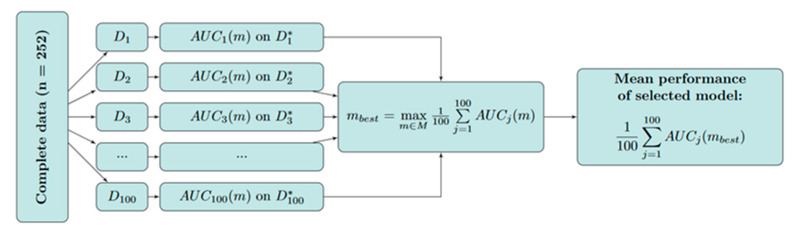
Access to blood products is crucial for patient safety during the perioperative course. However, reduced donations and seasonally occurring blood shortages pose a significant challenge to the healthcare system, with surgeries being postponed. The German Blood Transfusion act requires that RBC packages become assigned to an individual patient, resulting in a significant reduction in the available blood products, further aggravating shortages. We aimed to develop a scoring system predicting transfusion probability in patients undergoing spine surgery to reduce assignment and, thus, increase the availability of blood products. The medical records of 252 patients who underwent spine surgery were evaluated and 18 potential predictors for RBC transfusion were tested to construct a logistic-regression-based predictive scoring system for blood transfusion in patients undergoing spine surgery. The variables found to be the most important included the type of surgery, vertebral body replacement, number of stages, and pre-operative Hb concentration, indicating that surgical specification and the extent of the surgical procedure were more influential than the pre-existing patient condition and medication. Our model showed a good discrimination ability with an average AUC [min, max] of 0.87 [0.6, 0.97] and internal validation with a similar AUC of 0.84 [0.66, 0.97]. In summary, we developed a scoring system to forecast patients' perioperative transfusion needs when undergoing spine surgery using pre-operative predictors, potentially reducing the need for RBC allocation and, thus, resulting in an increased availability of this valuable resource.
在围手术期,获取血液制品对患者安全至关重要。然而,献血量减少以及季节性血液短缺给医疗系统带来了重大挑战,导致手术推迟。德国输血法案要求将红细胞包分配给个体患者,这导致可用血液制品大幅减少,进一步加剧了短缺。我们旨在开发一种评分系统,预测脊柱手术患者的输血概率,以减少分配,从而增加血液制品的可用性。对252例接受脊柱手术的患者的病历进行了评估,并测试了18个红细胞输血的潜在预测因素,以构建基于逻辑回归的脊柱手术患者输血预测评分系统。发现最重要的变量包括手术类型、椎体置换、阶段数和术前血红蛋白浓度,这表明手术规格和手术范围比患者的既往病情和用药更具影响力。我们的模型显示出良好的区分能力,平均AUC[最小值,最大值]为0.87[0.6,0.97],内部验证的AUC相似,为0.84[0.66,0.97]。总之,我们开发了一种评分系统,利用术前预测因素预测脊柱手术患者的围手术期输血需求,有可能减少红细胞分配的需求,从而增加这种宝贵资源的可用性。