Department of Chemistry, Faculty of Science and Agriculture, University of Fort Hare, P/Bag X1314, Alice 5700, South Africa.
Department of Chemical and Physical Sciences, Faculty of Natural Sciences, Walter Sisulu University, P/Bag X1, Mthatha 5117, South Africa.
Molecules. 2024 Feb 18;29(4):896. doi: 10.3390/molecules29040896.
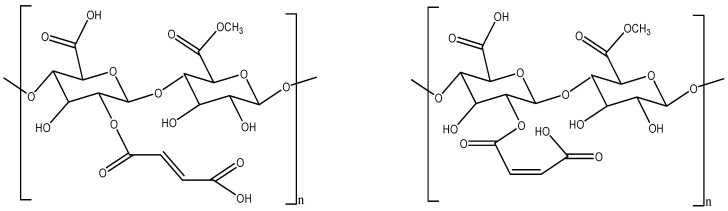
Non-communicable diseases (NCDs) are described as a collection of chronic diseases that do not typically develop from an acute infection, have long-term health effects, and frequently require ongoing care and therapy. These diseases include heart disease, stroke, cancer, chronic lung disease, neurological diseases, osteoporosis, mental health disorders, etc. Known synthetic drugs for the treatment or prevention of NCDs become increasingly dangerous over time and pose high risks due to side effects such as hallucination, heart attack, liver failure, etc. As a result, scientists have had to look for other alternatives that are natural products and that are known to be less detrimental and contain useful bioactive compounds. The increasing understanding of the biological and pharmacological significance of carbohydrates has helped to raise awareness of their importance in living systems and medicine, given they play numerous biological roles. For example, pectin has been identified as a class of secondary metabolites found in medicinal plants that may play a significant role in the treatment and management of a variety of NCDs. Pectin is mainly made of homogalacturonan, which is a linear polymer composed primarily of D-galacturonic acid units (at least 65%) linked in a chain by α-(1,4)-glycosidic linkages. There are also modified pectins or derivatives that improve pectin's bioavailability. Pectin is found in the cell walls of higher plants (pteridophytes, angiosperms, and gymnosperms), particularly in the middle lamella of the plant material. Citrus pectin is used in various industries. This article compiles information that has been available for years about the therapeutic importance of pectin in chronic diseases, different modes of pectin extraction, the chemistry of pectin, and the potency of pectin and its derivatives.
非传染性疾病(NCDs)被描述为一组慢性疾病,它们通常不是由急性感染引起的,对健康有长期影响,并且经常需要持续的护理和治疗。这些疾病包括心脏病、中风、癌症、慢性肺病、神经系统疾病、骨质疏松症、心理健康障碍等。已知用于治疗或预防 NCD 的合成药物随着时间的推移变得越来越危险,由于副作用如幻觉、心脏病发作、肝功能衰竭等,它们的风险很高。因此,科学家们不得不寻找其他替代品,这些替代品是天然产品,已知对身体的危害较小,并且含有有用的生物活性化合物。人们对碳水化合物的生物学和药理学意义的认识不断提高,这有助于提高人们对其在生命系统和医学中的重要性的认识,因为它们在许多生物学过程中发挥着重要作用。例如,果胶已被确定为一类存在于药用植物中的次生代谢物,它可能在治疗和管理多种 NCD 方面发挥重要作用。果胶主要由同质半乳糖醛酸组成,这是一种由 D-半乳糖醛酸单元组成的线性聚合物(至少 65%),通过α-(1,4)-糖苷键连接成链。还有经过修饰的果胶或衍生物,可提高果胶的生物利用度。果胶存在于高等植物(蕨类植物、被子植物和裸子植物)的细胞壁中,特别是在植物材料的中层中。柑橘果胶用于各种工业。本文汇集了多年来关于果胶在慢性疾病中的治疗重要性、果胶的不同提取方式、果胶的化学性质以及果胶及其衍生物的功效的信息。