Hernandez-Colina Arturo, Seechurn Nicola, Costa Taiana, Lopez Javier, Baylis Matthew, Hesson Jenny C
Department of Livestock and One Health, Institute of Infection, Veterinary and Ecological Sciences, University of Liverpool, Leahurst Campus, Chester High Road, Neston, Cheshire, CH64 7TE, UK.
North of England Zoological Society (Chester Zoo), Caughall Road, Chester, CH2 1LH, UK.
Heliyon. 2024 Feb 15;10(4):e26477. doi: 10.1016/j.heliyon.2024.e26477. eCollection 2024 Feb 29.
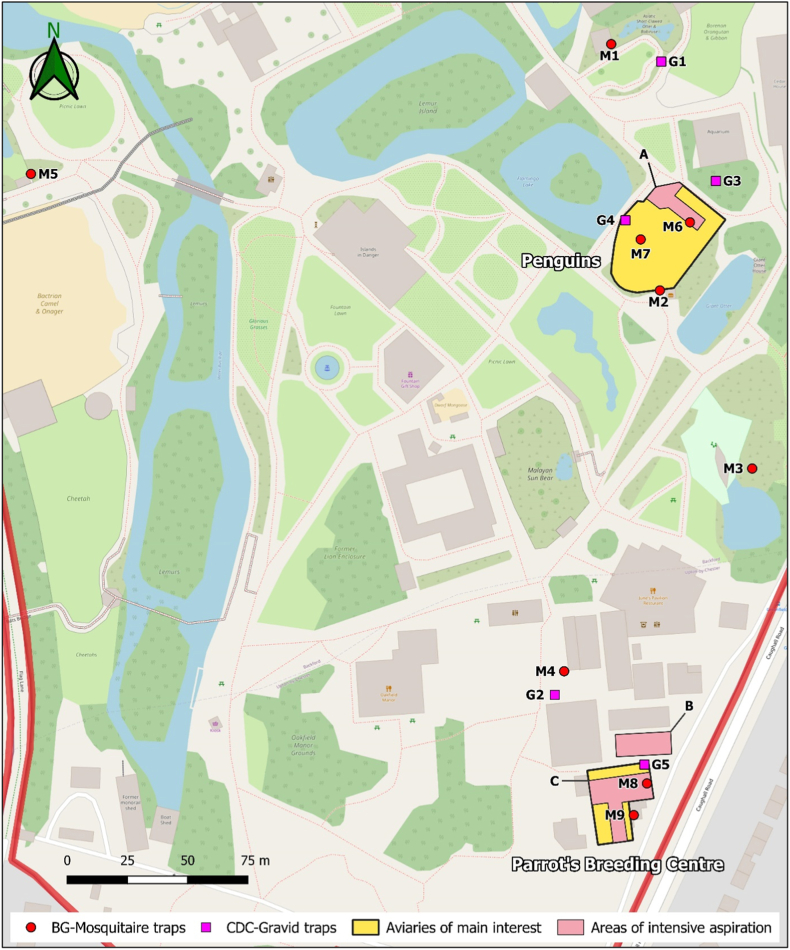
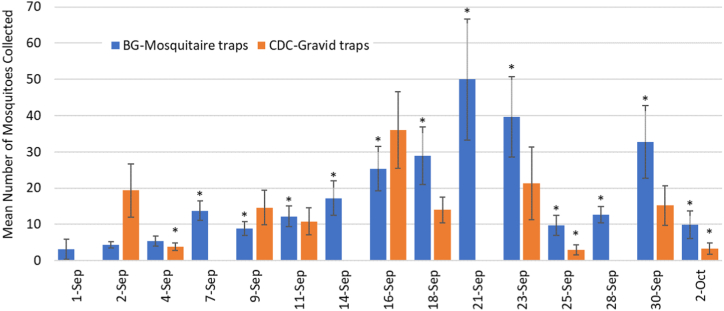
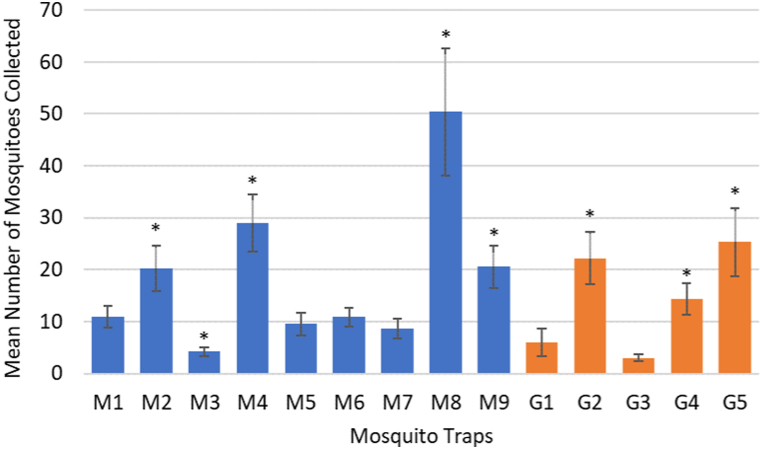
The emergence of several zoonotic mosquito-borne pathogens in Europe, including West Nile virus, Sindbis virus and Usutu virus, has emphasised the importance of consistent surveillance. Considerable fieldwork effort is usually needed to detect low-prevalence pathogens in mosquitoes and screening vertebrate hosts and reservoirs is rarely done simultaneously with mosquito sampling. Zoological gardens offer an opportunity for the surveillance of pathogens, mosquitoes, hosts, and reservoirs concurrently; thus, the aim of this study was undertaking integrated surveillance for mosquito-borne pathogens of wild birds and mosquitoes in Chester Zoo (Cheshire) in the United Kingdom. Mosquitoes were collected in September 2020 and tested for zoonotic bird-hosted arboviruses (i.e., West Nile virus, Usutu virus and Sindbis virus) using RT-qPCRs. Of the 3316 mosquitoes trapped, 98% were identified as spp. The average minimum prevalence of the viruses found in the literature was used to calculate the sample size needed for detecting these viruses with 99% confidence. The testing of 2878 females found no evidence of presence of the three viruses. Significant differences were found in mosquito abundance per sampling site and collection date; furthermore, important sources of immature and resting mosquitoes were found near aviaries. Eighteen wild birds belonging to 11 species were found dead in the zoo from May to December 2020 and were RT-qPCR tested for West Nile virus and Usutu virus; all samples resulted negative for viral infection. It is unlikely that these viruses were present in the zoo during the sampling period; however, since they circulate in Europe and Usutu virus has been isolated in the United Kingdom and may overwinter here, continued monitoring of mosquitoes and wild birds is recommended as virus introduction and dissemination are possible. This study highlights the importance of regular and integrated arboviral surveillance of zoonotic pathogens in zoos providing baseline information to that end.
包括西尼罗河病毒、辛德毕斯病毒和乌苏图病毒在内的几种人畜共患蚊媒病原体在欧洲出现,凸显了持续监测的重要性。通常需要大量的野外工作来检测蚊子中低流行率的病原体,而对脊椎动物宿主和储存宿主的筛查很少与蚊子采样同时进行。动物园为同时监测病原体、蚊子、宿主和储存宿主提供了机会;因此,本研究的目的是对英国柴郡切斯特动物园的野生鸟类和蚊子的蚊媒病原体进行综合监测。2020年9月收集了蚊子,并使用逆转录定量聚合酶链反应(RT-qPCR)检测人畜共患鸟类宿主虫媒病毒(即西尼罗河病毒、乌苏图病毒和辛德毕斯病毒)。在捕获的3316只蚊子中,98%被鉴定为 属。文献中发现的病毒平均最低流行率用于计算以99%的置信度检测这些病毒所需的样本量。对2878只雌蚊的检测未发现这三种病毒存在的证据。在每个采样地点和采集日期的蚊子丰度上发现了显著差异;此外,在鸟舍附近发现了未成熟和栖息蚊子的重要来源。2020年5月至12月期间在动物园发现11种18只野生鸟类死亡,并对其进行了西尼罗河病毒和乌苏图病毒的RT-qPCR检测;所有样本的病毒感染结果均为阴性。在采样期间,这些病毒不太可能存在于动物园中;然而,由于它们在欧洲传播,且乌苏图病毒已在英国分离出来并可能在此越冬,建议继续监测蚊子和野生鸟类,因为病毒有可能传入和传播。本研究强调了对动物园中的人畜共患病原体进行定期和综合虫媒病毒监测的重要性,为此提供了基线信息。