Gaggioli Margaret R, Jones Angela G, Panagi Ioanna, Washington Erica J, Loney Rachel E, Muench Janina H, Brennan Richard G, Thurston Teresa L M, Ko Dennis C
Department of Molecular Genetics and Microbiology, School of Medicine, Duke University, Durham, NC 27710, USA.
Department of Infectious Disease, Centre for Bacterial Resistance Biology, Imperial College London, London, UK.
bioRxiv. 2024 Feb 14:2024.02.14.580367. doi: 10.1101/2024.02.14.580367.
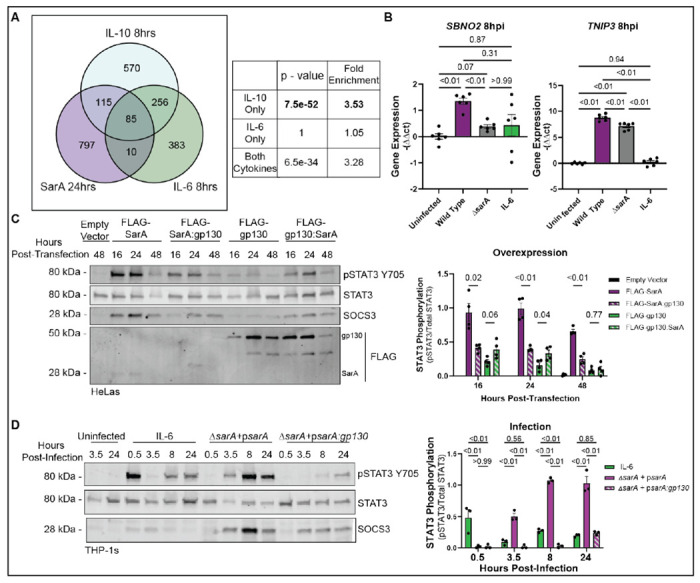
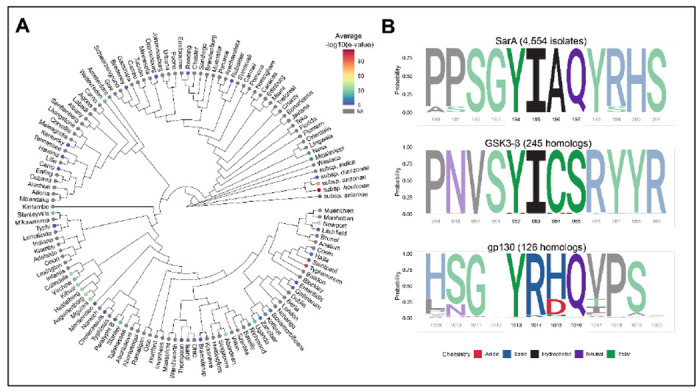
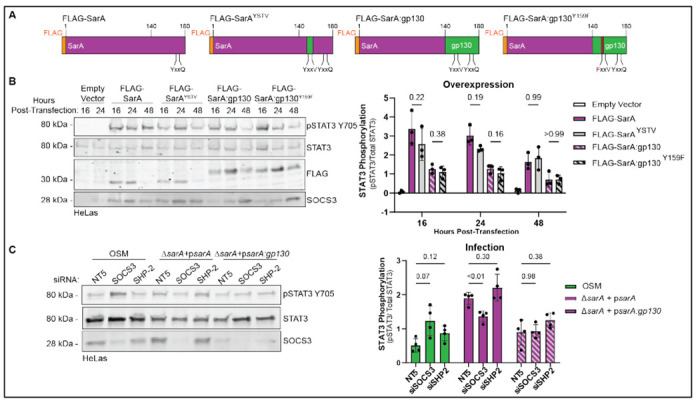
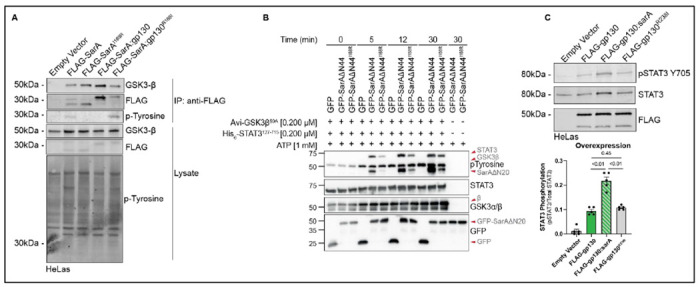
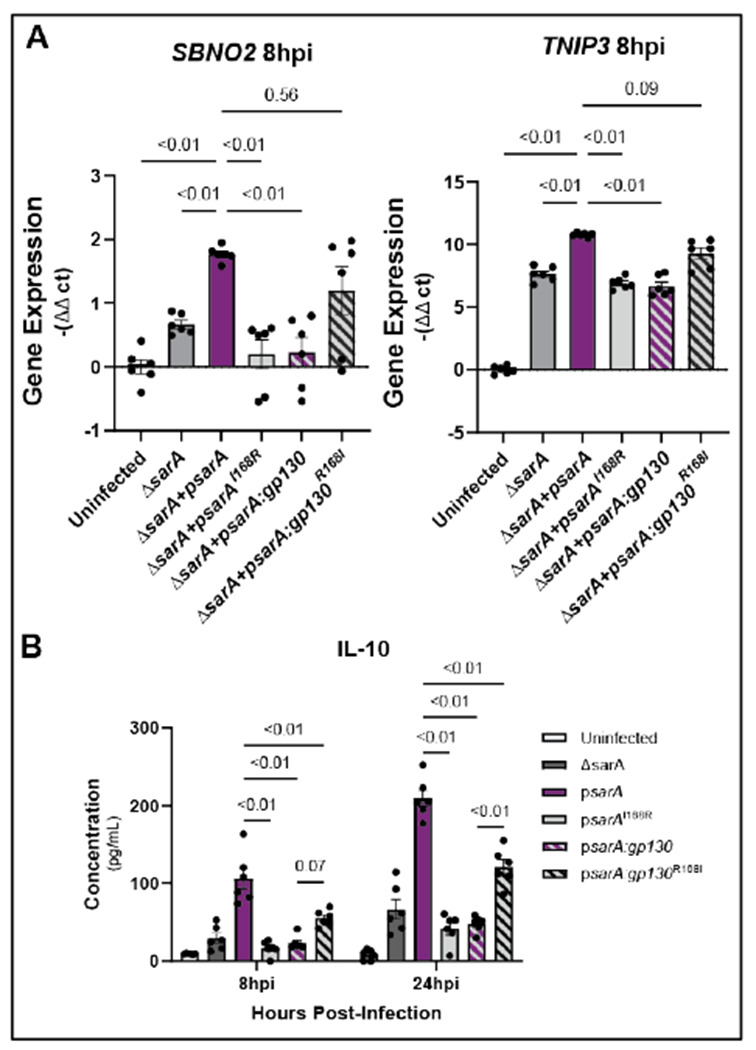
Non-typhoidal cause an estimated 1 million cases of gastroenteritis annually in the United States. These serovars use secreted protein effectors to mimic and reprogram host cellular functions. We previously discovered that the secreted effector SarA ( anti-inflammatory response activator; also known as SteE) was required for increased intracellular replication of . Typhimurium and production of the anti-inflammatory cytokine interleukin-10 (IL-10). SarA facilitates phosphorylation of STAT3 through a region of homology with the host cytokine receptor gp130. Here, we demonstrate that a single amino acid difference between SarA and gp130 is critical for the anti-inflammatory bias of SarA-STAT3 signaling. An isoleucine at the pY+1 position of the YxxQ motif in SarA (which binds the SH2 domain in STAT3) causes increased STAT3 phosphorylation and expression of anti-inflammatory target genes. This isoleucine, completely conserved in ~4000 isolates, renders SarA a better substrate for tyrosine phosphorylation by GSK-3. GSK-3 is canonically a serine/threonine kinase that nonetheless undergoes tyrosine autophosphorylation at a motif that has an invariant isoleucine at the pY+1 position. Our results provide a molecular basis for how a secreted effector achieves supraphysiological levels of STAT3 activation to control host genes during infection.
在美国,非伤寒型每年估计导致100万例肠胃炎病例。这些血清型利用分泌的蛋白质效应物来模拟和重新编程宿主细胞功能。我们之前发现,分泌的效应物SarA(抗炎反应激活剂;也称为SteE)是鼠伤寒沙门氏菌细胞内复制增加和抗炎细胞因子白细胞介素-10(IL-10)产生所必需的。SarA通过与宿主细胞因子受体gp130的同源区域促进STAT3的磷酸化。在这里,我们证明SarA和gp130之间的单个氨基酸差异对于SarA-STAT3信号传导的抗炎偏向至关重要。SarA中YxxQ基序的pY + 1位置的异亮氨酸(其与STAT3中的SH2结构域结合)导致STAT3磷酸化增加和抗炎靶基因的表达。这种异亮氨酸在约4000个分离株中完全保守,使SarA成为GSK-3酪氨酸磷酸化的更好底物。GSK-3通常是一种丝氨酸/苏氨酸激酶,但其在pY + 1位置具有不变异亮氨酸的基序处进行酪氨酸自磷酸化。我们的结果为分泌的效应物如何在感染期间实现超生理水平的STAT3激活以控制宿主基因提供了分子基础。