Nguyen Tan Minh, Jones Derek, Ngo Kinh Luan, Hayes Melanie Jane
Deakin University.
The University of Edinburgh.
MedEdPublish (2016). 2017 May 17;6:85. doi: 10.15694/mep.2017.000085. eCollection 2017.
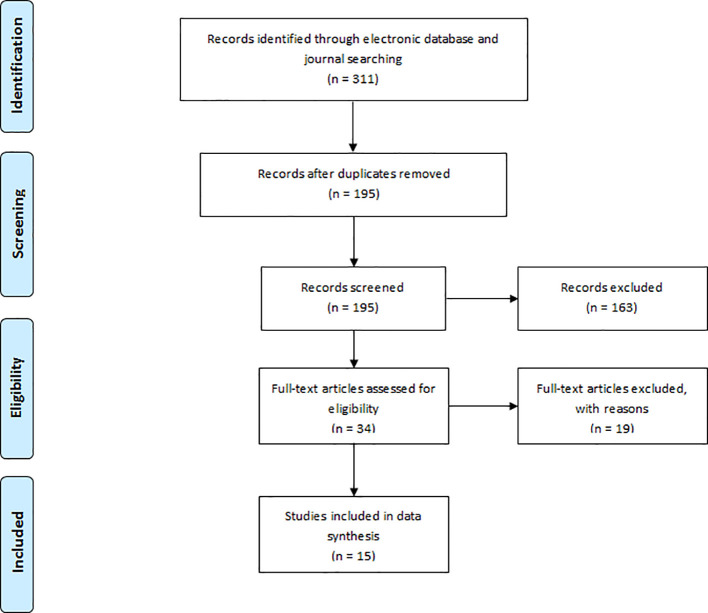
This article was migrated. The article was marked as recommended. Professionalism is a core competency and concern in all health professional education. Evidence from nursing and medicine suggests the evidence base for approaches to developing and assessing professionalism at undergraduate level is weak. In 2015, notifications, imposed sanctions, and in some cases de-registration against dental practitioners for reported incidences of breaches in infection control in New South Wales, Australia, have refreshed the essential need for dental practitioners to promote public safety and protection. To investigate the evidence for clinical education practice approaches to develop professionalism in dentistry. Relevant electronic databases were searched for full-text peer reviewed papers relating to dental practitioners published between 2000 and June 2016 in English. All research designs were included. Following initial and detailed screening, included papers were independently quality appraised and strength of evidence graded by two independent reviewers. Removal of duplicates resulted in 195 unique papers; following screening 34 full text articles were assessed for eligibility resulting in 15 papers evaluated in this review. Eight different clinical education approaches were identified. Most studies were of low quality and reported low levels of educational outcomes based on Kirkpatrick's Hierarchy. There is a lack of good quality evidence to support any one approach to develop professionalism in dentistry. What evidence there is focuses on low level educational outcomes such as learners experience. Low level outcomes is common in educational research and therefore unsurprising. More disappointing was failure to adequately justify the methodology and the absence on the definition of dental professionalism. The research findings is consistent with the evidence across other health professions internationally. There is scope for an inter-professional approach to tackle the challenge developing and subsequently assessing professionalism.
本文已迁移。该文章被标记为推荐文章。专业素养是所有健康专业教育的核心能力和关注点。来自护理和医学领域的证据表明,本科阶段培养和评估专业素养方法的证据基础较为薄弱。2015年,澳大利亚新南威尔士州针对牙科从业者因报告的感染控制违规事件发出通知、实施制裁,在某些情况下还取消其注册资格,这再次凸显了牙科从业者促进公众安全与保护的迫切需求。为了调查牙科临床教育实践方法以培养专业素养的证据。检索了相关电子数据库,查找2000年至2016年6月期间以英文发表的、与牙科从业者相关的全文同行评审论文。纳入所有研究设计。经过初步筛选和详细筛选后,由两名独立评审员对纳入的论文进行独立的质量评估和证据强度分级。去除重复项后得到195篇独特的论文;筛选后评估了34篇全文文章的资格,最终本综述纳入15篇论文进行评估。确定了八种不同的临床教育方法。大多数研究质量较低,根据柯克帕特里克层次模型报告的教育成果水平也较低。缺乏高质量证据支持任何一种培养牙科专业素养的方法。现有的证据主要集中在诸如学习者体验等低层次教育成果上。低层次成果在教育研究中很常见,因此不足为奇。更令人失望的是,未能充分论证研究方法,且缺乏牙科专业素养的定义。研究结果与国际上其他健康专业的证据一致。有必要采取跨专业方法来应对培养并随后评估专业素养这一挑战。