Department of Pathogenic Biology, Key Laboratory for Experimental Teratology of the Chinese Ministry of Education, and Key Laboratory of Infection and Immunity of Shandong Province, School of Basic Medical Science, Qilu Hospital, Cheeloo College of Medicine, Shandong University, Jinan, Shandong, China.
State Key Laboratory of Microbial Technology, Shandong University, Jinan, Shandong, China.
Nat Commun. 2024 Feb 26;15(1):1750. doi: 10.1038/s41467-024-46212-z.
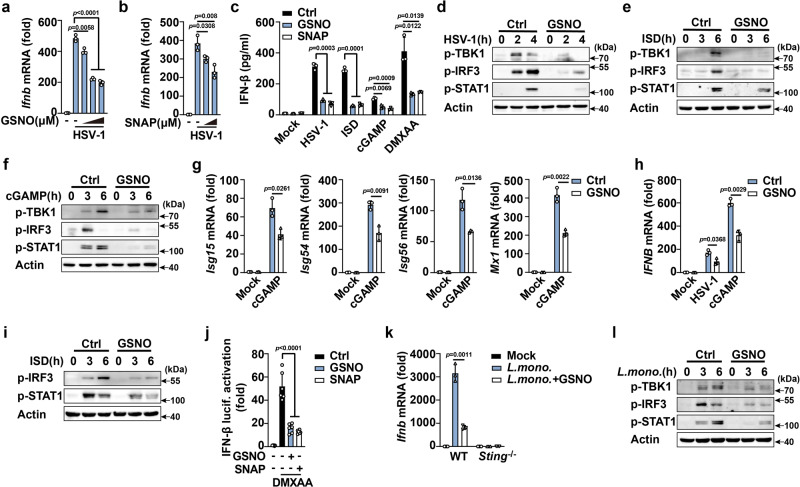
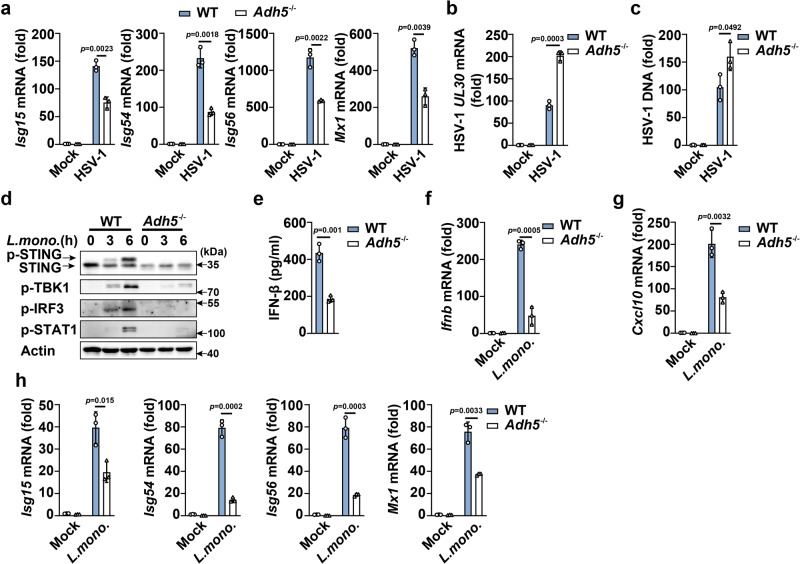
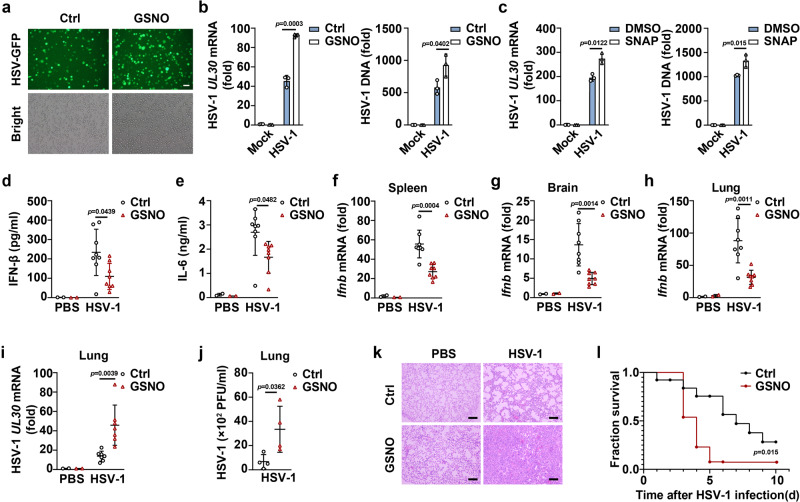
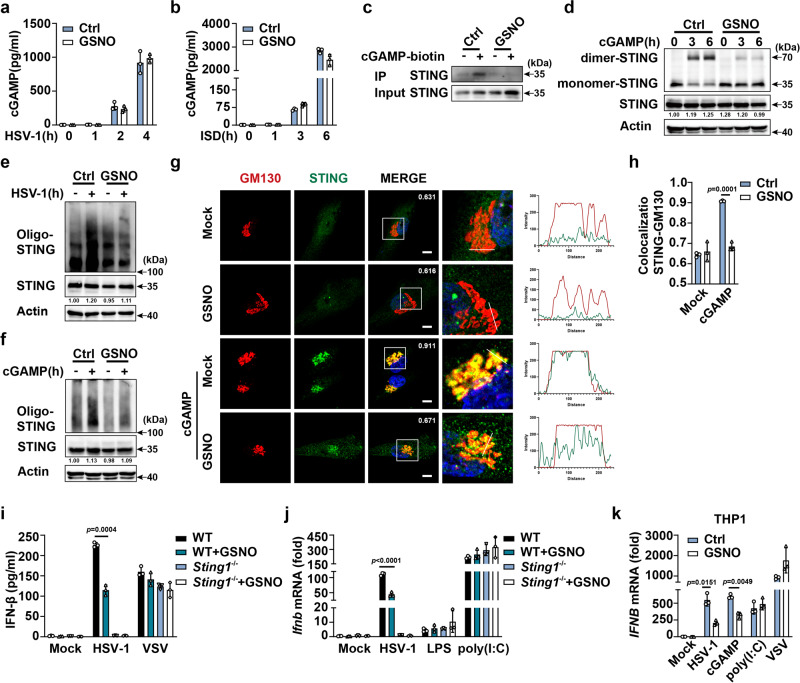
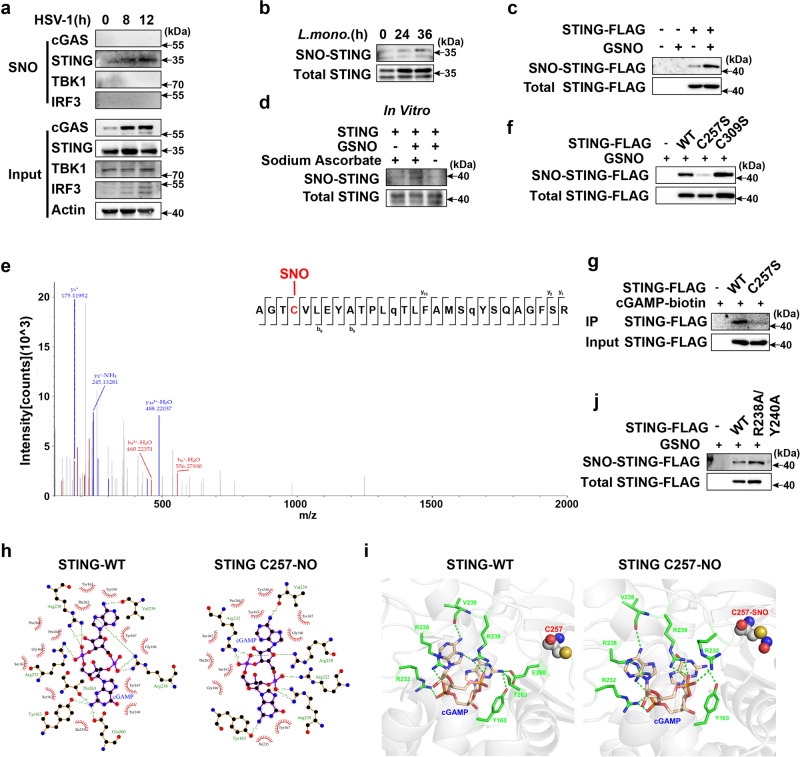
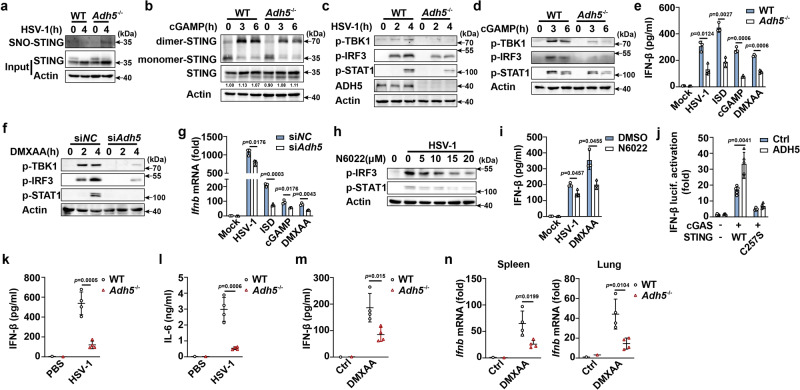
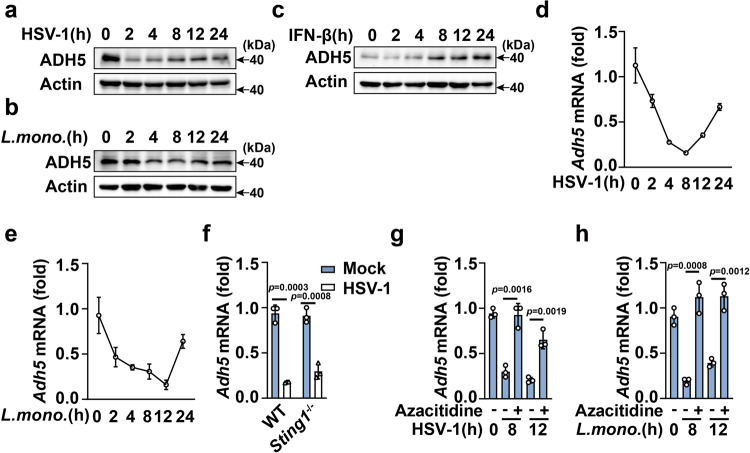
Oxidative (or respiratory) burst confers host defense against pathogens by generating reactive species, including reactive nitrogen species (RNS). The microbial infection-induced excessive RNS damages many biological molecules via S-nitrosothiol (SNO) accumulation. However, the mechanism by which the host enables innate immunity activation during oxidative burst remains largely unknown. Here, we demonstrate that S-nitrosoglutathione (GSNO), the main endogenous SNO, attenuates innate immune responses against herpes simplex virus-1 (HSV-1) and Listeria monocytogenes infections. Mechanistically, GSNO induces the S-nitrosylation of stimulator of interferon genes (STING) at Cys257, inhibiting its binding to the second messenger cyclic guanosine monophosphate-adenosine monophosphate (cGAMP). Alcohol dehydrogenase 5 (ADH5), the key enzyme that metabolizes GSNO to decrease cellular SNOs, facilitates STING activation by inhibiting S-nitrosylation. Concordantly, Adh5 deficiency show defective STING-dependent immune responses upon microbial challenge and facilitates viral replication. Thus, cellular oxidative burst-induced RNS attenuates the STING-mediated innate immune responses to microbial infection, while ADH5 licenses STING activation by maintaining cellular SNO homeostasis.
氧化爆发(或呼吸爆发)通过生成活性物质,包括活性氮物种(RNS),赋予宿主防御病原体的能力。微生物感染诱导的过量 RNS 通过 S-亚硝基硫醇(SNO)积累损害许多生物分子。然而,宿主在氧化爆发期间如何激活先天免疫的机制在很大程度上仍然未知。在这里,我们证明了 S-亚硝基谷胱甘肽(GSNO),主要的内源性 SNO,可减弱对单纯疱疹病毒-1(HSV-1)和李斯特菌感染的先天免疫反应。从机制上讲,GSNO 诱导干扰素基因刺激物(STING)在 Cys257 处的 S-亚硝基化,抑制其与第二信使环鸟苷酸-腺苷酸单磷酸(cGAMP)的结合。GSNO 代谢为降低细胞内 SNO 的关键酶——醇脱氢酶 5(ADH5),通过抑制 S-亚硝基化促进 STING 激活。一致地,微生物挑战时 ADH5 缺乏会导致 STING 依赖性免疫反应缺陷,并促进病毒复制。因此,细胞氧化爆发诱导的 RNS 减弱了 STING 介导的对微生物感染的先天免疫反应,而 ADH5 通过维持细胞内 SNO 平衡来许可 STING 激活。