Department of General Surgery, Renmin Hospital of Wuhan University, Wuhan, China.
Hubei Key Laboratory of Digestive System Disease, Wuhan, China.
Front Immunol. 2024 Feb 12;15:1326083. doi: 10.3389/fimmu.2024.1326083. eCollection 2024.
Immune checkpoint inhibitors (ICIs) represent a paradigm shift in the development of cancer therapy. However, the improved efficacy of ICIs remains to be further investigated. We conducted a systematic review and meta-analysis to evaluate the pan-immunoinflammatory value (PIV) and PILE score used to predict response to ICI therapy.
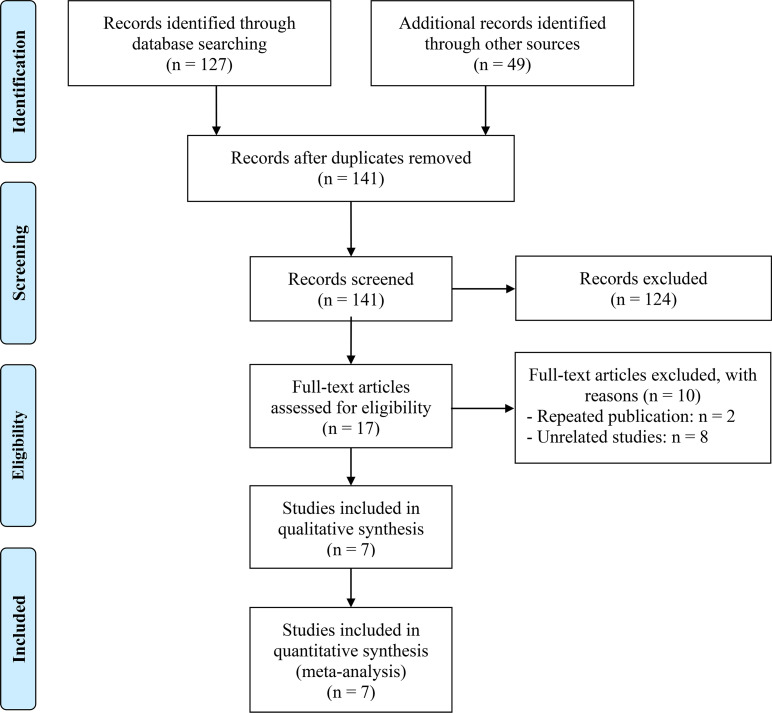
We searched selected databases for studies on pan-immune inflammation values and their association with outcomes of treatment with immune checkpoint inhibitors. We used hazard ratios (HRS) and 95% confidence intervals (CI) to summarize survival outcomes. All data analyses were performed using STATA 15.0.
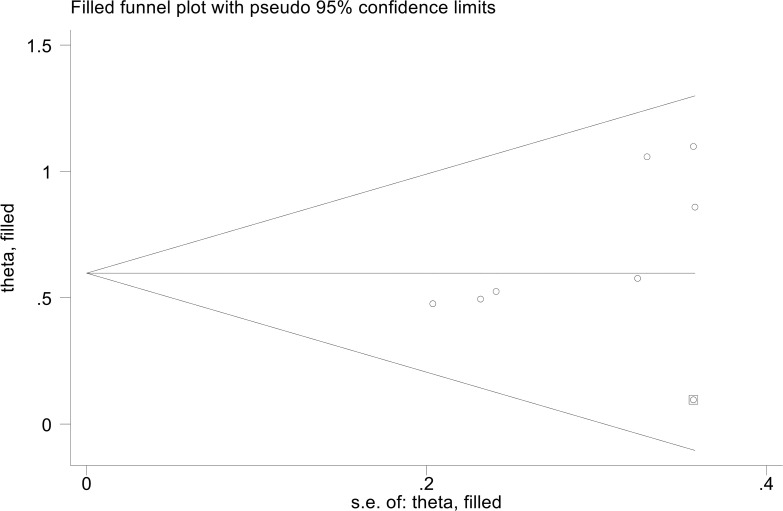
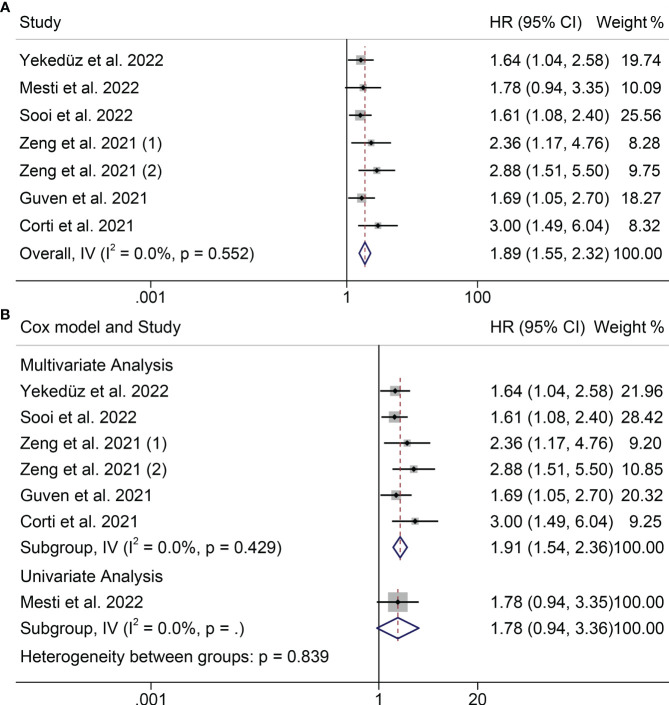
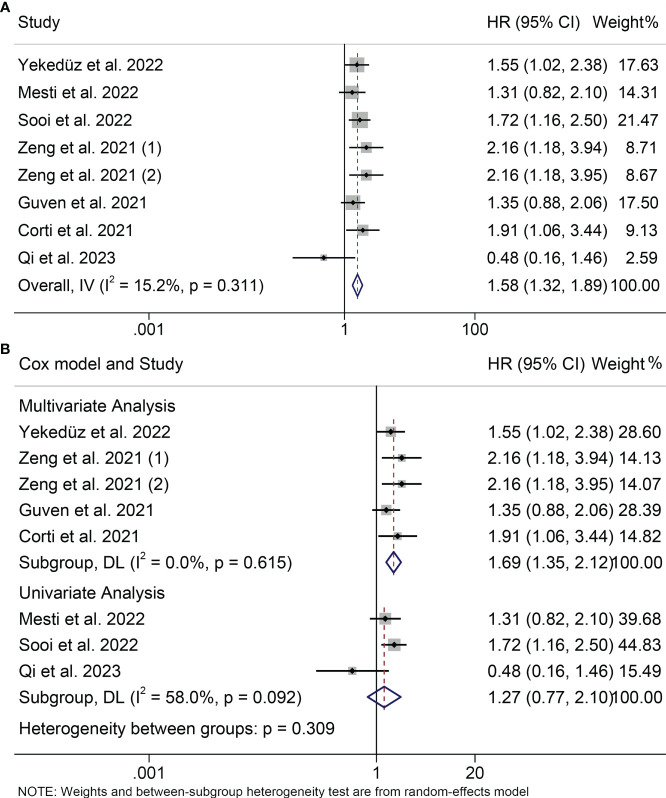
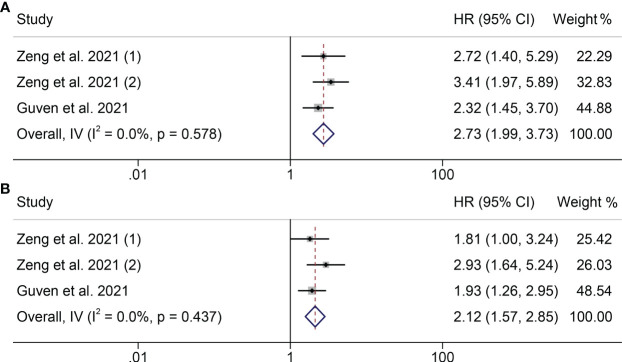
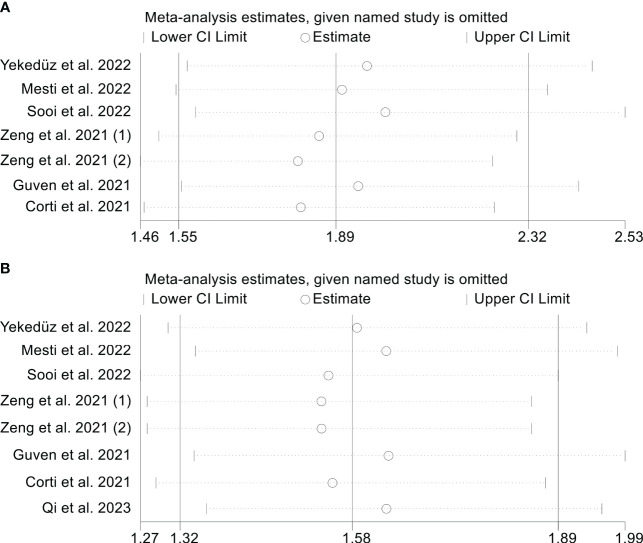
7 studies comprising 982 patients were included in the meta-analysis. The pooled results showed that higher PIV was significantly associated with shorter overall survival OS (HR = 1.895, 95%CI: 1.548-2.318) and progression-free survival (PFS) (HR = 1.582, 95%CI: 1.324-1.890). Subgroup analyses also confirmed the reliability of the results.
High PIV and PILE metrics are associated with lower survival in cancer patients receiving ICIs.
免疫检查点抑制剂(ICIs)代表了癌症治疗发展的范式转变。然而,ICIs 的疗效仍需进一步研究。我们进行了系统评价和荟萃分析,以评估用于预测免疫检查点抑制剂治疗反应的泛免疫炎症值(PIV)和 PILE 评分。
我们在选定的数据库中搜索了关于泛免疫炎症值及其与免疫检查点抑制剂治疗结果之间关系的研究。我们使用风险比(HR)和 95%置信区间(CI)来总结生存结果。所有数据分析均使用 STATA 15.0 进行。
荟萃分析纳入了 7 项研究,共 982 名患者。汇总结果表明,较高的 PIV 与较短的总生存期(OS)(HR=1.895,95%CI:1.548-2.318)和无进展生存期(PFS)(HR=1.582,95%CI:1.324-1.890)显著相关。亚组分析也证实了结果的可靠性。
在接受 ICI 治疗的癌症患者中,高 PIV 和 PILE 指标与生存率降低相关。